Week 9: Spain
- kelafoy
- Oct 10, 2022
- 7 min read
Updated: Oct 17, 2022
Introduction
“There are several factors that make Spanish cuisine so unique. The country was formed by uniting different kingdoms and each one had their own traditions which have added variety to the cuisine. The mountains divide the country into different regions, each with its separate culinary tradition. The country boasts of having the longest coastline in Europe making seafood and fish available in a bounty.” (Gourmandelle, 2022)
Method of Cookery:
“Most Spanish dishes are still prepared in the traditional method which was followed two hundred or three hundred years ago. Grilling is the most common method of Spanish cooking. Charcoal grilling is known as a la parilla or a la brasa. Chicken or fish are usually prepared in this method.
Cocido is stewing, which is used to prepare vegetables, beans, and even meats.
A la pancha is a popular method of grilling on a metal plate. The traditional Spanish round metal grill allows the heat to spread evenly. The food remains juicy inside while the outside becomes crispy, allowing the foodies to enjoy the taste of the ingredients fully.” (Gourmandelle, 2022)
Prior Knowledge of the Dish: I know bubkis about Spanish cuisine. I have never met anyone from Spain…to my knowledge. Nor have I ever attempted Spanish cooking. I think we have all eaten or prepared some version of Spanish cuisine, since the US borders with Mexico. I’m pretty sure we all love to eat Mexican food…well…our Americanized version of it anyway. When the settlement of Mexico began, it was known as The New Spain. The food in both countries share many similarities as well as the languages. However, just like most things in this world, if you want it to be truly authentic, you must go to the homeland. I am really excited to see what I can learn this week about the origins of the food and how the flavors of the region came to be.
Learning Objectives:
· Introduce the history of Spain, its geography, climate, and major cultural influences from the North African Moors.
· Reveal Spain’s influences on Latin American cuisines through conquest of Mexico and Puerto Rico.
· Introduce Spanish culinary culture, its twelve distinct culinary regions, and dining etiquette.
· Identify Spanish foods, flavor foundations, seasoning devices, and favored cooking techniques.
· Discuss the influences that resulted in the rise in popularity of Spanish cuisine.
· Teach the techniques and the beloved, classic dishes of Spain.
Background Information
Origin & History:
“The history of Spain is fraught with battles and invasions. In the 8th century B.C., the Greeks created their settlements in the coastal areas and the Celts conquered the interiors. In the second century B.C. the Romans ruled over the entire Spain.
Spain also saw the Arabic invasion when it went under Arabic rule in the eighth century A.D. for around 700 years. Later on, the Arabs were driven out too.
All the foreign invasions had left indelible marks on the history and cuisine of Spain. The influence of Greek culture can be seen in the use of olives and wine. The Celts left their heritage of meat and fish pies while the Moors taught Spanish people to use honey, almonds, and spices like cumin and saffron in the dishes.
Spain was one of the most advanced nations in terms of colonization and exploration. The voyagers explored different parts of the world and brought back foods like beans, potatoes, corn, tomatoes, sweet potatoes, chocolate, peppers, and vanilla. These ingredients slowly found their place in Spanish cuisine, making it richer and tastier.” (Gourmandelle, 2022)
“The basis of the history of Spanish food of course has to do with its geographical situation. First of all, the country is located on the Iberian Peninsula and is therefore almost entirely surrounded by the waters. Naturally, due to this fortunate location, seafood forms one of the pillars of Spain's gastronomy and categorizes the country as having a Mediterranean diet.
The rest of Spain is a diverse terrain made up of mountain ranges, lush pastures, fertile farm grounds, extensive coastlines and more, which together provide quite the variety of fresh products. For example, Spain's famous hams are cured high in the mountains, vineyards and olive groves sprawl across expanses of land, and fresh fruits and vegetables hail from throughout the country.
Endless cultures, as they passed through or settled in Spain, have influenced the history of Spanish food. The Phoenicians left their sauces, the Greeks introduced Spain to the wonders of olive oil, and Romans, Carthaginians, and Jews integrated elements of their own cooking into that of Spain. However, it was the Moors who, during their centuries of reign, most impacted Spanish gastronomy. They introduced fruits and light seasonings into the Iberian diet, as well as combinations of fruits and nuts with meats and fish. Rice- a genuine staple of Spanish gastronomy- and therefore Spain's vast array of rice dishes, come straight from the Moors, as does the use of saffron, cinnamon, and nutmeg. As you eat gazpacho on a hot summer day, thank this clearly gastronomically talented Moorish culture, as it too comes straight from them. Conclusion? Ironically enough, the foods we consider to be "typically Spanish" would either not exist or would be extremely different without the intervention of so many cultures into the history of Spanish food.” (Enforex, 2022)
Methods Used:
“When you think of Spanish food you may think of rice and beans. But Spanish cuisine is much more than that. Many ingredients are commonly used.
Ham, chicken, eggs, fruits and vegetables, legumes, nuts, lamb, pork, and more are often used in Spanish cooking. Several cooking methods are used as well, including stewing, roasting, broiling, grilling, and baking.
In other words, there's a lot of variety to be found in Spanish cooking. The traditional recipes are full of the flavour of the region.
To make things even more versatile, you'll find many versions of a recipe. Why? Because different regions have different ways of making them.” (Right Casa, 2018)
Dish Variations:
“1. Paella Valenciana – Valencian Paella
This world-famous Spanish dish includes arroz (rice), garrofón seeds, aceite de oliva (olive oil), jitomate (tomato), ajo (garlic), sal (salt), judías verdes (green beans), agua (water), pollo (chicken), and azafrán (saffron). This unique spice is responsible for the yellow color of the rice and gives it a unique taste.
Other common ingredients include caracoles (snails), conejo (rabbit), romero (rosemary), pimentón (paprika), pato (duck), costillas de cerdo (pork ribs), and albóndigas (meatballs). Paella ingredients vary from town to town, region to region and country to country.
2. Tapas y Pintxos – Tapas and Skewers
Nothing compares to eating tapas at the Barcelona Ramblas during sunset. Or having pinchos. These Spanish dishes are famous for their variety and practicality.
Tapas are small rations of a main course, such as jamón serrano (Serrano ham) to caviar and salmon over a goat cheese bedding with a bread base. You need to use cutlery to eat them.
Pintxos is Catalan for the Spanish word pinchos. It comes from the verb pinchar, which means “to skewer.” Pintxos are smaller than tapas and have few ingredients. They are served as snacks and side dishes.
3. Tortilla Española – Spanish Omelette
This delicious Spanish dish is a mix of eggs, starched potatoes, olive oil, and onions. It actually doesn’t look like an omelette at all; it looks more like a cake. It is pan-fried on both sides.
4. Jamón serrano – Iberian ham / Serrano ham
Many Spanish dishes are cooked or baked with Iberian ham. Whether you have it as a snack or entree, you will experience an incomparable flavor representative of this Mediterranean country.
Iberian pork legs are sliced, salted and left to dry before getting to your table.
5. Albóndigas – Meatballs
Albóndiga comes from the Arab term, “al-bunduqa,” which means “ball.” As you may remember from history class, Arabs besieged Spain for 800 years. So, many Spanish dishes were influenced by Arabic cuisine.
According to the traditional recipe, you need ajo (garlic), perejil (parsley), zanahorias (carrots), huevos (eggs), pan molido (bread powder), aceite (oil), sal (salt), pimienta (pepper), harina (flour), carne de puerco (pork meat), carne de ternera (veal), leche (milk), and nuez moscada (nutmeg) to make the meatballs. You can either bake them for 10 minutes or fry them until they are crujiente (crunchy).
To make the sauce, you mix cebolla (onion), ajo (garlic), aceite (oil), harina (flour), tomates fritos (fried tomatoes), vino blanco (white wine), agua (water), nuez moscada (nutmeg), and concentrado de carne (meat concentrate).
6. Gazpacho – Tomato Cold Soup
Of all the Spanish dishes, this is by far the most controversial. People either love or hate it. While not everyone is into cold soup, I have to say, it is enjoyable in warm weather.
Ingredients include pepino (cucumber), tomato, onion, black pepper, green pepper, olive oil, garlic, vinegar, pan (bread), and salt. The hot summers of Andalucia—gazpacho’s birthplace—explain the temperature of the soup.
7. Pulpos a la Gallega – Galician Octopus
Octopus, salt, paprika, and olive oil—this Spanish dish’s perfection relies on simplicity. After boiling the octopus, slice it in chunks and serve it over a wood plank. Add olive oil and sprinkle salt and paprika to taste.
Pulpos a la gallega (Galician octopus) has a Mediterranean flavor. The tradition of desalinating the octopus comes from the Greeks.
The rest of the recipe and process was created to accommodate societies that didn’t have refrigeration. People from León used to dry the octopus from Galicia to conserve it. They would rehydrate it with olive oil and season it with paprika and coarse salt.
8. Rabo de Toro – Bull Tail
This Spanish delicacy is known for its unique flavor. It has been eaten since ancient Roman times, but the modern recipe was born in Cordoba, Spain.
Traditionally served with onions, carrots, laurel (bay leaves), tomato, garlic, saffron, olive oil, vino tinto (red wine), black pepper, and salt, this tender bull meat is a favorite Spanish dish.
9. Fabada Asturiana – White Fava Bean Stew
This hot stew is perfect for winter weather. It has blood sausage, chorizo, bacon, and pork. Of course, white fava beans are the signature ingredient in a traditional fabada Asturiana.
10. Bacalao a la Vizcaína – Biscayne Cod
This Spanish dish was originally cooked with manteca (lard), fried garlic, citroned purple onion, choricero pepper, and bread or galletas (crackers). The cod was easy to conserve and transport on Transatlantic expeditions.” (Canún, 2021)
References
“10 Spanish Dishes that Influenced Global Cuisine.” Nicole Canún. https://www.spanish.academy/blog/10-spanish-dishes-that-influenced-global-cuisine/. May 13, 2021.
“An Introduction to Traditional Spanish Cooking.” Right Casa. https://rightcasa.com/an-introduction-to-traditional-spanish-cooking/#:~:text=Several%20cooking%20methods%20are%20used,the%20flavour%20of%20the%20region. October 05, 2018.
“History of Spanish Food.” Enforex. https://www.enforex.com/culture/history-spanish-food.html. 2022.
“Spanish cuisine – a delightful journey for your senses.” Gourmandelle. https://gourmandelle.com/spanish-cuisine/#:~:text=Grilling%20is%20the%20most%20common,%2C%20beans%2C%20and%20even%20meats. 2022.
Dish Production Components
Recipes:


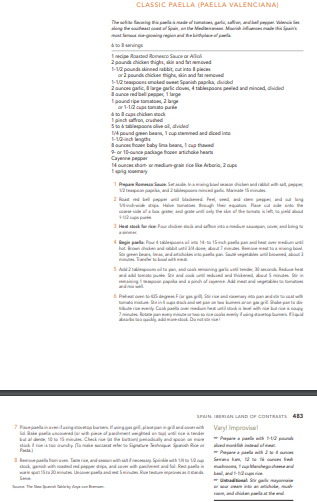

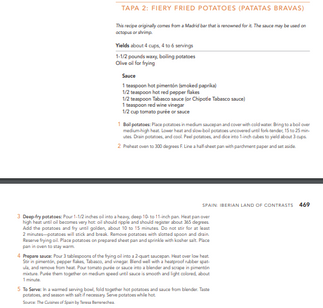

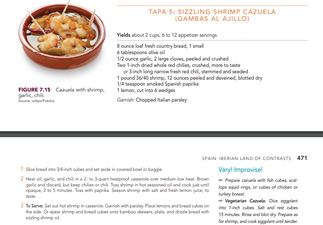


Plan of Work:

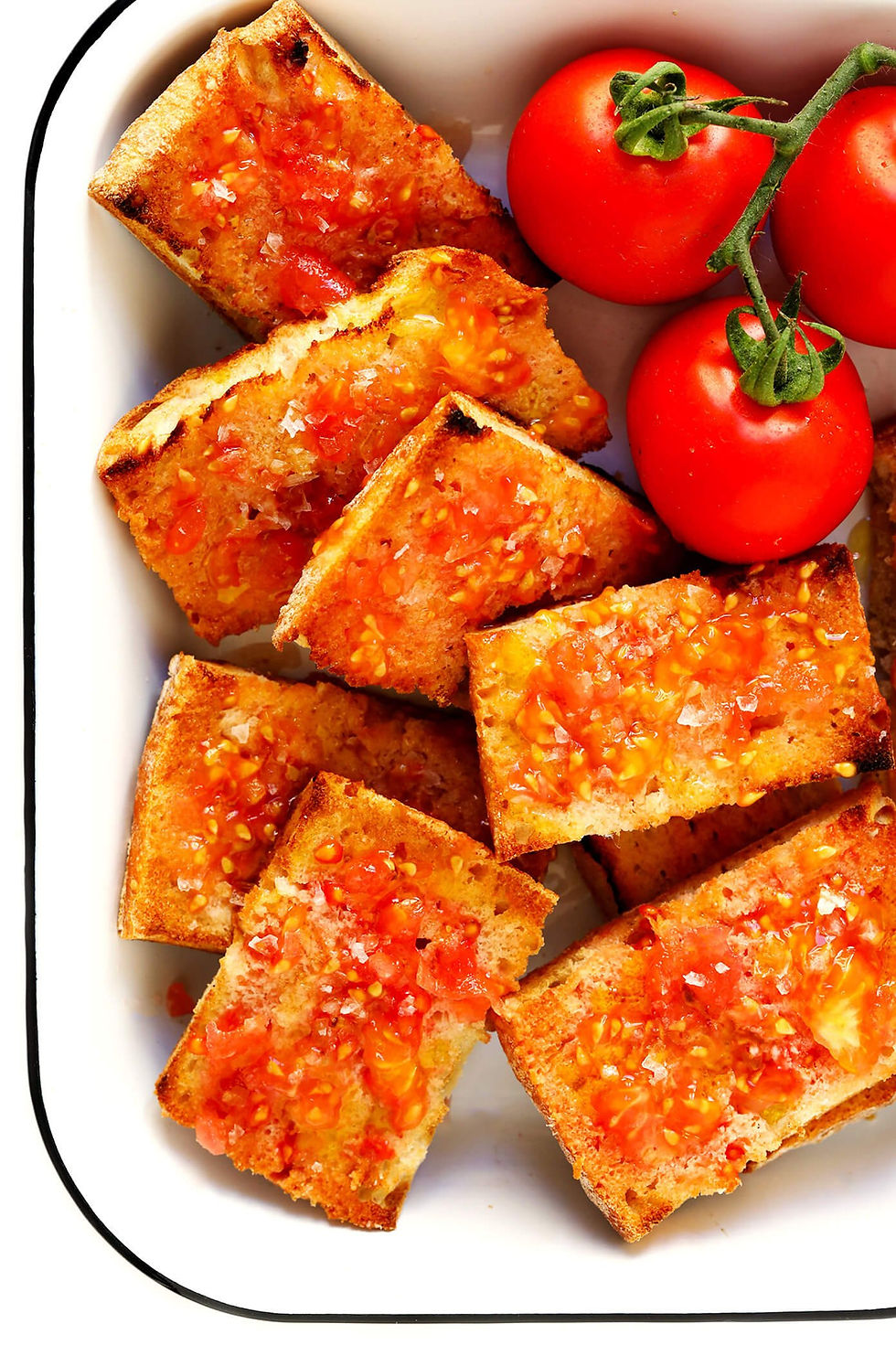
Sources:




Reflection & Summary of Results
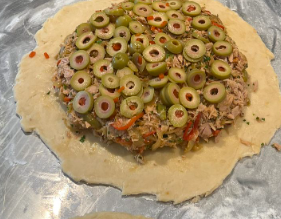
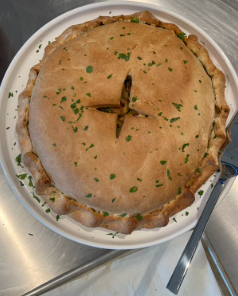
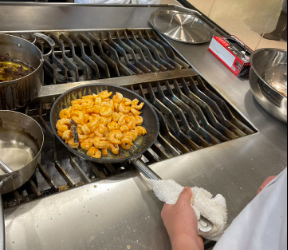
What Happened(?): I had something last minute come up at school for my kiddo this week, and was unable to make it to lab. I asked a classmate for notes from the lab, but have yet to get a response. Based on the photos posted in our group chat, it appears they had to deviate from the recipes a little. Just like other businesses all across the country, we have been having some supply chain issues at the Rane Culinary Science Center. All of the dishes turned out beautifully. Take a look below and check them out for yourself. I'm pretty partial to the charcuterie board. I could snack on that all day. 😊

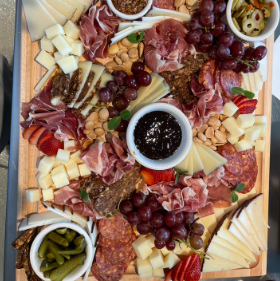

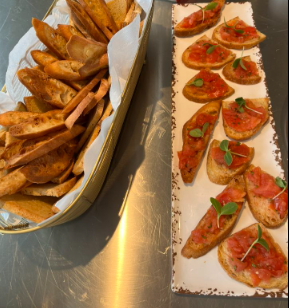

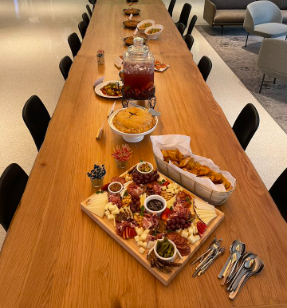
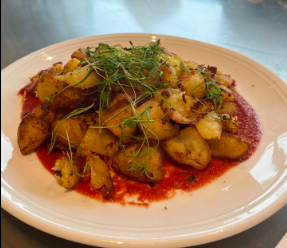



Make sure to pop back in for Week 10 when we take a little visit to The Mediterranean!


Comments