Week 12: The Middle East & Caucasus
- kelafoy
- Oct 31, 2022
- 10 min read
Updated: Nov 7, 2022
Introduction
“Spanning the vast region east of the Mediterranean, the Middle East is comprised of nearly 20 different nations—including Israel, Lebanon, and the countries of the Arabian Peninsula—each with its own defining set of ingredients, influences, and techniques. As a result, the phrase “Middle Eastern cuisine” encompasses an incredibly diverse array of dishes.” (Saveur, 2020)
Method of Cookery:
“From 130 BCE to 1453 CE, the foods of the Middle East were widely sought out. Deep flavored spices such as coriander, cinnamon, cassia, turmeric, saffron and garlic were popular and became building blocks of the regional cuisine. Much of the protein in the area at this time was mostly cows and goats which was not used for fancy purposes but rather sheer practicality. In most cooking methods, including the favorite slow-roasting technique, it would include a variety of spices to bring meals to life.” (Luxofood, 2022)
“The dietary restrictions of three major religions represented in the Middle East—Islam, Judaism, and Coptic Christianity—have given rise to some seriously inventive meat- and dairy-free cooking.” (Saveur, 2020)
Prior Knowledge of the Dish:
I feel like I say this every week…but…I know absolutely nothing about food from this region of the globe. I just started travelling within the last 2 years, and more recently opened my palate to a wider array of cuisines from various countries of the world. This class has broadened my horizons way more than I expected it to. Not only am I learning the history of where all these different foods come from, but I am being introduced to new cultures, ways of life, and flavors / spices I never could have imagined cooking with. Prior to taking this course, I would have no clue what is in a Persian Herb Stew, which uses turmeric and saffron. Before August of this year (2022) I would not even begin to know what type of flavor profile that is, or the medicinal benefits of such ingredients. I almost wish we had more classes focused on global cuisine, because this has been my favorite culinary class to date. 😊
Learning Objectives:
1. Introduce the rich and varied histories of Iran and Georgia, their diverse geographies, cultural influences, and climates.
2. Introduce the culinary culture, regions, and dining etiquette in Iran and Georgia.
3. Discuss the importance of religion and the Silk Road on both cuisines.
4. Discuss the importance of the supra and tamada on dining etiquette in Georgia.
5. Identify the foods, flavor foundations, seasoning devices, and favored cooking techniques.
6. Teach the techniques and the marvelous, creative dishes of ancient Persia, Iran, and the Republic of Georgia.
Background Information
Origin & History:
“Early civilizations in the Middle East paved the way for modern farming and cooking. This area of the world was among the first to keep farm animals and cultivate plants, including wheat, sheep, goats, and cattle. Middle Easterners also developed the process of fermentation, which has permeated worldwide cultures to leaven bread, make alcohol, and create unique flavors.
As a result of its unique location between Europe, Asia, and Africa, the Middle East became a hub for the exchange of goods and culture as international trade expanded through the ages. Spices, ingredients, and new dishes were all exchanged, shaping the food of the Middle East and surrounding areas alike.” (Ensign, 2021)
“As the rise of civilizations transformed the region’s agricultural landscape, the Middle East secured a vital role in food history. Evidence of the earliest forms of plant domestication have been found in what we call the Fertile Crescent — an area that consists of modern-day Syria, Lebanon, Northern Egypt, Israel and Southern Iraq. As empires grew, more time was spent refining how food was cooked and consumed, a transition seen in two ancient tablets dated at 1550 BC. Made from clay, the texts-tablets have proven to be the oldest examples of cookbooks from Babylon and contained recipes for dishes that were passed down for generations. In all likelihood, these recipes weren’t meant for the common person, given that most people ate the same food every day. The luxury of food choice was left to the wealthy who had access to abundant resources.
The location of the Middle East also contributes to the region’s rich culinary history. At a geographic crossroad between Asia, Africa and Europe, the area served as the conduit that connected trade routes between empires on the famous Silk Road. Along this route, diverse goods were traded, permanently transforming the cuisines of participating areas.
From 130 BCE till 1453 CE, the foods of the Middle East were widely sought out. Deep flavored spices such as coriander, cinnamon, cassia, turmeric, saffron and garlic were popular and became building blocks of the regional cuisine. Much of the protein in the area at this time was neither fatty nor flavorful and came from ruminant animals. Historically, we see cows and goats in many Middle Eastern recipes out of a principle of sheer practicality: use the protein that’s most prevalent — and use it all. Traditionally, goats are slow roasted whole over a fire, adding tenderness and smoke, allowing for the deep flavors of the spices to penetrate the meat. Early culinary traditions such as these were based upon survival, but continue today through religious practices.” (Feldmeier, 2016)
Methods Used:
“Middle Eastern food is all about fresh ingredients and adding plenty of vegetables in the dishes. Fried foods are rare in Middle Eastern cooking, which instead uses baking, grilling, and raw ingredients. These are just a couple of the reasons why this type of cuisine is healthier than the standard modern diet. With plenty of fresh vegetables, wholesome ingredients, preservative-free foods, healthy fats like olive oil, and lean sources of protein like chicken and fresh seafood, Middle Eastern foods have been found to lower heart disease and cancers, boost vitality, and increase a person’s life expectancy.
The great part about Middle Eastern cuisine is that it is easy and simple to prepare and doesn’t take a lot of time. The focus is mainly about fresh ingredients such as purslane, parsley, mint, olive oil, rice, lentils, beans, onions, cucumbers, garlic, tomatoes, pine nuts, a variety of spices, and cheese, butter and yoghurt and other dairy products.
Common vegetables include beans, okra, cabbage, vine leaves, olives, cucumbers, sweet peppers, eggplant, fava beans, beets, pickled garlic, bitter greens, spinach, and eggplant. Spices are also essential, such as saffron, rose water, garlic, coriander, cumin, lime, ginger, turmeric, baharat, black pepper, cinnamon, nutmeg, paprika, mint, thyme and parsley.” (Luxofood, 2022)
Dish Variations:
“While shish kebab, yogurt sauce and pistachios are pretty standard fare throughout the Middle East, there are a vast array of differences that have arisen even with a shared, Levantine history. From basmati rice to cardamom, each country within the region has developed their own unique tastes.
The Middle East is distinct from many regions on earth because of the fact that it was, and to many extents still is, a crossroads for many different cultures. From the Phoenicians, Rome, the Byzantine and Ottoman empires, the Middle East is home to some of the world’s oldest countries – including Saudi Arabia, Yemen, Jordan and Israel. While tracing a straight line through the narrative of the Middle East can seem easier in the historical and cultural contexts described, it’s also important to keep in mind that it is impossible capture the truth of people’s identities based on broad terms like the Middle Eastern region, the Mediterranean basin, or the Mediterranean.
While we’ve focused on how the historical evolution of Middle Eastern food has led to many shared, staple ingredients and dishes, anyone from the Middle East will tell you there are many differences between the countries within the region.
Yemen
Located on the Arabian Peninsula and home to many islands, Yemen has also unfortunately been declared by the UN as the country whose population is the most in need of humanitarian aid in the world. Political instability has resulted in a famine that as of 2017 has affected 17 million people. While it’s more recent history has been filled with strife, it is important to highlight the beauty of this country’s culture, which can often be appreciated through food. Saltah, often compared to tagine, is a stew made of a meat called maraq, chilies and vegetables. Served with flatbread, it’s a dish often eaten in the north.
Palestine
Palestine means different things to different people, countries and organizations. While often only focused on because of the Arab-Israeli conflict, it’s also home to a beautiful culture and history of food. One popular sweet snack is Knafa, also known as Kanafeh. As with many Middle Eastern desserts, its ingredients include semolina and syrup. What makes Knafa unique is that it is a cheese-based pastry and is often eaten in the city of Nablus. If you’re looking for something savoury, Maqlouba is the typical, everything but the kitchen sink dish. Translating into “upside down” from Arabic, it’s made of fried vegetables like eggplant and cauliflower, meat and rice.
Egypt
Egypt is located on the African continent, where it boasts one of the oldest histories of civilization. Because of its flourishing culture and technology, Egyptian influence can still be seen today throughout the Mediterranean. Part of that influence can be traced through its food. If you’re interested in a classic Egyptian breakfast, look towards Ful. Made of fava beans, this dish requires only a bit of oil and salt and are commonly served with pita bread, cheese or eggs. Koshari is a typical Egyptian, chickpea dish made of rice, lentils and macaroni. Topped with spices, herbs and sauce, this dish is a flavour bomb. Find more about it with the best cooking courses London on Superprof.
Lebanon
Located West of Syria and North of Israel, Lebanon is a country whose history dates back more than seven thousand years. While this makes for a nearly endless selection of delectable dishes, you’ve probably already tried one of its most popular savoury treats: tabbouleh. While this dish, as with most, has it’s variations across the Middle East, it is a staple in Lebanese cuisine. Tabbouleh, or tabouleh, is typically thought of as a bulgur salad, mixed with fresh vegetables like tomato and cucumber. However, traditional Lebanese tabbouleh is actually made up of parsley, with a lot smaller quantities of bulgur, tomato and mint. Manakeesh, or manakish, is a variation of flatbread that is covered with toppings such as sesame seeds, pine nuts, olive oil and zaatar, or za atar. Zaatar is a mixture of spices and herbs containing oregano, basil thyme, and savoury. Eaten at breakfast or lunch, there are many bakeries that specialize in making
Jordan
Located on the Arabian Peninsula, in between Saudi Arabia and Israel, Jordan is the 11th most populated Arab country. Boasting the famous archaeological city of Petra, as well as the earth’s lowest elevation point at the Dead Sea, Jordan is one the Middle East’s most visted countries. If you’re looking to experience Jordan through food, Mansaf is a great dish to begin with. Part of many celebrations and festivals, Mansaf is a lamb-based dish that is cooked in yogurt, spiced with saffron and cardamom, and eaten with pitta bread, or pita bread.
Iraq
While the country’s name was created before the 6th century, the area of Iraq has actually been inhabited since before the pre-Neolithic era. While Iraq is often in the news because of the destruction of ISIL, the country is home to a rich cultural heritage and artistry – infamous for their poetry, sculptures and paintings. While kebab, or kabob, is one of those dishes whose origins in the Middle East are often contested, the Iraqui kebab is distinct from the other kebabs in the region and can be prepared from lamb, mutton and other meats. One classic Iraqi dish is shorba, or shorbat, which is a lentil soup made of lentils, parsley and spices. Making use of red lentils and, while vegetarian, can also be made with chicken or lamb.” (Jess, 2019)
References
“5 Interesting Facts About Middle East Food History.” Luxofood. https://luxofood.com/5-interesting-facts-about-middle-east-food-history/. 2022.
“53 Best Middle Eastern Recipes.” Saveur. https://www.saveur.com/best-middle-eastern-recipes/. May 18, 2020.
“How Different are Middle Eastern Recipes in the Region?” Jess. https://www.superprof.com/blog/diversity-of-regional-middle-eastern-cuisine/. June 05, 2019.
“Middle Eastern Food from Etiquette to Recipes.” Alison Ensign. https://www.familysearch.org/en/blog/middle-eastern-food-recipes-etiquette. September 22, 2021.
“Tracing the History of Middle-Eastern Cuisine and Setting Roots in Los Angeles.” Kenneth “Duke” Feldmeier. https://www.kcet.org/shows/the-migrant-kitchen/tracing-the-history-of-middle-eastern-cuisine-and-setting-roots-in-los-angeles. October 12, 2016.
Dish Production Components
Recipes:



Plan of Work:
Sources:


Reflection & Summary of Results
What Happened: All my plans this week just flew out the window…in a good way. We had guests from the Middle East join us for lab this week to help create traditional dishes from their native country. I paired up with a lovely young woman named, Sadaf. She hails from Persia, and we created a dish called Mirza Ghasemi (Persian Eggplant Dip). To say it was yummy was an understatement.

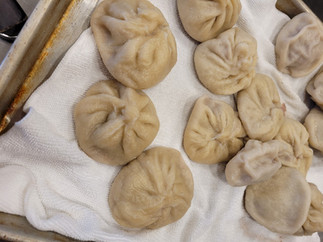
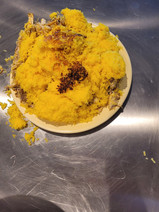
The other students created a few surprise dishes as well as completed dishes that were on our syllabus / schedule. You can check them out here…






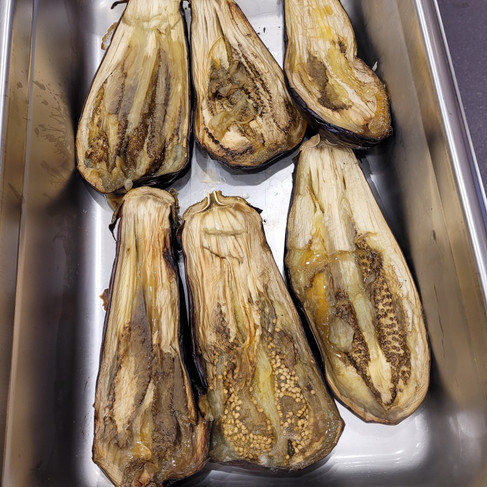
Evaluation: Sadaf and I attempted to roast our eggplant in the oven. However, it wasn’t softening the vegetable properly, nor was it drawing the natural juice of the eggplant into the vegetable as it should. We transferred the eggplants to the grill, and SUCCESS…everything started coming together marvelously. While our eggplants were roasting, we minced a TON (not literally) of garlic, peeled and diced fresh tomatoes, and added all to a deep skillet with butter, eggs, salt, pepper, and turmeric. These ingredients simmered slowly while the eggplant did its job on the grill (barbeque). “The goal of grilled eggplant is to have slices that are tender not mushy, with just the right bite. Too often, eggplant gets a bad rap for being bitter, seed-riddled, mushy and either too tough or overcooked. It’s heralded as the vegetable that requires a time-consuming ritual of salting, draining, and frying that sometimes tastes like, well, not that much. On the flip side of the spatula, grilled eggplant is totally the opposite of that, where these purple globes become creamy, tender, sweet and smoky, and incredibly easy to prepare, no salting required!” (Heidi, 2022)


Conclusions: Allowing the dish the time to simmer and the eggplant to cook slowly seems to be the key to the flavor profile. The turmeric, salt, and pepper slowly develop as the liquid reduces. Adding the almost sweet grilled eggplant gives a punch of balance to the high acidity created by the tomatoes. I guess it’s the same as we Southern Americans adding sugar to spaghetti.


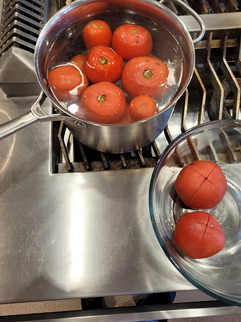


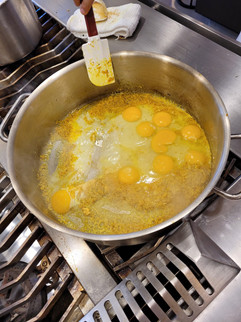


We topped each dish with a single fried egg, as is traditional in Persia. One of the eggs Sadaf cracked had a double yolk.

I informed her of our old American wives tale stating that a double yolk is a sign of pregnancy to come, and quite possibly twins. She found the idea humorous, yet interestingly she was hopeful. 😊 It was fun to teach her a little about our culture since she taught me so much of hers. Here’s a look at our final dish.




I feel like we should have added a little more salt, and maybe even some spice to it. Then again…doing so would have Americanized it, which is what we are trying to avoid in Global Gastronomy. The goal is to create meals as traditionally as possible to develop our skills, our knowledge, and our palates from various regions around the world. Check back in next week to see where our plate takes us!
References
“Grilled Eggplant with Chimichurri.” Heidi. https://www.foodiecrush.com/grilled-eggplant/. 2022.


Comments