Week 4: Southeast Asia...Thailand, Indonesia, & Vietnam
- kelafoy
- Sep 7, 2022
- 7 min read
Updated: Sep 13, 2022
Introduction
I am REALLY looking forward to this week’s lab. We are focusing on Southeast Asia, primarily Thailand, Indonesia, and Vietnam. As with most countries in Asia, I know very little about the food and where it comes from. This class is already putting all kinds of wrinkles in my brain…better than on my face 😉… and we’re only 4 weeks into the semester. I think this will be my favorite semester yet!
Method of Cookery:
“A standard Southeast Asian meal has no courses. All of the parts of a meal are presented at once and eaten together. As in Chinese cuisine, the cook strives for a harmonious balance of textures, temperatures, and flavors: sweet, sour, salty, bitter. In Thailand, people eat with a spoon, knife, and fork. In Indonesia, Malaysia, and Singapore, people eat with their (right) hands and spoons are used for serving. Vietnam is unique in the region for eating with chopsticks.” (My Hungry Traveler, 2022)
Prior Knowledge of the Dish:
I don’t know much about Asian cuisine, in general. I have a little experience with Vietnamese cooking. My adopted sister’s biological mother is from Vietnam. She inspired my love of rice noodles and Pho. Not to mention the AMAZING Vietnamese coffee she used to send in her care packages through the mail. My sister and I would look forward to that box arriving every few months. It was like Christmas for my palate. 😊 “Pho originated in the early 20th century in northern Vietnam and was popularized throughout the world by refugees after the Vietnam War. Because pho's origins are poorly documented, there is disagreement over the cultural influences that led to its development in Vietnam, as well as the etymology of the name.” (Wikipedia, 2022)
Learning Objectives:
· Introduce three of the most influential countries of Southeast Asia, their histories, geography, cultural influences, and climates.
· Introduce the culinary cultures, regional variations, and dining etiquette of Thailand, Vietnam, and Indonesia.
· Identify the foods, flavor foundations, seasoning devices, favored cooking techniques of Thailand, Vietnam, and Indonesia, and how they differ and where they are similar.
· Technique and recipes of the major dishes of Thailand, Vietnam, and Indonesia.
Background Information
Origin & History:
“Each country has its own unique history cooked into its dishes. In Indonesia and Malaysia, the prevalence of Islam has virtually eliminated pork from the diet. Vietnamese food retains the flavors of centuries of French occupation. Filipino foods are enhanced with Spanish and American accents.
While the countries maintain distinct identities, they also have a great deal in common, and their cuisines share histories as well as similar staple ingredients and methods of cooking. The major influences on Southeast Asian cuisines came from China from the northeast (the wok, dumplings, noodles) and India (curries) from the west. Perhaps the most profound impact on the region’s cooking was made in the 16th century, when the Portuguese brought hot chili peppers from the Americas. Today the fiery chili provides signature heat in Southeast Asian meals. In addition to long-grained rice, rice noodles, and chilies, the regions other defining ingredients are coconut milk, fish sauce, seafood, sweet soy sauce, and an endless array of leafy green vegetables, herbs, and tropical fruits.” (My Hungry Traveler, 2022)
Methods Used:
“A Southeast Asian kitchen is built around five main items: a coal or wood fire, a wok, a mortar and pestle, a cleaver, and something in which to cook rice — these days it is usually an electric rice steamer.
Southeast Asian food is cooked primarily in a well-seasoned wok, an all-purpose pan in which you can stir-fry, deep-fry, pan-fry, boil, blanche, and even steam foods. Some foods, like satay, are grilled directly over the fire, but, because of the scarcity of fuel, virtually nothing is baked. In wok cooking, food is usually cut into uniform small pieces in order to speed cooking time, save precious fuel, and expose the maximum surface area to sauces and marinades. Communal cooking is another method of fuel conservation.
Mortars and pestles are used to create the many marinades and spice mixtures. These vary in form from area to area. Thai cooks, for example, use deep, bowl-shaped mortars, while Indonesians use flat mortars or grinding stones, crushing and blending ingredients with a rolling, rather than a pounding, motion. The work of grinding chiles and other spices into powder or paste with mortar and pestle can be replicated by a food processor or coffee grinder, but nothing can match the satisfaction of using your muscles to release and blend multiple flavors into one new, sublime taste and smell.” (The Cuisine Network, 2021)
Dish Variations:
“The food of any region is not only the result of what ground and climate will produce, but also of who has been there, what powers have influenced it, how poor or wealthy the people are, and what its sensibilities prefer. The major influences on Southeast Asian cuisines have been exerted by China from the east (the wok, noodles) and India (curries) from the west. Perhaps the most profound impact on the region’s cooking was made in the 16th century when the Portuguese brought the chile from the Americas. Today the fiery chile provides signature heat in a Southeast Asian meal.
Indonesian cooking is rich with coconut milk. Beverages, sauces, soups, and even rice are prepared with it. Traditional spicing builds on a base of coriander, pepper, and garlic. Added to those are turmeric, cassia (the local bark that is quite close in flavor to cinnamon), bay leaf, star anise, ginger, tamarind, galangal, cardamom, lemon grass, scallion, shallots, peanuts, dried anchovies, and prawns. Even ghee finds its way into many recipes. Surprisingly, cloves and nutmeg, flavors at the very heart of the spice trade, play a marginal role, at best, in Indonesian cuisine. They are more commonly used in local medicine.
Because Thailand forms a crescent around the Gulf of Thailand and the country is etched with hundreds of miles of rivers and canals, fish is a staple of the Thai diet. Fish sauce (nam pla) and/or shrimp paste (kapee) appear in nearly every recipe. The other distinct flavors of Thai cooking come from the indigenous spices and produce: coconut milk, lemon grass, tamarind, ginger, black pepper, galangal, garlic, cilantro, basil, palm sugar, turmeric, cumin, shallots, and green onions. Last but not least is the chile, a late influx into Thai cooking, having arrived with Portuguese traders early in the 16th century. The chile has become a central player and much Thai food is fiery hot. Thai food is either stir-fried or steamed — primarily in a wok. Some foods are grilled, but, as in the rest of the region, a lack of fuel precludes baking. Chiles and other spices are ground into powder or paste with mortar and pestle or, for the convenience-oriented cook, with a coffee grinder.
Vietnamese cooking is generally not as rich or heavy as the coconut milk curries, of, say, Thailand or India. All that coastline means that fish and seafood are central to the diet. Other meats — pork, beef, and chicken — are also common, but in smaller quantities. Vegetables are often left raw, especially in the south, to act as a fresh contrast to the spicy cooked meat. The distinct flavors of Vietnamese food come primarily from: mint leaves, coriander, lemon grass, shrimp, fish sauces (nuoc nam and nuoc cham), star anise, ginger, black pepper, garlic, basil, rice vinegar, sugar, and green onions. Many flavorful marinades are made by some combination of these flavorings. Marinated meat or fish is quickly sautéed in the wok and served with an array of raw vegetables and herbs. All this may be eaten over rice or rolled in a rice-paper wrapper or lettuce leaf (or both), then dipped into a pungent sauce.” (The Cuisine Network, 2021)
References
“Pho.” Wikipedia. https://en.wikipedia.org/wiki/Pho. 2022.
“Southeast Asian Cuisine.” The Cuisine Network. https://www.cuisinenet.com/world/southeast-asian-cuisine/. 2021.
“Southeast Asian Cuisine.” My Hungry Traveler. https://myhungrytraveler.com/cuisines/se-asian/#:~:text=A%20standard%20Southeast%20Asian%20meal,spoon%2C%20knife%2C%20and%20fork. 2022.
Dish Production Components
Recipes:


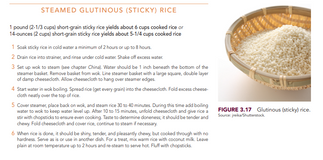


Plan of Work:

Sources:


Reflection & Summary of Results
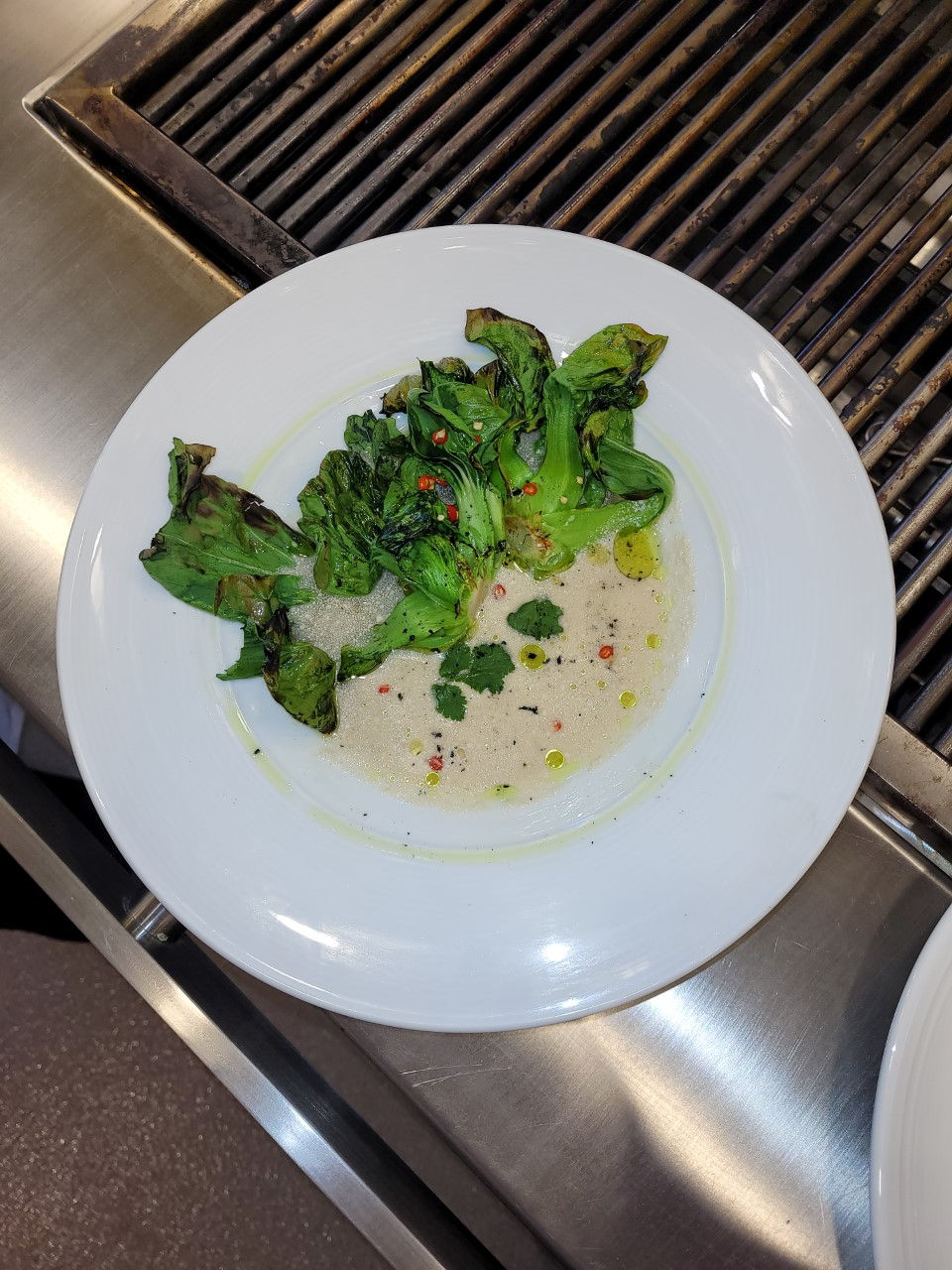
What Happened(?): I worked with Cameron this week on the Vietnamese Rice Paper Rolls, and I personally made the Roti. “Roti (also known as chapati or phulka) is a circular flatbread, made with ground whole wheat flour or “atta.” Flour is simply mixed with water, sometimes salt, and ghee or oil is added too. Roti is a staple Indian bread, made fresh in Indian homes every day, sometimes for 2 to 3 meals.” (Singh, 2022) I was unable to take photos of the dishes the rest of the class created, but I managed this one shot of the Thai Chicken Coconut Soup.
Evaluation: I was extremely comfortable making the Roti because breads and pastries are part of my regular creations. I made this a little thicker like I would Naan bread but realized after the fact that it should have been rolled out thinner, much like a Mexican tortilla would look. We did not have ghee or coconut oil in the lab. I brushed the roti with sesame oil thinking it would complement the flavor profile of our other dishes well. I chose to make smaller Roti in order to stretch the dough a little further to feed the entire class. It was so popular that it was being eaten by visiting professors faster than I could cook it. 😊








While I was working on the Roti dough before allowing it to rest, my lab partner gathered and cut all the fillings for our rice paper rolls. Once the dough was taken to the pastry lab to proof, I steamed the shrimp for our rolls. I used a simple technique that I do when cooking at home. I placed enough water in the bottom of a tall pot to allow for a steady boil but still leave enough room to keep the shrimp from touching the water. I then placed a colander on top of the pot and put the shrimp inside, covering it with a lid. Every few seconds I would move the shrimp around with a wooden spoon until they were all cooked evenly with a pink / opaque color. It is extremely easy to overcook shrimp and give it a rubbery texture. When cooked properly, shrimp truly does not need any other seasoning added to it. According to my classmates and professor, these two batches of shrimp were cooked perfectly. 😊





Conclusions: The Roti came out a little chewy. I think that was due to it not being rolled thin enough and my heat was not accurate. According to Seasoned Advice, if the pan is not hot enough the roti will become chewy as it takes longer to cook through. It has more of a steamed effect rather than pan seared / fried. Plus, if I would have rolled it our thinner it would have had the nice puff that is common in roti. We also should have placed smaller pieces of the Thai basil into our rice paper rolls. The flavor of the basil was a little overpowering. All in all, the dish composed well. Any time I can learn from my mistakes and improve my skills is a plus in my book. Check back next week to see what we cook up from India!


References
“Help with rubbery roti/chapatti.” Seasoned Advice. https://cooking.stackexchange.com/questions/75227/help-with-rubbery-roti-chapatti. 2016.
“Roti (Whole Wheat Indian Flat Bread).” Prerna Singh. https://www.simplyrecipes.com/roti-recipe-5209201. 24 February 2022.


Comments