Week 9: Plant-Forward Cooking
- kelafoy
- Oct 17, 2021
- 7 min read
Introduction
We are all about being plant forward this week. That’s not to say we will not have any meat or meat products in our dishes, but the focus will be on grains and vegetables. A large part of our world prefers not to consume meat and it is important for us to learn to respect and appreciate the needs and desires of everyone in the culinary world.
Method of Cookery: “What is plant forward cooking? To some, it means vegan or eating no animal products. To most, though, plant-forward, or plant-based cooking means that plants are the predominant part of the meal or the dish. While there may be small amounts of meat, poultry, cheese or other dairy products in a dish or meal, it’s the plants that are the stars of the dish or meal. The Mediterranean Diet clearly fits that definition. As the guidance alongside Oldways Mediterranean Diet Pyramid advises, ‘base every meal on these plant foods.’” (Oldways, 2021)
Prior Knowledge of the Dish: I don’t have much prior knowledge of plant-forward cooking. Within the last six months, I have attempted to create a healthier lifestyle for myself. In doing so, I have tried to find alternatives to red meat as my primary source of protein. I’m hoping this week’s cooking lab will show me better ways to prepare my meals without causing so much harm to my digestive system, as well as our planet.
Learning Objectives:
Identify a variety of grains
Apply various cooking methods
Identify & cook pasta
Making & cooking fresh pasta
Describe plant-forward cuisine and apply a variety of ingredients as alternatives to meat, poultry, fish, or diary
Background Information
Origin & History: “In 2009, Changing Tastes founder Arlin Wasserman created the Plant-Forward culinary strategy in response to two simple realizations: changing the portions and proportions of plant- and animal-based ingredients served is the most significant way the culinary profession and foodservice industry can address climate change, water scarcity and other environmental concerns. That same shift is also the key to profitably using more humanely raised meat and poultry and sustainable seafood in America’s restaurants.
The simple culinary instruction “Plant-Forward” embodies that shift, moving plants from the edge to the center of the plate while continuing to keep meat, fish and seafood on the menu and providing flavor. And even modest reductions in the amount of red meat American’s eat each day can make a meaningful contribution to greenhouse gas reduction goals and improve the financial performance.” (Changing Tastes, 2021)
Methods Used: “For a balanced plant-forward diet, focus on using whole grains, beans/legumes, fruits, vegetables, nuts, seeds, and healthy oils in the majority of your meals. Use small portions of dairy, meat, fish, eggs, and poultry to add nutrients and flavor. If you know that one of your meals is going to be more meat-heavy that day, aim to fill your other meals with lots of plant foods! You can still enjoy Texas barbecue while following a plant-forward diet! What about snacks and desserts? Isn’t sugar technically a plant? Aren’t potato chips plant-based? Yes, and yes, but part of the idea of the plant-forward movement is encouraging people to consume whole, “slow-metabolizing”, plant foods. That “slow-metabolizing” bit helps plant-forward diet newbies narrow their focus on the true elements of a plant-forward diet. Does adopting a plant-forward diet mean giving up all of your favorite foods? Not at all! As dietitians and chefs, we acknowledge the role that flavor, variety, and pleasure play in our eating choices. In fact, we enjoy burgers, pizza, and dessert just as much as anyone else! The key in making these foods work within a healthy lifestyle is making plants the star of the meal.” (Endicott, 2021)
Dish Variations:
“Add Plants to Your Smoothie: If you don’t enjoy vegetables on their own, add them to your smoothies. Include a cup of cauliflower, kale or spinach to your favorite smoothie or smoothie bowl for an added dose of daily greens.
Get Some Grains: Hearty whole grains make a great base for homemade bowls, curries, side dishes and stews. Try amaranth, brown rice, buckwheat, millet, or quinoa.
Go Nuts for Nuts and Seeds: Nuts and seeds are a great on-the-go snack when practicing a plant-forward lifestyle. Almonds, Brazil nuts, cashews, chia seeds, flax seeds, hemp seeds, macadamia nuts, pumpkin seeds, sunflower seeds, and walnuts are all great options. Add some variety by choosing a new nut butter flavor to slather on a slice of fresh fruit or drizzle a spoonful on your stack of superfood pancakes.
Pile On the Plants: When whipping up your favorite dishes like homemade burrito bowls, pasta, pizza and tacos, take advantage of additional toppings by piling on the plants. You can even get creative and use vegetables to create veggie noodles from carrots and zucchinis. You may even bake up a pumpkin pizza crust for your favorite flatbread recipe and serve vegetables in your favorite desserts like these Secret Spinach Brownies.
Serve Up Salads, Soups and Stir Frys: Eating more plants can be easy when you are whipping up a handcrafted sandwich, salad, soup or stir fry. These meals are especially perfect if you are looking for a way to repurpose your leftover food scraps.” (Simple Mills, 2020)
References
“Mediterranean Plant-forward Cooking.” Oldways. https://oldwayspt.org/blog/mediterranean-plant-forward-cooking. 12 July 2021.
“Plant Forward: A Culinary Concept and Strategy.” Changing Tastes. https://www.changingtastes.net/plantforward. 2021.
“Put Plants First with the “Plant-Forward” Movement.” Simple Mills. https://www.simplemills.com/Learn/Blog/Blog-Posting/April-2020/Put-Plants-First-with-the-Plant-Forward%E2%80%9D-Movement.aspx. 09 April 2020.
“What is a Plant-Forward Diet? Dietitians’ Take on This Exciting Movement.” Lexi Endicott. https://totaste.com/plant-forward-cooking/. 24 April 2021.
Dish Production Components
Recipes:


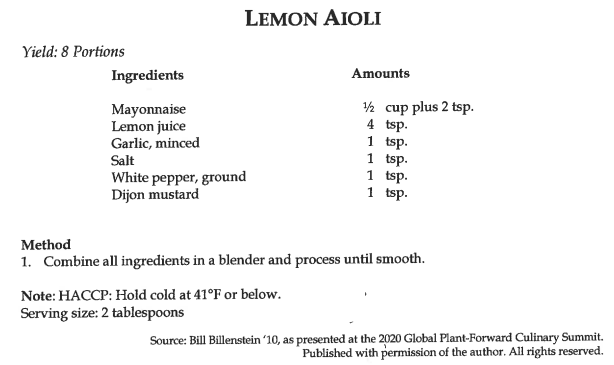

Plan of Work: We are creating six different dishes this week. My primary focus will be on the Smoky mushroom BLT.

Plate Presentation:

Sources:


Reflection & Summary of Results



What Happened(?): This week was a great success! We all chose different recipes to work on in lab. I make fresh pasta at home, so I wanted to give my classmates a chance to hone their pasta making skills. As for the cauliflower, I just created a cauliflower dish in the previous day’s lab class, and I don’t really care for the flavor of it. Needless to say, cauliflower wasn’t my preferred choice either. I dedicated my time to the Smoky Mushroom BLT. It turned out less like a BLT and more like a Crostini. I started by sautéing shitake mushrooms with olive oil in a hot skillet. The goal was to remove as much moisture as possible from the mushrooms before smoking them. By doing so, the flavor of the smoke absorbed into the mushrooms better. I sliced a baguette, brushed each slice with olive oil, salt, and pepper, and toasted in the oven for about 5 minutes. The olive oil mixture kept the bread soft while giving the edges a little crispiness. One of my classmates and I worked on making the perfect lemon aioli to build upon and create the basil mayo to be used as a spread for the BLT. I find it a little funny that it’s called a BLT when we are using mushrooms in place of bacon. I guess we should call it an MLT. 😊










Food Cost:

Evaluation: My original thought process for plate presentation looked unfinished. With a little guidance from Chef Ana, I decided it was best to dice the tomato and place it on top of the mushrooms. Using it as a slice beneath the mushrooms as originally planned left the dish looking quite plain. The pop of color with the tomatoes on top gave it a more appetizing appearance. I sliced my remaining romaine lettuce into a delicate chiffonade and combined it with the tomatoes in the middle of the platter for a quick and easy salad, accompanied by the remaining aioli.

Conclusions: We had two failed attempts at the aioli. After the first attempt, we decided to use two whole eggs as opposed to just the egg yolks. This helped thicken the mixture, but it was still runny. On our second attempt we realized that even though the recipe called for 20 ounces of olive oil, we really need to cut that in half. On our third attempt we still didn’t have the consistency we desired. I added about a half of a cup of mayonnaise to adjust the thickness and voila…we had a successful base for the basil mayo. We also need to slow down adding the oil, I think. It is supposed to be a very slow drip, and we got in a bit of a hurry due to time constraints. “When you don’t get the consistency of aioli mayonnaise sauce just right, the eggs and oil refuse to come together into a smooth mixture. This happens because either the eggs or oil were cold, the oil was added too quickly, or because the whisking was not sufficiently vigorous. First, try whisking in a teaspoon of warm water. Whisking can be done with a brisk back-and-forth motion, or in fast circles. If this doesn’t work, put another room temperature egg yolk in a clean bowl. Then slowly whisk the thin mixture into the new egg yolk, drop by drop.” (Chef, 2009)


I chose to use hickory wood chips to smoke my mushrooms, but I think I’d like to try a cherry or mesquite wood in the future. “I love using mesquite wood chips for smoking mushrooms because they provide a deep, smoky flavor. Hickory is another great wood to smoke with for strong smoked flavor. If you do a lot of smoking, I recommend trying different types of chips to find your favorites! Make sure to only use wood chips that were intended for smoking foods.” (Yule, 2020) I liked the idea of the hickory, because I figured it would have a nice earthy flavor like the mushrooms. According to Yule, alder wood, apple wood, and cherry wood also pair well with mushrooms if you’re looking for a more mild smoke flavor.


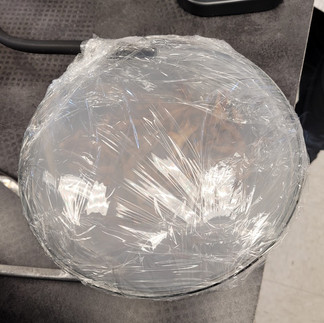


Everyone’s dishes looked beautiful and tasted great. The Cauliflower Banh Mi with the Walnut Mushroom Pate really needed some color added to it. It looked a lot like roasted cauliflower with dog food. Once my classmate added some of the radishes from our fermenting lab it gave it a better aesthetic appeal.


My other classmates created two versions of pasta, one with eggs and one without. The pasta with eggs had a better color, but the pasta without had a softer texture.





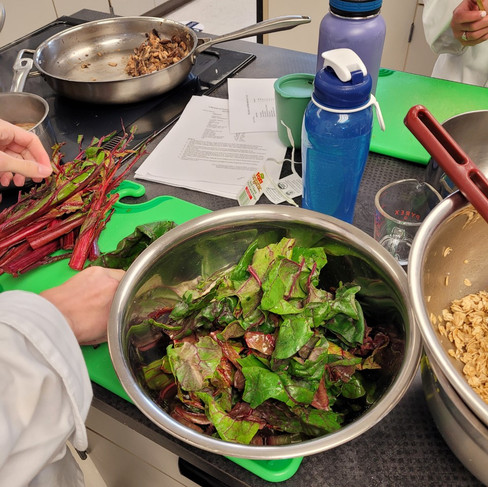
The grilled chard made for a fantastic puree. Mixed with the toasted oats, it had a nice crunch to it. I think it would make a great addition to a smoothie or salad. I would really like to try it on top of a baked sweet potato.



References
“How to Get the Right Consistency for Aioli Mayonnaise.” Ask the Chef. https://foodchannel.com/2009/how-to-get-the-right-consistency-for-aioli-mayonn. 12 May 2009.
“Smoked Portobello Mushrooms.” Summer Yule. https://summeryule.com/smoked-mushrooms-indoor-smoker-recipe/. 2020.


Comments