Week 8: Tarts
- kelafoy
- Mar 2, 2022
- 6 min read
Updated: Mar 14, 2022
Introduction
“Tart is a dessert which has a bottom crust and shallow sides. The crusts are made from pastry dough, which is usually made using flour, sugar, unsalted butter and ice-cold water. The goal is to get a thick, firm, and crumbly crust. The filling is directly added on the crust, which is later baked to make it settle down.” (Times of India, 2021)
Method of Cookery: “A tart is a baked dish consisting of a filling over a pastry base with an open top not covered with pastry. The pastry is usually shortcrust pastry; the filling may be sweet or savoury, though modern tarts are usually fruit-based, sometimes with custard. Tartlet refers to a miniature tart; an example would be egg tarts. The categories of "tart", "flan", "quiche", and "pie" overlap, with no sharp distinctions.” (Wikipedia, 2022)
Prior Knowledge of the Dish: I always thought a tart was just a miniature pie. “The main difference is that pies have an upper crust while tarts don’t. While pies look covered from all sides, tarts are open from the top and you can easily see the filling on top. Another difference lies in the base. While pies have a thin and smooth crust, tarts have a rather thick and crumbly crust which crumbles down when pieces are cut from the tart. Pies are served in the same dish they are made in, while tarts are often taken out and molded, if needed. Pies are more firm because of the crust layering at the top and bottom, while tarts are more delicate.” (Times of India, 2021)
Learning Objectives:
· Cook sugar syrups to various stages of hardness.
· Prepare whipped cream and meringues.
· Prepare crème anglaise and pastry cream variations.
· Prepare dessert sauces, ganache, and other chocolate creams.
· Prepare baked and unbaked tarts and tartlets.
· Prepare a variety of special pastries based on puff pastry, choux pastry, and meringue- type sponges.
Continued from Week 7:
o Prepare Pâte Brisée and Short Pastries.
o Prepare puff pastry dough, blitz puff pastry dough, and reversed puff pastry dough, and make simple pastries from these doughs.
o Prepare Pâte à Choux (éclair paste) and make simple pastries from it.
o Prepare strudel dough, handle commercial phyllo (strudel) dough, and make pastries using either homemade or commercial dough.
o Bake meringue and meringue-type sponges and assemble simple desserts with these meringues.
Background Information
Origin & History: “…"small pie," late 14c., from Old French tarte "flat, open-topped pastry" (13c.), possibly an alteration of torte, from Late Latin torta "round loaf of bread" (in Medieval Latin "a cake, tart"), perhaps from past participle of torquere "to twist" (from PIE root *terkw- "to twist").” (Etymonline, 2022)
“The French word tarte can be translated to mean either pie or tart, as both are mainly the same with the exception of a pie usually covering the filling in pastry, while flans and tarts leave it open. Tarts are thought to have either come from a tradition of layering food, or to be a product of Medieval pie making. Enriched dough (i.e., short crust) is thought to have been first commonly used in 1550, approximately 200 years after pies. In this period, they were viewed as high-cuisine, popular with nobility, in contrast to the view of a commoners pie. While originally savoury, with meat fillings, culinary tastes led to sweet tarts to prevail, filling tarts instead with fruit and custard. Early medieval tarts generally had meat fillings, but later ones were often based on fruit and custard. An early tart was the Italian crostata, dating to at least the mid-15th century. It has been described as a "rustic free-form version of an open fruit tart".” (Wikipedia, 2022)
“Originating in France, this dessert, which is named for the Hôtel Tatin in Lamotte-Beuvron that first served it, is traditionally made with apples, so think of it as an Apple Upside Down Tart. According to legend, the tart was invented by the unmarried French sisters who ran the hotel in the 1880s, so in France, the actual name of the tart is "Tarte des Demoiselles Tatin" (the tart of two unmarried women named Tatin.) It actually didn't become famous until a Parisian restaurant called Maxim's put it on the menu. Nowadays, though the apple tart is still the version served in France (with tons of caramel to hold it together). The tarte Tatin can be made with any fruit, but to be strictly traditional, it must be served warm with cream on the side.” (Bundel, 2018)
Methods Used: “Tarts over the centuries have split into two categories: Savory (quiches and the like) and Sweet (like the fruit tart). The French are still considered the master of the tart, both sweet and savory, with many traditional recipes stemming from the country, from the quiche to the onion tart, to the "French Apple" tart to the Tarte Tatin. Citrus tarts are still considered the most classic European versions, but as our culinary palettes have been opened to encompass fruits of all stripes and cultures, they can really be filled with anything.” (Bundel, 2018)
Dish Variations: “The Treacle Tart is nowadays a misnomer. There's not a drop of treacle in it. Instead, modern recipes call for golden syrup, which we in America would think of as an inverted sugar syrup (referred to sometimes as "light treacle.") The treacle tart wasn't always made with the stuff though, as the earliest recipes for it stretch back to the 1870s, and Golden Syrup wasn't discovered until the mid-1880s. The original tart was made with treacle, black treacle to be specific, which is like a less-bitter version of pure molasses. Black Treacle was actually used for medicine in the 1700s, long before people gave up trying to pretend sugar was good for you. The golden syrup version, which is lighter and sweeter, became popular by the 1900s.
The fruit tart evolved from the fruit pie. Pies first came into common baking circulation around the 1350s in Europe. The shortcrust, which is the basis for all tarts and one of the things that majorly differentiates it from pies, was invented somewhere in the 1550s. They became hugely popular in medieval courts during this time period, because the open-faced nature of the dessert made them brightly colored works of art to bring to the table and shared among the guests.” (Bundel, 2018)
References
“Know Your GBBS History: Tart Week.” Ani Bundel. https://tellyvisions.org/2018/07/03/know-your-gbbs-history-tart-week. 3 July 2018.
“Pie Vs Tart: What’s The Difference Between the Two.” Times of India. https://timesofindia.indiatimes.com/life-style/food-news/pie-vs-tart-whats-the-difference-between-the-two/photostory/80410389.cms. 23 January 2021.
“Tart.” Wikipedia. https://en.wikipedia.org/wiki/Tart. 2022.
“Tart (noun).” https://www.etymonline.com/word/tart. 2022.
Dish Production Components
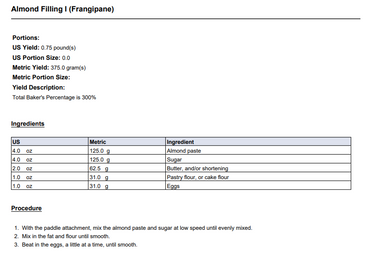
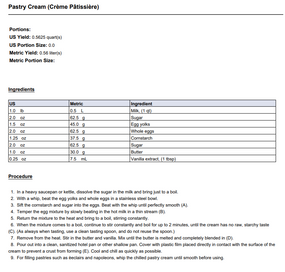
Recipes:






Plan of Work:

Plate Presentation:

Sources:


Reflection & Summary of Results
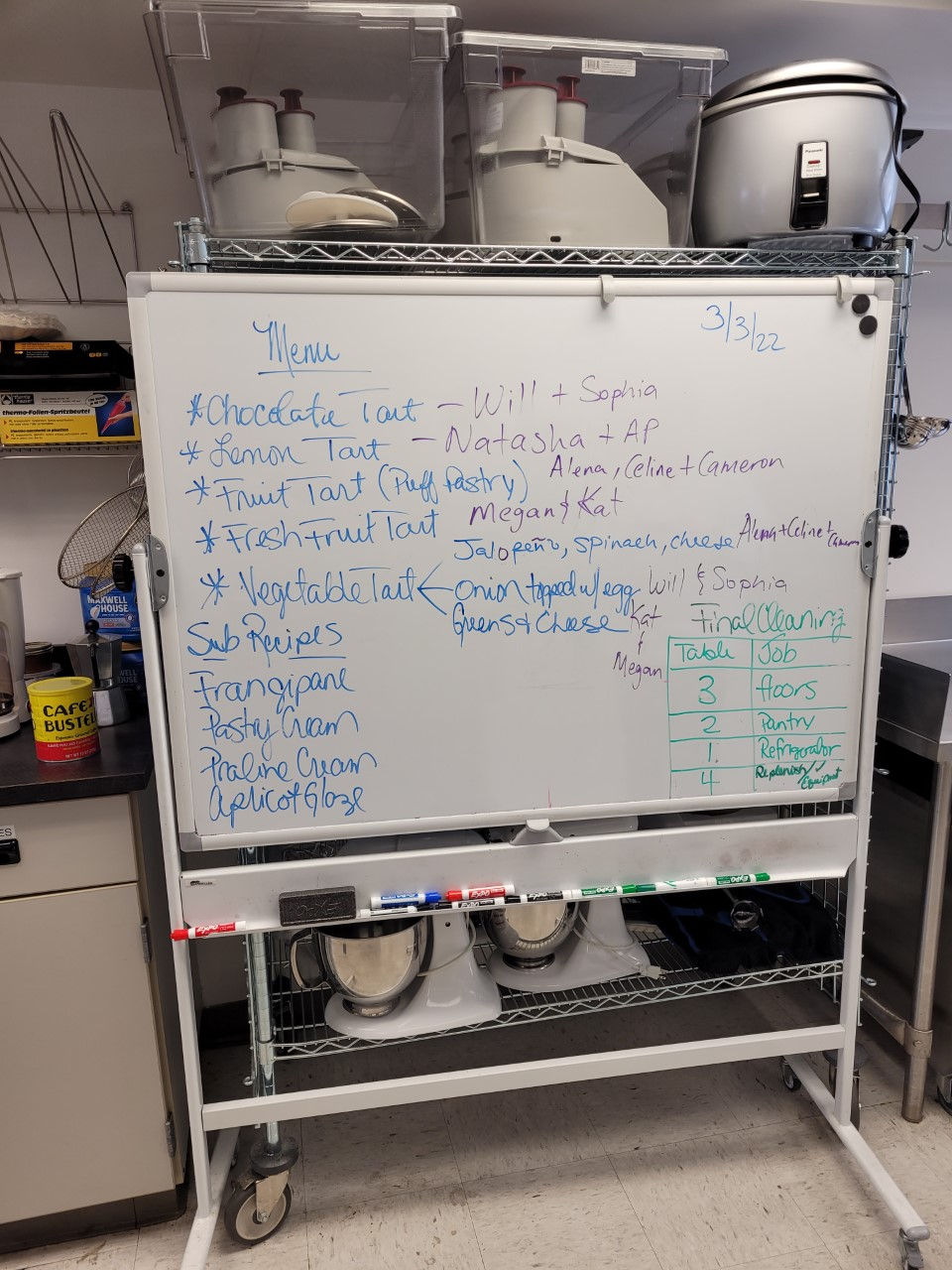
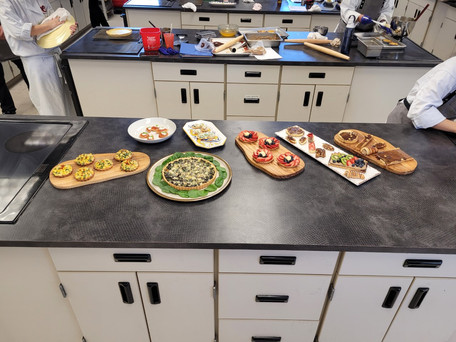
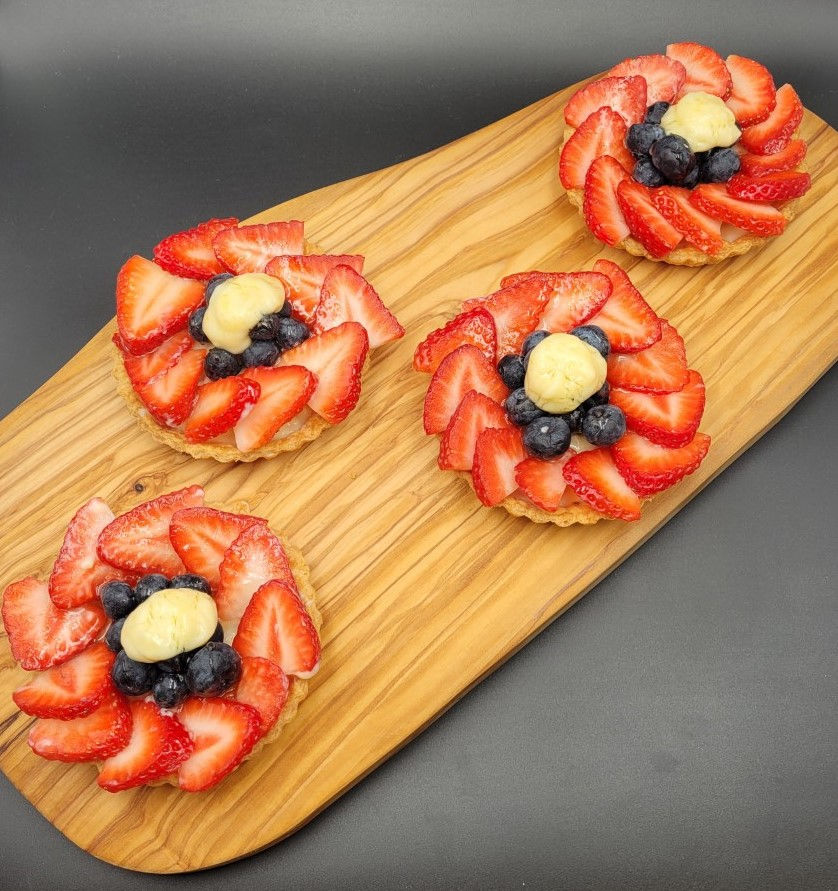
What Happened(?): My lab partner and I chose to create a greens and cheese tart using spinach, king black mushrooms, carrots, and gruyere cheese. We checked out the guava jellies from week 6 and noticed they didn’t solidify very well. I think I may not have allowed the jelly mixture to boil long enough before pouring it into the molds. “Jam and jelly not setting is usually a problem that is caused by temperature, pectin problems, or incorrect measurements. Jellies cooked at too high a temperature can destroy the pectin’s ability to gel while if it’s not boiled long enough it won’t set either.” (Kim, 2020) We chose to use the jelly as a mini tart topping with goat cheese and mint. The sweet and pungent combination was quite tasty. We also made mini fruit tarts with strawberries, blueberries, and pastry cream, then drizzled an apricot glaze over the top.
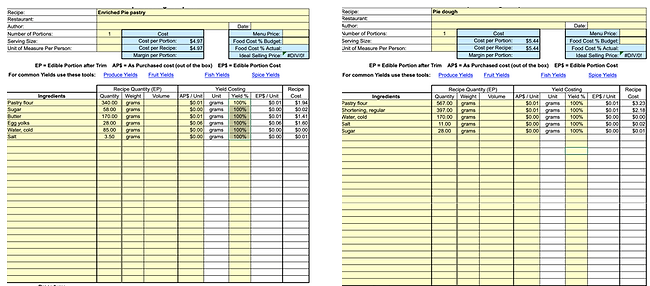
Food Cost:


Evaluation: I think all our creations this week turned out splendidly. My one correction would be for the guava jelly tarts. My partner forgot to dock the pastry dough before baking. It caused a puffing effect which in turn kept the jelly from staying on the pastry. It ran off the sides some, but the flavor profile was perfect. “To "dock" a pastry means to prick a pie crust with a fork before baking. This technique is a simple way to poke holes in the pastry dough. This allows the steam to escape so that the pie crust doesn't puff up in the oven. Usually, this technique is used when blind baking a pie crust before filling.” (Larsen, 2019)



Conclusions: The entire class created some beautiful and tasty dishes this week.


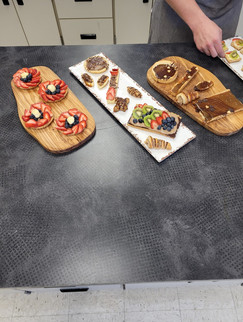







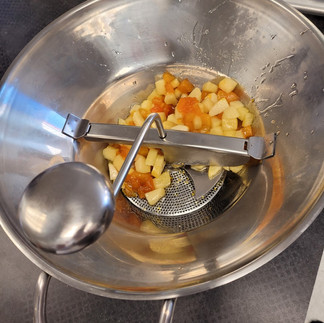
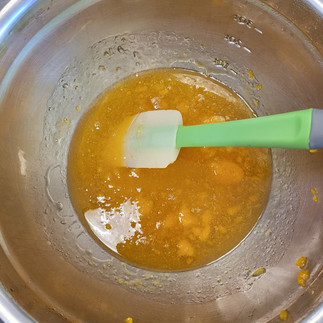
The apricot glaze was created using canned apricots (drained) and fresh apples. This was my first time using a food mill. Let me tell you…it’s much harder than it looks. The task itself isn’t difficult but be prepared to tire out your muscles from turning the crank repeatedly. I will say though, the delicate glaze that turned out as the final product was very light and added a bolder sweetness to the fresh fruit tarts.








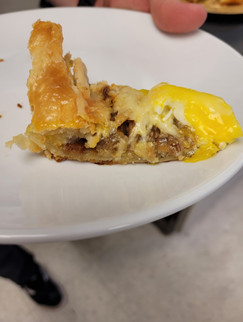
I was partial to the greens and cheese tart we created though. I added some crushed red pepper to the greens while sautéing them. Prior to baking the tart, the greens mixture had quite a spicy kick to it. Once it was combined with the eggs and cheese, it cooled the spice factor and made for a zesty flavor profile without the fiery bite. A lot of tarts you see in the baking world are extremely rich and sweet. Having something savory was a nice change of pace, and the short dough we used is extremely versatile.




References
“How to Dock a Pastry.” Linda Larsen. https://www.thespruceeats.com/definition-of-dock-a-baking-term-480616#:~:text=To%20%22dock%22%20a%20pastry%20means,a%20pie%20crust%20before%20filling. 27 November 2019.
“Why Your Jam Or Jelly Isn’t Setting And How To Fix It.” Kim. https://www.homestead-acres.com/how-to-fix-jam-or-jelly-that-didnt-set/. 28 May 2020.


Comments