Week 13: Custards, Pudding, Mousses, & Soufflés
- kelafoy
- Apr 9, 2022
- 6 min read
Updated: Apr 11, 2022
Introduction
Week 13… Oh my gosh I can’t believe we’re so close to the end of this semester! This week is custard, soufflé, and mousse. They can be sweet and / or savory, but they all have one thing in common…EGGS. Mousse can be made with alternatives like whipped cream, but a fluffy meringue folded into your dish is almost always a good choice.
Method of Cookery: “Any mousse includes a flavor base, like chocolate or citrus, thickened with a binder of gelatin or eggs and then lightened with an aerator, typically whipped cream or egg whites. The end result is rich but with an airy texture.” (Bates, 2020)
“Custard is a heat-thickened mixture of eggs, milk, and (usually) sugar that can be made on the stovetop or in the oven. Custard is notoriously finicky: Heat causes egg proteins to coagulate, forming a thick solid mass, but because they’re diluted by milk and sugar, the custard must be heated to a higher temperature than egg alone would be. Overheating, however, can cause smooth custard to turn grainy. Some recipes call for cornstarch or flour to prevent curdling, but this can also detract from the flavor of the custard. Western custards are typically made with cream or milk, but custards can be made with any mineral-rich liquid, such as bonito, chicken stock, coconut milk, or vegetable broth.” (Master Class, 2021)
Prior Knowledge of the Dish: I have a little experience with both mousse and custard. I helped make both a sweet (chocolate) and a savory (salmon) mousse for our final meal in the Food Production class during Spring Semester 2021. I’ve made quite a few custard pies in my lifetime. I still get nervous every time I cook a custard. I’m always afraid it’s going to crack or be too runny. There’s an art to custard that not everyone can master. As for the soufflé… I’m terrified of it falling. In my opinion, a soufflé is the product of a marriage between a mousse and a custard. You must whip egg whites into it to give it that airiness and fluffy rise, but the yolks are also used to make each bite creamy and give balance and stability to whatever filling you may be using, such as vegetables in a savory soufflé. This would probably fall under the baked custard category. A soufflé is much more delicate though and needs to be served immediately before the center begins to droop like my smile during finals week. 😉 I want to try making a savory soufflé this week. We have so much sweet stuff in the baking lab that I want to add a little balance to our plated creations. I plan on looking up some recipes before class, so hopefully I'll come up with something good.
Learning Objectives:
Prepare boiled puddings and range-top custards.
Prepare baked and steamed puddings.
Prepare Bavarian creams, mousses, and cold charlottes.
Prepare hot dessert soufflés.
Background Information
Origin & History: “Mousses, including those chocolate-flavoured, originated in the 1700s, with the first known recipe for chocolate mousse documented by Menon, a French writer, in 1750, in his book La science du maître d’hôtel confiseur (loosely translated as ‘The science of a master confectioner’).” (Ten Random Facts, 2022)
“Mixtures of milk and eggs thickened by heat have long been part of European cuisine, since at least Ancient Rome. Custards baked in pastry (custard tarts) were very popular in the Middle Ages and are the origin of the English word ‘custard’: the French term ‘croustade’ originally referred to the crust of a tart.” (Brews & Eats, 2017)
Methods Used: “Mousse, savoury or sweet dish with the consistency of a dense foam, composed of a puréed chief ingredient mixed with stiffly beaten egg whites, whipped cream, or both. Mousses are almost always cold dishes, and sweet mousses are sometimes served frozen. Savoury mousses are frequently prepared from poultry, foie gras, fish, or shellfish, to be eaten as a first course or light entree. They may be stabilized by the addition of gelatin.” (Rogers, 2022)
“While custard may refer to a wide variety of thickened dishes, technically the word “custard” (in French cookery it would be crème or more precisely crème moulée) refers only to an egg-thickened custard. When starch is added, the result is called pastry cream, or confectioners’ custard, made with a combination of milk or cream, egg yolks, fine sugar, flour or some other starch, and usually a flavouring such as vanilla, chocolate, or lemon.” (Brews & Eats, 2017)
Dish Variations: “Sweet mousses are typically made with whipped egg whites, whipped cream, or both, and flavored with one or more of chocolate, coffee, caramel, puréed fruits, or various herbs and spices, such as mint or vanilla. In the case of some chocolate mousses, egg yolks are often stirred into melted chocolate to give the final product a richer mouthfeel. Mousses are also typically chilled before being served, which gives them a denser texture. Additionally, mousses are often frozen into silicone molds and unmolded to give the mousse a defined shape. Sweetened mousse is served as a dessert or used as an airy cake filling. It is sometimes stabilized with gelatin. Savory mousses can be made from meat, fish, shellfish, foie gras, cheese, or vegetables. Hot mousses often get their light texture from the addition of beaten egg whites.” (Wikipedia, 2022)
“Baked custards: These include custards baked in a pie or tart shell and custards cooked in a baking dish set in a bain-marie (water bath), which can be served in the dish itself, or unmolded.
Stirred custards: These include custards made on the stovetop, such as crème Anglais, a pourable custard with the consistency of heavy cream at room temperature, and crème pâtissière, which is thickened with flour or cornstarch and holds its shape at room temperature.
Steamed custards: These include Japanese chawanmushi, a savory custard made with dashi and flavored with soy sauce and mirin that literally means “steamed cup.” The custard mixture is strained into a teacup, topped with meat and vegetables, then set in a lidded pot with about an inch of water. Korean gyeran-jjim and Chinese steamed eggs are made in a similar way. Steamed Thai custards use a base of coconut milk.” (Master Class, 2021)
References
“Chocolate Mousse.” Ten Random Facts. http://tenrandomfacts.com/chocolate-mousse/. 2022.
“How to Make Custard: 9 Ways to Prepare Custard.” Master Class. https://www.masterclass.com/articles/how-to-make-custard#what-is-custard. 28 September 2021.
“How to Make Mousse.” Anna Bates. https://www.tasteofhome.com/article/how-to-make-mousse/. 7 December 2020.
“Mousse.” Wikipedia. https://en.wikipedia.org/wiki/Mousse. 2022.
“Mousse.” Kara Rogers. https://www.britannica.com/topic/mousse. 2022.
“The History of Custard.” Brews & Eats. https://www.theocelot.co.uk/the-history-of-custard#:~:text=Mixtures%20of%20milk%20and%20eggs,the%20crust%20of%20a%20tart. 29 April 2017.
Dish Production Components
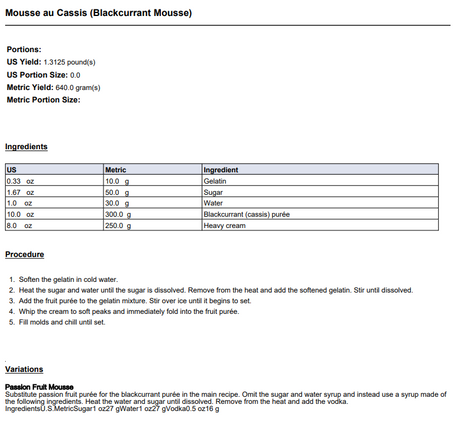
Recipes:


Plan of Work:
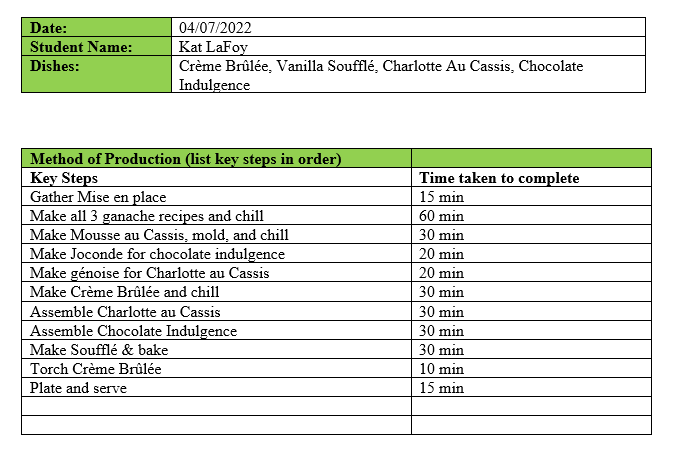
Plate Presentation:

Sources:


Reflection & Summary of Results
What Happened(?): I concentrated most of my time this week on making a mousse and a soufflé. We split into groups per usual and divided up tasks. Natahsa and I worked on a Crème Brûlée, Parfait, & Savory Soufflé. Natasha also honed her skills on making Pâte à Choux with Bavarian Cream.

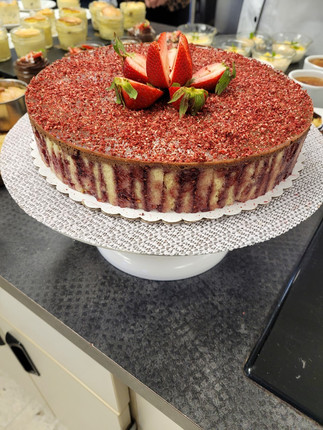
AP created a Charlotte Au Cassis that was GORGEOUS!



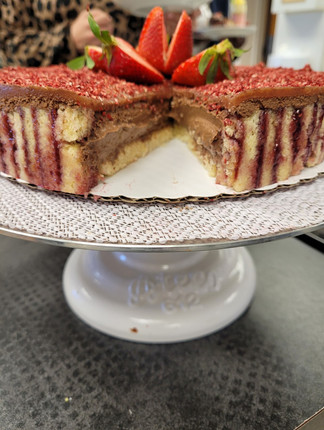
True to form, the entire class made some pretty amazing things this week.

Evaluation: I could have left my soufflé in the oven for maybe a minute longer…two minutes tops. The bottom of the dish wasn’t quite firm enough according to one taster. All around though it seemed to be enjoyed by all. I created mini soufflés using miniature (4oz) mason jars. The filling was comprised of egg yolks, zucchini, shitake mushrooms, fontina cheese, milk, flour, butter, cayenne pepper, thyme, cream of tartar, and salt. Once the mixture was combined, I folded in whipped egg whites. After covering the bottom of each jar with asiago cheese I spooned the soufflé mixture into the jars, filling them about ¾ of the way full. I topped some of the dishes with shredded asiago and some with shredded fontina.


Conclusions: My time management skills still need work. I wanted to practice the Pâte à Choux with Natasha, but the mousse for the parfait, the Crème Brûlée, and the soufflé took up all my time. I don’t think it was too shabby of me to complete 3 dishes though. 😊
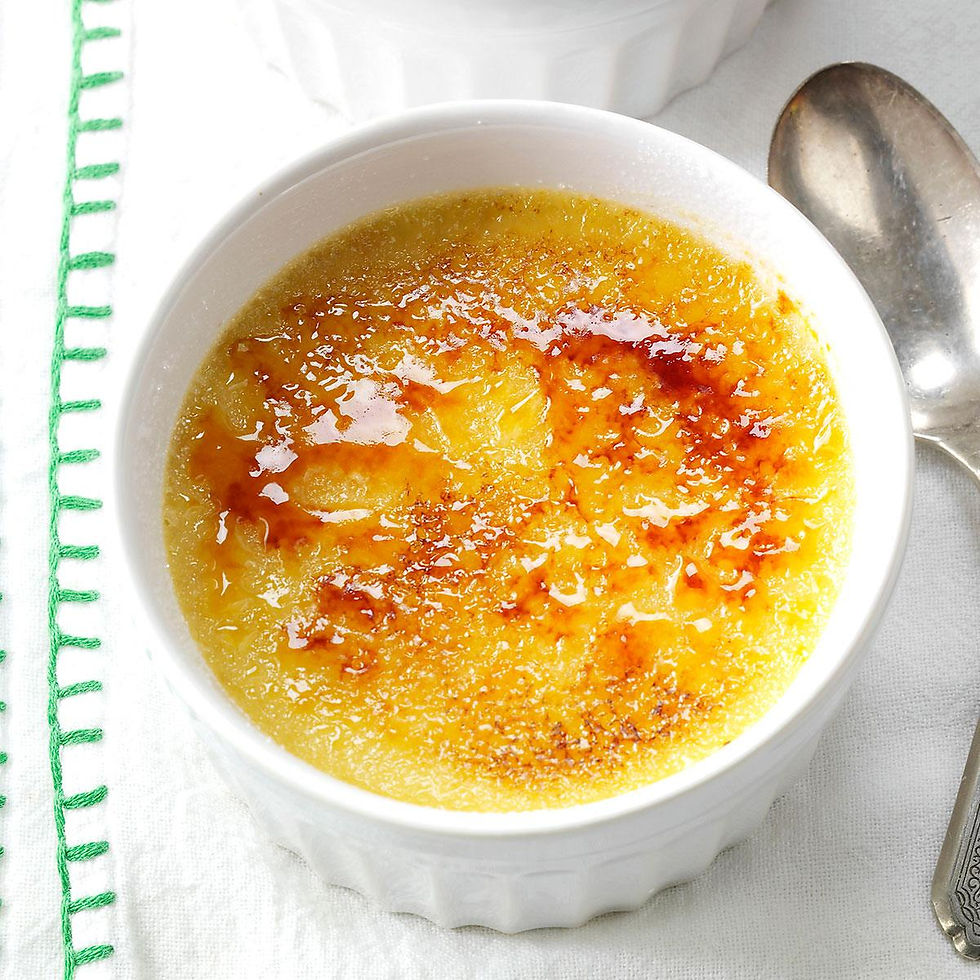
The Crème Brûlée was surprisingly easy. I have custard experience though, so I hoped I wouldn’t embarrass myself. Thankfully the texture was perfectly creamy with a nice crunch of torched sugar on top.


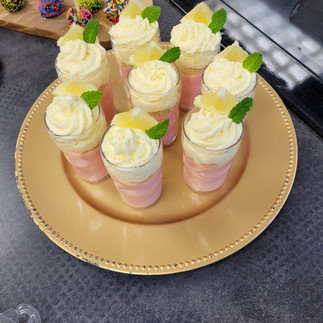
Finding the right dish for my mousse presentation was difficult at first. I originally had them in individual glass cups, and I was planning to top them with fruit before serving.



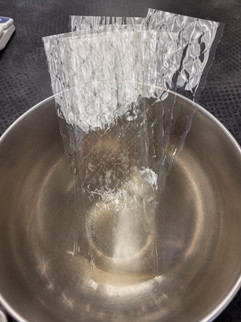



Shenee, our graduate assistant, found some nice dessert glasses that were perfect for creating a parfait…so that’s what we decided to do. We layered the bottom with guava mousse. I KNOW…I KNOW…MORE GUAVA! 😉 We have a bunch of guava puree in the lab that needs to be used. SO anyway… we layered the bottom 2/3 of the glass with guava mousse, placed a 2-inch piece of Joconde cake in the center, and topped it with Bavarian Cream. It. Was. SSSSOOOO GOOD! I wanted to top it with a kiwi slice, but the only kiwi we had was mushy and unusable. The green would have made the dish pop and the kiwi compliments the guava well. With few options to choose from, I opted for a lemon wedge and mint leaf for color.




Comments