Week 8: Broiled Cod, Glazed Carrots, Risotto, & Hollandaise Sauce
- kelafoy
- Oct 5, 2021
- 7 min read
Updated: Oct 12, 2021
Introduction
For week 8 we are making broiled cod…the recipe calls for seabass, but we’re using cod as a substitute…hollandaise sauce, glazed carrots, and risotto. My mouth is WATERING!!! Just typing this is making me hungry. I’ve never met a fish I didn’t want to eat. 😊 To say I am excited for this week is a drastic understatement. Timing is everything this week. Each component of the dish needs to be finished at the same time. If not, the sauce will break, the fish will be cold, and nobody wants a cold cod. 😉
Method of Cookery: “This week we are broiling seafood which is a dry cooking method using radiant heat and is a quick method of cooking foods. Broiling is actually a variation of Grilling. Broiling involves cooking food under a broiler (also known as a salamander) so that the heat comes from above. The heat source is using an infrared coil or sometimes a gas broiler. Grilling on the other hand involves cooking foods on a grill where the heat comes from below. You should always preheat the broiler. It is recommended that the tray used to cook the foods is greased beforehand, food items can be difficult to handle due to them being delicate. This method works very well with lean and tender cuts of meats, seafood and vegetables. In addition, to meats and seafood, vegetables can be broiled, furthermore, broiling can be used to create a crust (au Gratin) on and glaze many dishes. Broiling is rapid method of cooking and therefore helps to retain many nutrients in foods. We will be cooking sea bass this week which is a round white fish.” (Canvas, 2021)
Prior Knowledge of the Dish: I have baked, broiled, fried, grilled, smoked, and even microwaved fish. I love all types of fish. Cod is easy for me to find in the frozen food section, so it is common to find it in my household. Being the good Southern girl that I am, catfish and freshwater bass were staples in my house growing up. My Daddy makes the best fried fish I have ever tasted.
Glazed carrots are something I cook about once per month. They are easy to fix, and my family doesn’t complain about eating them.
I like risotto, but it’s a little more temperamental than rice so I don’t fix it often.
I have always been afraid to try creating a hollandaise sauce. I have heard the sauce breaks easily, so I’ve been a little scared of it in the past. Hopefully this will be a successful endeavor. 😊
Learning Objectives:
· Identify the structure and composition of fish.
· Prepare seafood for cooking - broiling
· Prepare a hollandaise sauce.
Background Information
Origin & History:
“To broil, is essentially, to expose food to very high temperature, over direct heat or in an oven, or in a pan. Broiling, which is similar to grilling, may be considered to have been known since early days, though the exact date or period of the origin of this method of cooking is not known. However, the origin of some broiled recipes can be ascertained. The first preparation of the broiler came into existence in 1930 with the breeding of Rock Cornish variety of hybrid chicken. After 30 years, the production and consumption of broiler chicken increased as the method of production of chicken made it an easily procurable meat which was more affordable than the earlier versions. The popular American technique of cooking, misleadingly called the London broil, was first mentioned in a 1931 publication.” (ifood, 2021)
“The 16 century Netherlands seen the development of the orange carrots that we have today. Prior to the 16th center the carrot range in colors from red, purple, yellow and white. The carrot originated from regions around Pakistan and Afghanistan and it still to be the center for carrot diversity. Carrots arrived in Roman Times in the eastern Mediterranean and was introduced in Italy, and Greece before moving to the Middle East. In the 14th century carrots are mentioned in the "Le Menagier Paris" has been red roots sold at markets. It should be noted that some of these Medieval varieties are still possible to attain which have names as Purple Dragon (Dragon), Comic Purple, Labyana, a Slovenian yellow variety and Flemish white. Taste can be similar from old varieties to our common everyday variety however the yellow carrots appear to have a coarser texture making them better for soups and stewing. In Archaeological finds of the 9th and 10 century Viking foodstuffs of vegetables were found in Jorvik (York), Danalaw (England) which were carrots, parsnips, turnips, celery, spinach, brassicus (cabbage).” (Constable, 2011)
“Hollandaise sauce is a rich, buttery sauce freshened with the lightest touch of lemon. Despite having “Holland” in its name, it’s generally agreed among chefs that Hollandaise sauce was first born in France and was originally known as Sauce Isigny, named after a small town in Normandy famous for its butter and cream. Although its exact birthdate is unknown, Isigny sauce is found in recipe books starting in the 19th century. Hollandaise was added to the list of legendary French chef Marie-Antoine Carême’s four distinctly French “mother sauces” as the fifth mother sauce by 20th century chef and culinary writer Georges Auguste Esoffier.” (OPHD1996, 2019)
“The story of risotto began in the 14th century B.C., when the Arabs brought rice to Sicily and Spain during their rule. Italy was the ideal place to grow short-grain rice due to the humid weather and abundant flat land. As a result, rice became a main part of Italian food culture. Valerius, a young apprentice, is believed to be the creator of risotto. In 1574, he was put in charge of making the stained-glass window that was to adorn the Cathedral Duomo Di Milano. While he worked, many of the townspeople made fun of him, giving credit to the herb saffron for the beautiful colors showcased in his artwork. As a result, Valerius became angry and devised a plan of retaliation. During his master's wedding, he added an excessive amount of saffron to the rice being served as the main dish. He hoped his action would ruin the festivities, but instead the rice received great reviews, launching risotto into culinary fame.” (Starling, ?)
Methods Used: There’s really only one way to broil fish. As for the glazed carrots, they can be done in a sauté pan, in the oven, or even on a grill. As long as you have the proper dish, you can glaze carrots using any heat source. The hollandaise sauce is generally prepared the same way every time. The variation for the sauce comes when you decide to pair it with something other than the traditional poached eggs. Risotto varies based on the spices you choose to alter the flavor. One of the great things about risotto is that it acts like a blank canvas. You can alter the flavor to pair with any dish of your choosing.
Dish Variations:
“Many types of fish are suitable for broiling and if you follow these few simple guidelines you’re sure to get delicious results. Always preheat the broiler for 7 to 10 minutes prior to adding the fish. Broil fish in the bottom half of a broiler pan that has been lined with aluminum foil and lightly oiled. Always oil both sides of a fish fillet, even if you are planning to baste with butter. When broiling whole fish, be sure the total weight doesn’t exceed 2 pounds. The skin on a whole fish should be pricked with a skewer to prevent it from curling and blistering. If broiling skin-on fillets, slash the skin a few times to prevent shrinkage and broil skin side up. The distance from the heat source is determined by the thickness of the fish, allow 2-inches distance from the heat for each 1/2-inch of thickness. Thicker fish fillets should be moved further from the heat to prevent over-cooking on the surface before the center is cooked completely. A general rule of thumb for broiling times is as follows, allow 2 minutes per side for each 1/2-inch of fish thickness. Good fish choices for broiling include: salmon, halibut, sole, swordfish, mahi and trout.” (Webb, 2014)
“Italian rice is the only kind of rice used to make risotto. Arborio, a large grain superfino rice, is the preferred choice because of its ability to absorb the liquid without overcooking. Vialone Nano, also used to prepare risotto, is a small-grain semifino rice that is very popular in Veneto. Carnaroli and Baldo, both semifino rices, are traditionally used when preparing risotto with bold flavorings and condiments.” (Starling, ?)
References
“202210 HOSP-2350-002PagesWeek 8: Week 8 Overview.” Canvas. https://auburn.instructure.com/courses/1381074/pages/week-8-week-8-overview?module_item_id=20251757. 2021.
“A Simple Guide To Broiling Fish.” Lynne Webb. https://www.mygourmetconnection.com/a-simple-guide-to-broiling-fish/. 6 March 2014.
“Broiling.” Ifood.tv. https://ifood.tv/method/broiling/about. 2021.
“Glazed Carrots.” Mistress Christiana Elizabeth Constable. http://phasianilacusmaneriumcookery.blogspot.com/2011/06/glazed-carrots.html. 16 June 2011.
“The History of Risotto.” Valerie Starling. https://oureverydaylife.com/the-history-of-risotto-12212815.html. Year unknown.
“What is Hollandaise Sauce?” OPHD1996. https://www.ophdenver.com/what-is-hollandaise-sauce/. 4 March 2019.
Dish Production Components
Recipes:


Plan of Work:

Plate Presentation:

Sources:


Reflection & Summary of Results
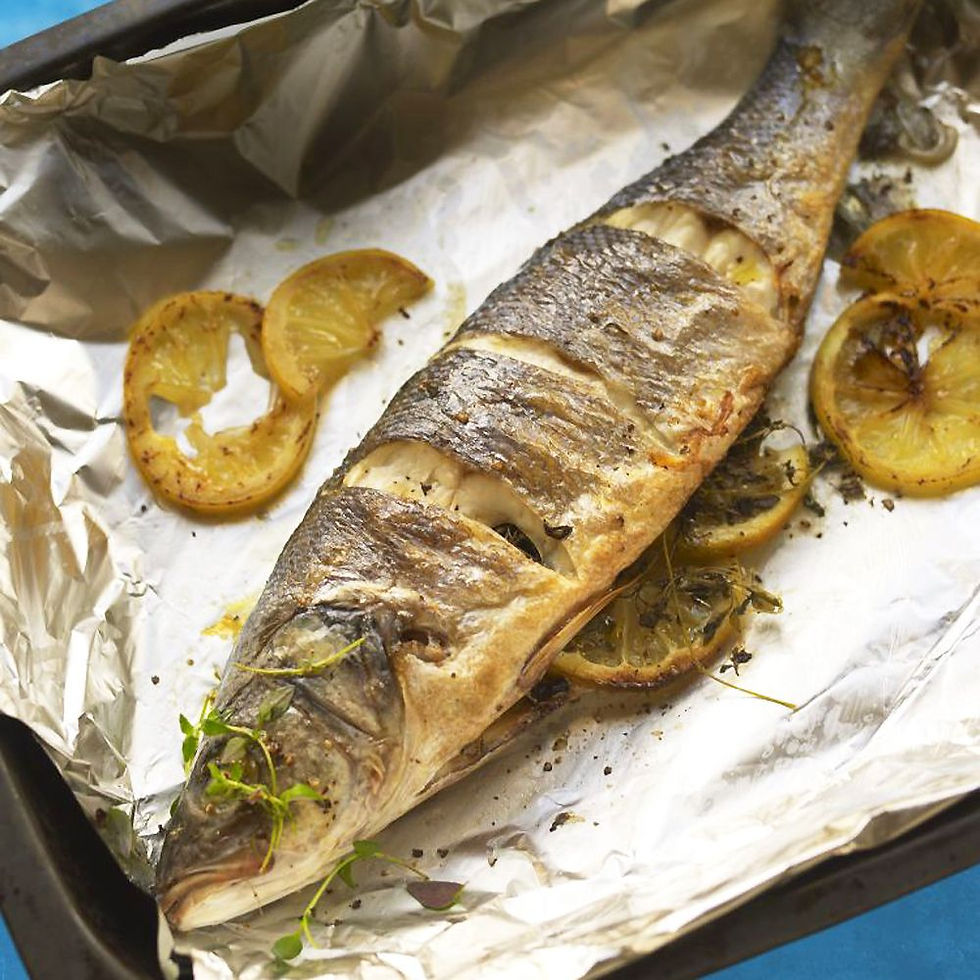
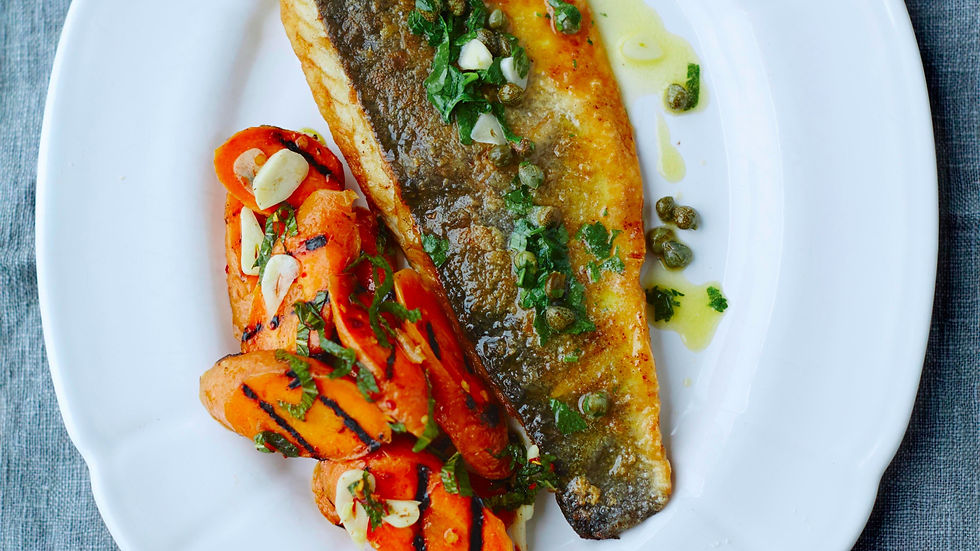
What Happened(?): Once again, personal issues kept me out of lab this week. I have reached out to my fellow classmates to find out what happened in lab but have yet to get a response. I was going to attempt to create the dish myself at home. Unfortunately, my local stores don’t carry sea bass, they are currently sold out of lemon juice, and I can’t find risotto anywhere locally. My lab partner was unable to attend this week's lab as well, but he was able to get pictures from a classmate. I am including them below.





Food Cost: I couldn't find a price on our purchased ingredients list for the maple syrup or the chicken stock. It is likely the stock used was made in lab with leftover bones and vegetables.
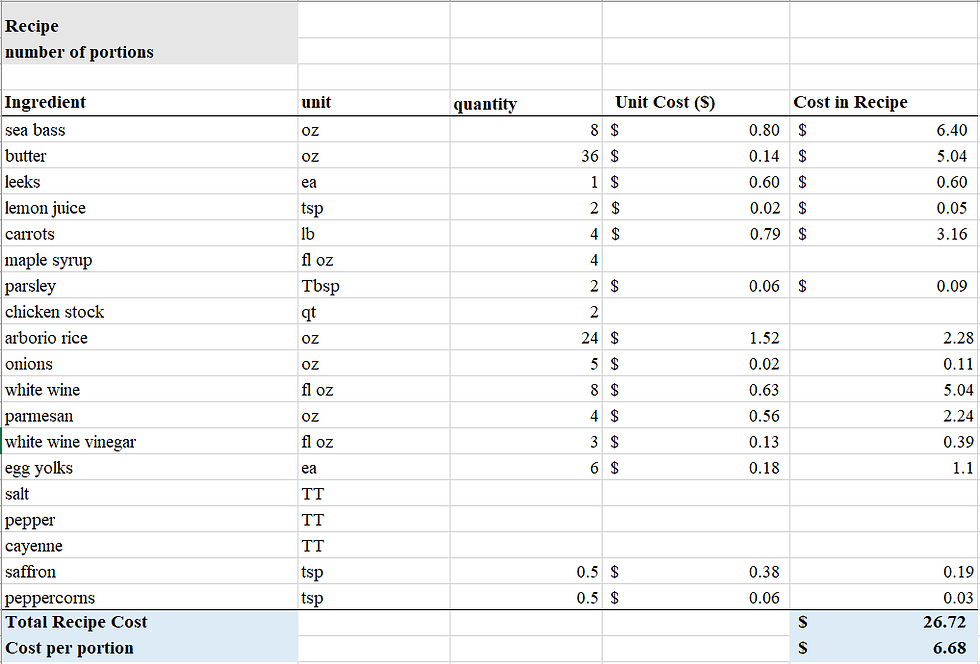
Evaluation: I can’t really evaluate something I haven’t cooked or tasted. I am going to attempt the dish this weekend, if I can find what I need in Auburn. Once I do, I will come back and edit this posting. I must say though, the finished product looks quite delicious.


Conclusions: Don’t miss lab!!!!! It’s difficult depending on others. Especially in a hands-on program like culinary science, I need to be there to do the work and experiment with the various foods and techniques.


Comments