Week 13: Sous Vide Steak, Triple Cooked Chips, Beer Battered Onion Rings, & Stir-fry Asparagus
- kelafoy
- Nov 9, 2021
- 8 min read
Updated: Nov 14, 2021
Introduction
You can’t go wrong with a spectacular steak. Most of my class is excited about the onion rings as well, but…well…you know my hang-up with that by now. 😉 “This week we are continuing our combination cooking methods (dry and moist). We will be cooking some beef using a water bath and precision circulation - Sous Vide. Sous Vide is French for “under vacuum” and describes the cooking of raw ingredients in heat-stable, vacuumed pouches at precise temperatures.” (Canvas, 2020)
Method of Cookery: “Sous vide cooking has been used in the world’s top restaurants since the 1970s, was extensively studied by food scientists in the 1990s, and started showing up in home kitchens in the late-2000s. Precise temperature control has several benefits:
1. It allows almost-perfect reproducibility; it gives greater control over doneness than traditional cooking methods.
2. The food can be pasteurized and made safe at lower temperatures — so it doesn’t have to be cooked well-done to be safe.
3. Tough cuts of meat can be made tender and still be a medium or a medium-rare 'doneness'.
4. Vacuum-sealing allows for efficient heat transfer from the water (or steam) to the food, it increases shelf-life by eliminating the risk of re-contamination during storage, it helps inhibit off-flavors from oxidation, and it prevents evaporative losses of flavor volatiles and moisture during cooking.” (Canvas, 2020)
Prior Knowledge of the Dish: When I was in the Food Production class during Spring semester 2021, we created Sous Vide duck for our final meal. It was my first and only experience with Sous Vide. The meat was so tender and juicy, it just fell off the bones. We briefly fried the meat before serving to give it some crunch to add texture. I have double fried potatoes / fries before, but never by parboiling them first. This will be a new experience for me. Onion rings are pretty straight forward. If you have ever worked in a restaurant, you generally know how to make onion rings from scratch. Even establishments that use premade, frozen onion rings have had to improvise when short on inventory for a busy weekend. As for the asparagus…I usually only eat roasted asparagus. I have never had it fixed any other way that it doesn’t turn out mushy. Hopefully this week’s lab will change my mind like it did with the lamb last week. Time will tell. 😊
Learning Objectives:
· Prepare a meat product for cooking using a combination cooking method: Sous Vide
· Understand the different cuts of beef
Background Information
Origin & History: “Most sources credit two French chefs — Bruno Goussault and George Pralus — with independently developing sous vide, then working together to refine it. When Goussault, who's known as the "father of sous vide," developed the technique in 1971, he was looking for a way to improve the tenderness of roast beef. Pralus, who's also been called the "father of sous vide," discovered in 1974 that wrapping foie gras in plastic prevented the fatty liver from shrinking as it cooked. A few years later, the two chefs teamed up with Cryovac, a plastic manufacturer, to fine-tune the method. By 1991, when Goussault opened the Culinary Research and Education Academy in Paris, as a training center that promised to take the technique "from boil-in-bag to haute cuisine," sous vide was on its way.” (Popovici, 2018)
“Triple-cooked chips are a type of chips or deep-fried potato that were developed by English chef Heston Blumenthal. Blumenthal began work upon the recipe in 1993, and eventually developed the three-stage cooking process for their preparation. The preparation process involves the chips first being simmered and then cooled and drained of water using a sous-vide technique or by freezing, deep fried at 130 °C (266 °F) and again cooled, and finally deep fried again at 180 °C (356 °F). The result is what Blumenthal calls ‘chips with a glass-like crust and a soft, fluffy centre’.” (Wikipedia, 2021)
Methods Used: “Steak is one of the most popular foods for first-time sous vide enthusiasts to cook, and with good reason. Cooking steak the traditional way, in a cast iron skillet or on the grill, leaves lots of room for error, and an over- or undercooked steak is a big mistake to make when there's a prime-grade dry-aged ribeye on the line. Sous vide cooking takes all of the guesswork out of the process, delivering steaks that are cooked to precisely the temperature you like each and every time. Not only that, because sous vide is such a gentle cooking process, you'll be able to achieve steaks that are more evenly cooked from edge to edge than what you'll find in even the best steakhouses in the world.” (López-Alt, 2021)
Dish Variations: “By 1991, when Goussault opened the Culinary Research and Education Academy in Paris, as a training center that promised to take the technique "from boil-in-bag to haute cuisine," sous vide was on its way. Goussault leads sous vide seminars for the culinary school, which trains chefs throughout the world, and is chief scientist at Cuisine Solutions, a large-scale sous vide supplier based in Virginia. I recently asked him whether he'd heard of my step-grandfather's work. He said he hadn't, but that he was familiar with the Nacka System, which was developed in Swedish hospitals in the 1960s, according to a Canadian research book on the principles of sous vide. In this system — which Mac tested during his project — items were fully cooked, then vacuum-sealed, refrigerated and boiled before serving. But those who sampled the results said the food had a "tired" taste, likely as a result of overcooking.” (Popovici, 2018)
“Here's a rough breakdown of how steaks feel at different degrees of doneness.
Rare sous vide steak (120°F/49°C): Your meat is still nearly raw. Muscle proteins have not started to contract much and will have a slippery, wet texture. Chewier cuts, like hanger or flap meat, will be particularly tough at this stage. Fat has not yet started to render, so fattier cuts will have a waxy texture. I recommend cooking only very lean, tender cuts, like tenderloin, to rare.
Medium-rare (129°F/54°C): Your steak is still nice and red, but muscle proteins have begun to tighten and firm up. You lose a bit of juice due to this tightening, but what you lose in juice, you gain in tenderness. Medium-rare steaks have a cleaner bite to them: Instead of muscle fibrils mushing and slipping past each other, as they do with very rare steaks, they cut more easily between your teeth. I recommend medium-rare for all types of steaks, though steaks particularly high in fat benefit from being taken closer to medium.
Medium sous vide steak (135°F/57°C): Your steak is a rosy pink throughout and has lost about four times more juices than a rare steak. With a well-marbled piece of beef, however, the rendering, softened fat should more than make up for this extra juice loss. Coarsely textured cuts, like hanger, skirt, and flap meat, also become firm and juicy at this stage. I recommend cooking very fatty or coarse pieces of beef to the cooler side of medium.
Medium-well sous vide steak (145°F/63°C): Your steak is well on its way to dryness. At this point, you've lost nearly six times as much juice as a rare steak, and the meat has a distinctly cottony, grainy texture that no amount of excess lubricating fat can disguise. If you must have your meat cooked medium-well, I suggest using very rich cuts, like short rib, skirt steak, or hanger, which suffer less than finely textured cuts, like ribeye, strip, or tenderloin.
Well-done sous vide steak (156°F/69°C+): I get it. Some people like their meat well-done. However, there is no real reason to use a sous vide precision technique if you like your steak well-done. Just grill or pan-roast until it's as done as you like it.” (López-Alt, 2021)
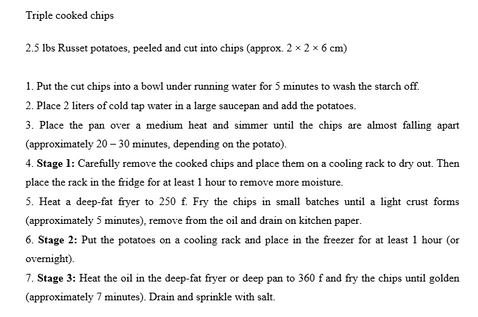
For the triple-cooked fries…
“Variations include using a refrigerator to cool the chips in between cooking times and the use of different temperatures, such as 140 °C (284 °F) for the first cooking and 200 °C (392 °F) for the second. Triple Cooked Chips cooked in duck fat is another variation. Various cultivars of potato are used, such as Sebago, Rooster and Maris Piper.” (Wikipedia, 2021)
References
“Sous Vide Steak Guide | The Food Lab.” J. Kenji López-Alt. https://www.seriouseats.com/food-lab-complete-guide-to-sous-vide-steak. 27 April 2021.
“The Colonel in The Kitchen: A Surprising History Of Sous Vide.” Alice Popovici. https://www.npr.org/sections/thesalt/2018/05/09/608308624/the-colonel-in-the-kitchen-a-surprising-history-of-sous-vide. 9 May 2018.
“Triple-cooked chips.” Wikipedia. https://en.wikipedia.org/wiki/Triple-cooked_chips. 2021.
“Week 13: Week 13 Overview.” Canvas. https://auburn.instructure.com/courses/1381074/pages/week-13-week-13-overview?module_item_id=20251774. 2020.
Dish Production Components
Recipes:





Plan of Work:

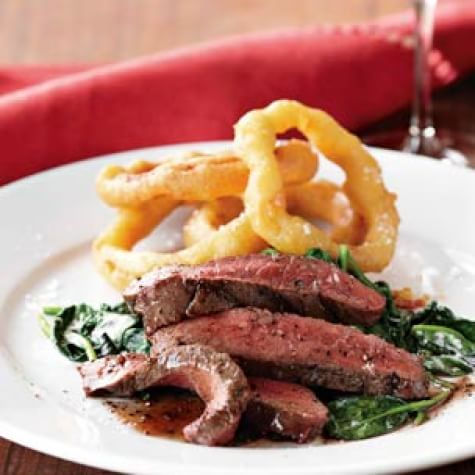
Plate Presentation:

Sources:


Reflection & Summary of Results
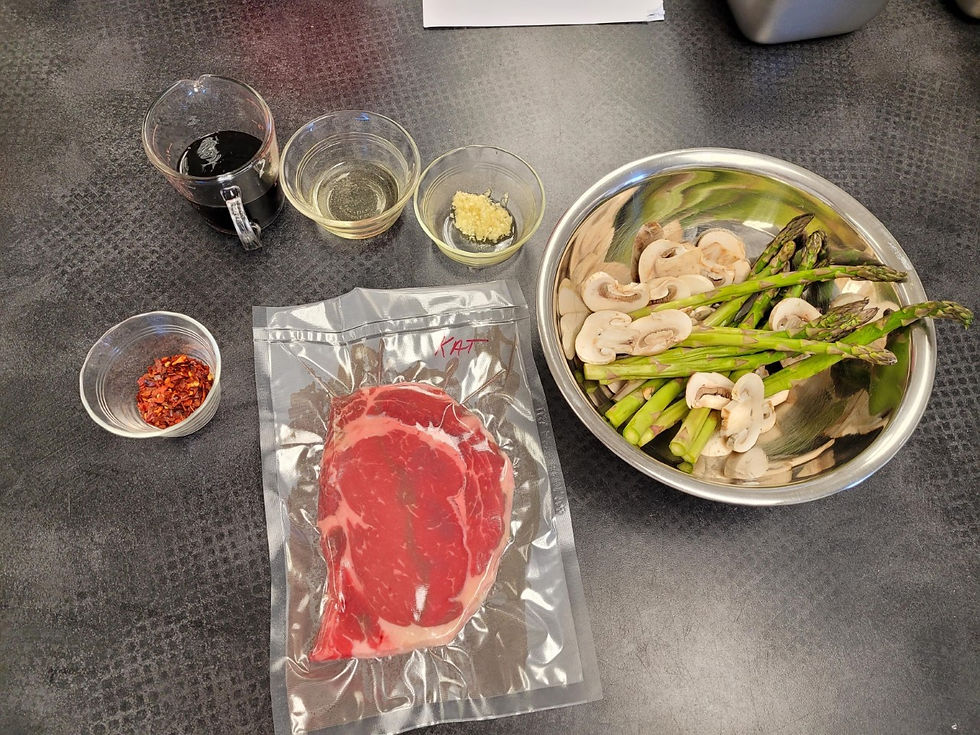
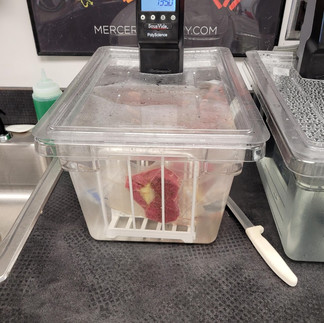
What Happened(?): We attempted sous vide steak this week. It took a lot less time in the water bath than I anticipated. When creating the duck last Spring, it stayed in the water bath for about 24 hours. I guess since it was poultry it took longer to reach a safe internal temperature. “While there is a wide temperature range you can use, sous vide chicken is almost always cooked until it is pasteurized. When deciding whether or not to pasteurize your food, you need to worry about parasites and bacteria. Different types of meat have different parasites, and the bacteria also behaves differently depending on the density of the food. Chicken and other poultry should always be pasteurized because the bacteria can penetrate into the inside of the meat. Because the bacteria penetrates to the inside, the entire piece of meat needs to be heated through and pasteurized. This is why chicken tartar or medium-rare chicken is never served.” (Logsdon, 2021)




Food Cost:

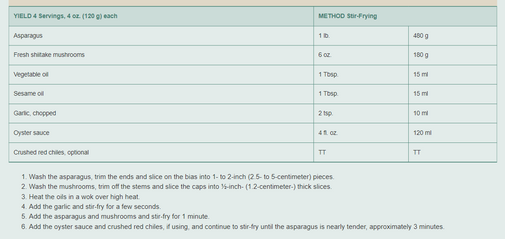
Evaluation: The asparagus stir-fry did not match the flavor profile of the rest of the dish. I think the curriculum required us to cover that particular culinary area, but we didn’t have enough time left in the semester to complete it in a separate lab. It was delicious but did not pair well with the steak and potatoes. Had we used something other than oyster sauce, it would have matched the dish well.

The potatoes were very time consuming. We did not have the proper amount of time to follow the steps exactly. If we had, I think they would have turned out perfectly. As it was, they were a little soggy.

The class decided to try two different batter flavors. One batter included a light American beer (Coors) and the other a dark German beer (Guinness). “Beer makes such a great base for batter because it simultaneously adds three ingredients—carbon dioxide, foaming agents and alcohol—each of which brings to bear different aspects of physics and chemistry to make the crust light and crisp. Beer is saturated with CO2. Unlike most solids, like salt and sugar, which dissolve better in hot liquids than they do in cold, gases dissolve more readily at low temperatures. Put beer into a batter mix, and when the batter hits the hot oil, the solubility of the CO2 plummets, and bubbles froth up, expanding the batter mix and lending it a lacy, crisp texture.” (Gibbs / Myhrvold, 2011) The American beer created an almost yellow effect while the German beer gave a darker hue. The darker beer created a thicker batter consistency as well.



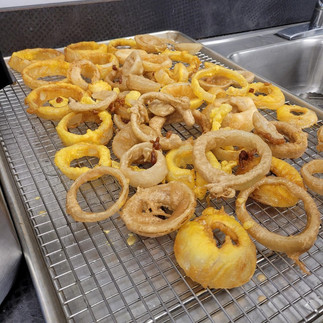
Conclusions: The steak was delicious! The sous vide method made the meat very tender. It almost melted in your mouth like butter would. I chose to add crushed red pepper to mine, which gave it a fiery quality that complimented the savory meat well. The consensus of the class was that the darker onion rings tasted better. As for the fries…the flavor was great. The smaller cuts dried faster, therefore they weren’t as crumbly as the larger cut fries.


References
“Beer Batter Is Better.” W. Wayt Gibbs, Nathan Myhrvold. https://www.scientificamerican.com/article/beer-batter-is-better/. 1 February 2011.
“Sous Vide Cooking Times by Thickness and Pasteurization Charts.” Jason Logsdon. https://www.amazingfoodmadeeasy.com/info/modernist-cooking-blog/more/sous-vide-cooking-times-by-thickness. 2021.


Comments