Week 6: Pear Tart, Key Lime Pie, Strawberry Chiffon Pie, Apricot Jellies
- kelafoy
- Feb 14, 2022
- 8 min read
Updated: Feb 21, 2022
Introduction
This week is pies & fruit desserts. This could mean fruit pies, fruit compotes, jellied fruit pies…you name it. We’re going to try out a couple different types of pie dough / crust and play around with various fillings. Let’s learn a little about what we’re doing before we get started.
Method of Cookery: “I am a cake person, obviously, but I love love LOVE pies and tarts too! More and more the older I get. I have always made just two styles of crusts, graham cracker or American Flaky… I discovered the three Pate crusts. Pate Brisee, Pate Sucree and Pate Sablee!
· Flaky – cut the fat (butter and shortening) into the crust, to create a beautifully crunchy and flaky crust. Better baked with a filling over blind if you can
· Pate Brisee – no sugar, perfect for savory dishes, very flaky, but softer than the American style. Also better baked with a filling, than blind baking
· Pate Sucree – sweet, full of sugar, butter and cream, softer than the others, similar to a thin crunchy baked scone (best I can describe), beautiful blind bake
· Pate Sablee – A cross between a Sugree and a shortbread cookie, a great crunch, sweet and a beautiful blind bake.” (Ashlee Marie, 2015)
“The word compote is French for “mixture.”
A compote is a dessert that originated in 17th century France. It is made up of whole or pieces of fruit (a mixture) in sugar syrup. The whole fruits are cooked in water with added sugar and spices. The seasonings which may be included in the syrup are vanilla, lemon peel, orange peel, cinnamon sticks, cinnamon powder, cloves, ground almonds, grated coconut, candied fruit or raisins. Fruit compote may be served either warm or cold.
The French belief that fruit cooked in sugar syrup balanced the effects of humidity on the body led to the invention of compotes. It was initially served in the afternoon as a snack with sour cream and biscuits. It was during the Renaissance that it was served chilled at the end of dinner.” (South Florida Reporter, 2018)
Prior Knowledge of the Dish: Pies are my jam!!! I make a buttermilk pie that will knock your socks off. This past Fall our oldest child graduated from college. Not knowing if this was the last holiday we’d get together, I told him to pick whatever dessert he wanted, and I’d make it just for him. He chose homemade apple pie.

My fiancé’s favorite is chocolate pie, and the youngest likes cookies and cream pie. If you can’t tell, I have a wide array of experience in the pie department. Our middle daughter, like myself, likes just about anything. We’re easy to please. Although I do love a good lemon meringue pie at Thanksgiving. 😉
Learning Objectives:
· Prepare pie doughs.
· Roll pie doughs, assemble and bake single-crust pies, double crust pies, lattice topped pies, and unbaked pies.
· Prepare a variety of pie fillings, including fruit, soft or custard-type, cream, and chiffon fillings.
· Judge the quality of pies.
· Work with fresh fruits, from selection to preparation, for use in desserts and calculation of fresh fruit yields.
· Prepare various fruit desserts, including poached fruits and fruit compotes.
Background Information
Origin & History: Pie has been around for my entire life as well as that of my parents and grandparents. “But the pies we know today are a fairly recent addition to a history that goes back as long as mankind has had dough to bake into a crust and stuff to put inside it. In medieval England, they were called pyes, and instead of being predominantly sweet, they were most often filled with meat — beef, lamb, wild duck, magpie pigeon — spiced with pepper, currants, or dates. Historians trace pie’s initial origins to the Greeks, who are thought to be the originators of the pastry shell, which they made by combining water and flour. The wealthy Romans used many different kinds of meats — even mussels and other types of seafood — in their pies. Meat pies were also often part of Roman dessert courses, or secundae mensea.” (Mayer, 2008)
“The purpose of a pastry shell was mainly to serve as a baking dish, storage container, and serving vessel, and these are often too hard to actually eat. For hundreds of years, it was the only form of baking container used, meaning everything was a pie.” (What’s Cooking, 2019)
“Compote conformed to the medieval belief that fruit cooked in sugar syrup balanced the effects of humidity on the body. The name is derived from the Latin word compositus, meaning mixture. In late medieval England it was served at the beginning of the last course of a feast (or sometimes the second out of three courses), often accompanied by a creamy potage.[2][3][4] During the Renaissance, it was served chilled at the end of dinner. Because it was easy to prepare, made from inexpensive ingredients and contained no dairy products, compote became a staple of Jewish households throughout Europe.[5] In modern French, the term refers to usually unsweetened fruit purée without fruit chunks, such as applesauce. Today, it is widespread and often served in lieu of vegetables in Northern European countries such as Germany, The Netherlands, Belgium; in Scandinavia; and in France.” (Wikipedia, 2022)
Methods Used:
“Pies come in many varieties, both sweet and savory.
1. Open-face pies only have a bottom crust and are typically sweet. Open-face pies are known as tarts in England and France.
2. Double-crust pies have a bottom crust and a top crust.
3. Lattice pies have a bottom crust and decorative top crust made with strips of dough.
4. Deep-dish pies do not have a bottom crust—just a single crust on the top. They’re often called pot pies when made with savory fillings.
5. Hand pies are pastry pockets baked on a baking sheet rather than in a pie dish.
6. No-bake pies are made with pressed crumb crusts of pulverized graham crackers or cookies bound together with melted butter. They’re typically filled with refrigerated or frozen creams and custards.
There is an almost infinite number of pie fillings and styles, but some of the most popular pie fillings include:
1. Fruit: Fruit pies such as apple pie, peach pie, and mixed berry pie are best served either hot with a scoop of vanilla ice cream or cold for breakfast the next morning. Try making fruit pie with a flaky phyllo dough crust.
2. Nuts: Pecan pie sweetened with brown sugar is a North American favorite inspired by English walnut pie.
3. Custard: Custard pies are filled with an egg custard that bakes with the pie crust. Classic pumpkin pie and sweet potato pie can both be made as custard pies.
4. Cream: Cream pies include peanut butter pie, coconut cream pie, banana cream pie, and chocolate cream pie, as well as citrus curd pies like key lime pie and lemon meringue pie.” (Master Class, 2020)
Dish Variations: “The first pies, called “coffins” or “coffyns” (the word actually meant a basket or box) were savory meat pies with the crusts or pastry being tall, straight-sided with sealed-on floors and lids. Open-crust pastry (not tops or lids) were known as “traps.” These pies held assorted meats and sauce components and were baked more like a modern casserole with no pan (the crust itself was the pan, its pastry tough and inedible). These crusts were often made several inches thick to withstand many hours of baking.” (What’s Cooking, 2019)
References
“A Brief History of Pie.” Laura Mayer. https://time.com/3958057/history-of-pie/#:~:text=Historians%20trace%20pie's%20initial%20origins,of%20seafood%20%E2%80%94%20in%20their%20pies. 26 November 2008.
“Compote.” Wikipedia. https://en.wikipedia.org/wiki/Compote#:~:text=2%20Variations-,History,Latin%20word%20compositus%2C%20meaning%20mixture.&text=In%20modern%20French%2C%20the%20term,fruit%20chunks%2C%20such%20as%20applesauce. 2022.
“FOUR AMAZING PIE CRUSTS – FLAKY, BRISEE, SUCREE, SABLEE.” Ashlee Marie. https://ashleemarie.com/four-amazing-pie-crusts/. 2015.
“Fruit Compote Originated in 17th Century France.” South Florida Reporter. https://southfloridareporter.com/fruit-compote-originated-17th-century-france/. 28 February 2018.
“History of Pies.” What’s Cooking America. https://whatscookingamerica.net/history/piehistory.htm. 2019.
“Types of Pie: A Guide to 10 Different Pies.” Master Class Staff. https://www.masterclass.com/articles/types-of-pie#what-is-pie. 8 November 2020.
Dish Production Components
Recipes:


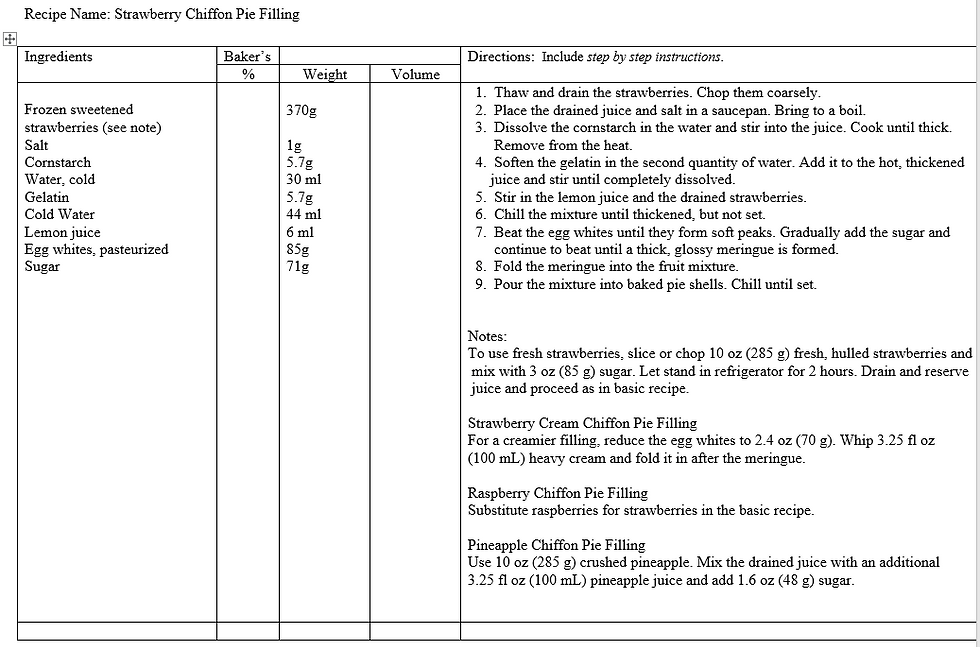


Plan of Work:

Plate Presentation:
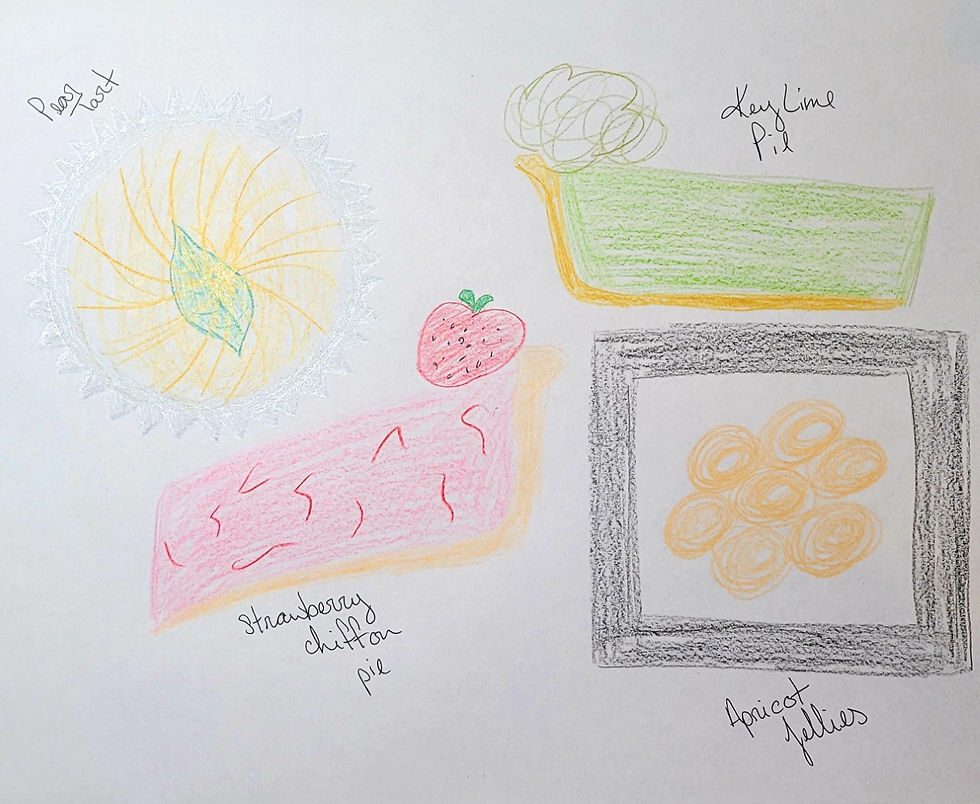
Sources:


Reflection & Summary of Results
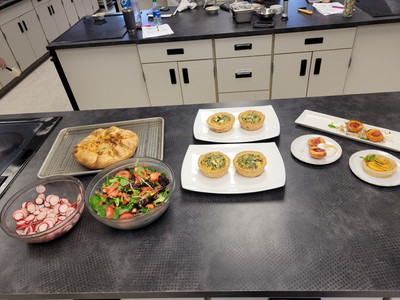
What Happened(?): We began the morning by watching Chef demo the difference between a mealy dough such as the enriched pie dough recipe we used, and a flaky dough like the regular pie dough recipe we used.





After the demo, we started measuring out all our ingredients and gathering all the mise en place we would need for the entire lab. My lab partner and I decided to make Guava Jellies and Spinach & Mushroom Quiche using the flaky pie dough method.

I also pickled some radishes with apple cider vinegar, fresh cilantro, kosher salt, white pepper, and ground ginger. They were a nice compliment to the salad chef created.

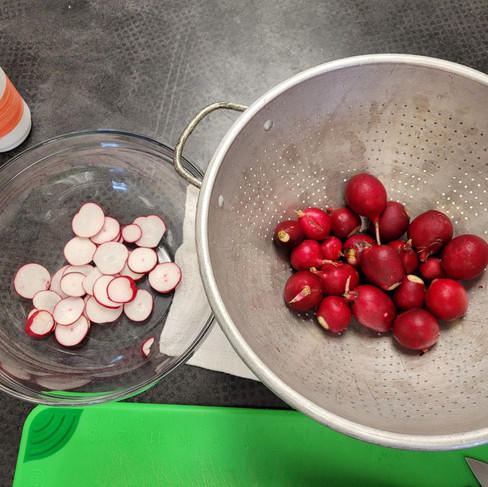

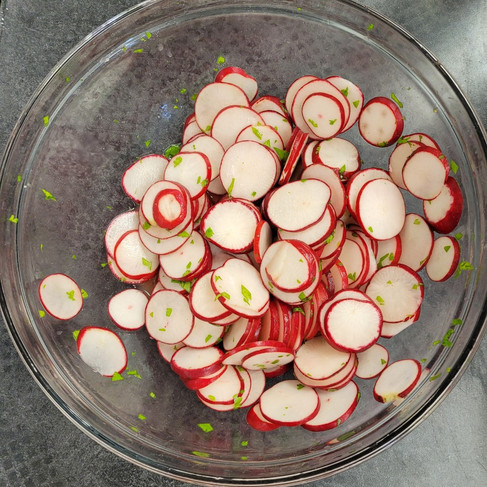
The rest of the class worked on various projects such as custard tarts, Spinach/Bacon/Onion Quiche, Cardamom Ice Cream, Key Lime Pie, & Strawberry Chiffon Pie. It all tasted divine!


Food Cost:


Evaluation: When working on the Guava Jellies, I mistakenly put the pectin in a little early. It didn’t seem to affect the end result though. I made sure to let my mixture reach the exact temperature of 225̊ F using a candy thermometer, stirring constantly so as not to scald the viscous concoction. After completing the task on the stove, I poured the hot guava into small silicone molds to chill. Once they were set in the refrigerator to cool, they had to stay there for 24 hours before removing them from the mold and rolling them in sugar. Since I couldn’t be in lab the next day, I am unsure of how they came out in the end. I am hoping they will stay preserved until I can work with them again next week. I want to try rolling them in coconut sugar to compliment the flavor of the guava.


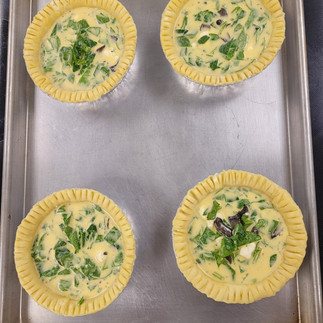
While I worked on the Guava Jellies my lab partner began mixing the ingredients for our pie crust. We decided to replace the shortening in our recipe with butter. We accidentally combined the basic pie dough recipe with the enriched pie dough recipe. Basically, we added eggs when the recipe didn’t call for it. Our crust still turned out nice and flaky, and the flavor was spectacular.



We had a good bit of dough left over, so Will (my lab partner) decided to try his hand at a Galette. “A galette is a round pastry wrapped and fruit filled dessert that is baked on a baking sheet. They are very easy to make because they are virtually formless.” (Gillingham, 2008) Rather than stuff it with fruit, he used sun dried tomatoes, fresh slicing tomatoes, tomato sauce, goat cheese, and gruyere. It turned out to be a big hit and complimented our quiche well! 😊


Conclusions: “Egg: This makes the dough more pliable and easy to roll out. Eggs also make the crust more compact.” (Christensen, 2008) I think our egg mishap helped our crust a little. We planned on blind baking the crust for a few minutes to make sure the bottom of the dough cooked through all the way after adding the quiche filling. I think adding the egg may have helped speed up that cooking process a little by adding extra steam in the dough. We filled 4 mini pie pans with eggs, mushrooms, spinach, milk cream, salt, pepper, and goat cheese. Since we made mini quiches instead of one full size quiche, we had concern for the crust getting overdone before the egg mixture could cook through. We baked them for about 30 minutes total, and they came out perfectly. The crust was nice and flaky, and the filling was light and fluffy. The goat cheese gave a nice acidic quality to the rich and savory filling and balanced the earthiness of the spinach and mushrooms.

References
“Pie vs. Tart: What’s the Difference?” Sara Kate Gillingham. https://www.thekitchn.com/pie-vs-tart-whats-the-differen-68710. 5 November 2008.
“Food Science: The Anatomy of a Pie Crust.” Emma Christensen. https://www.thekitchn.com/food-science-the-anatomy-of-a-68486. 4 November 2008.


Comments