Week 5: Crab Cakes, Fish en Papillote, Red Onion Confiture & Rhubarb Compote
- kelafoy
- Oct 18, 2021
- 7 min read
Introduction
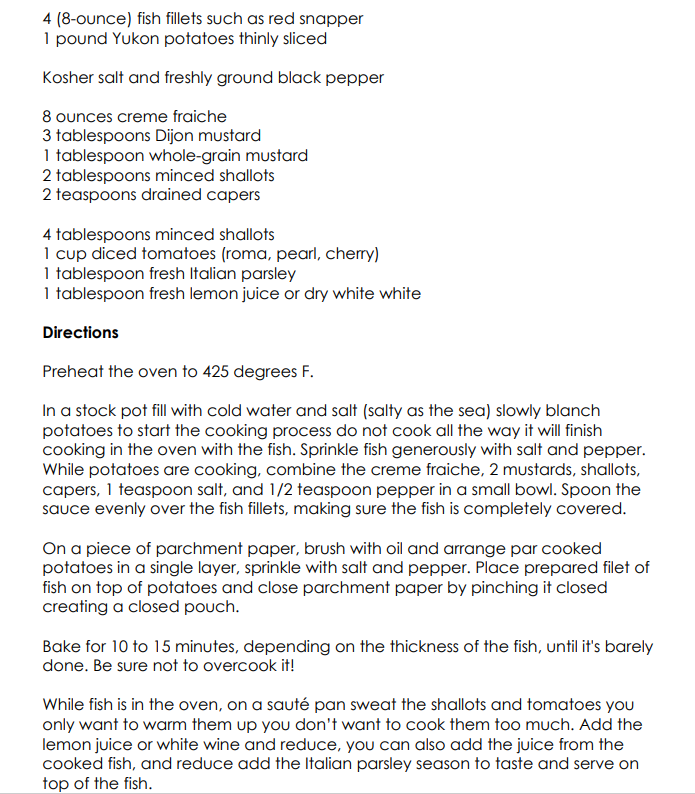
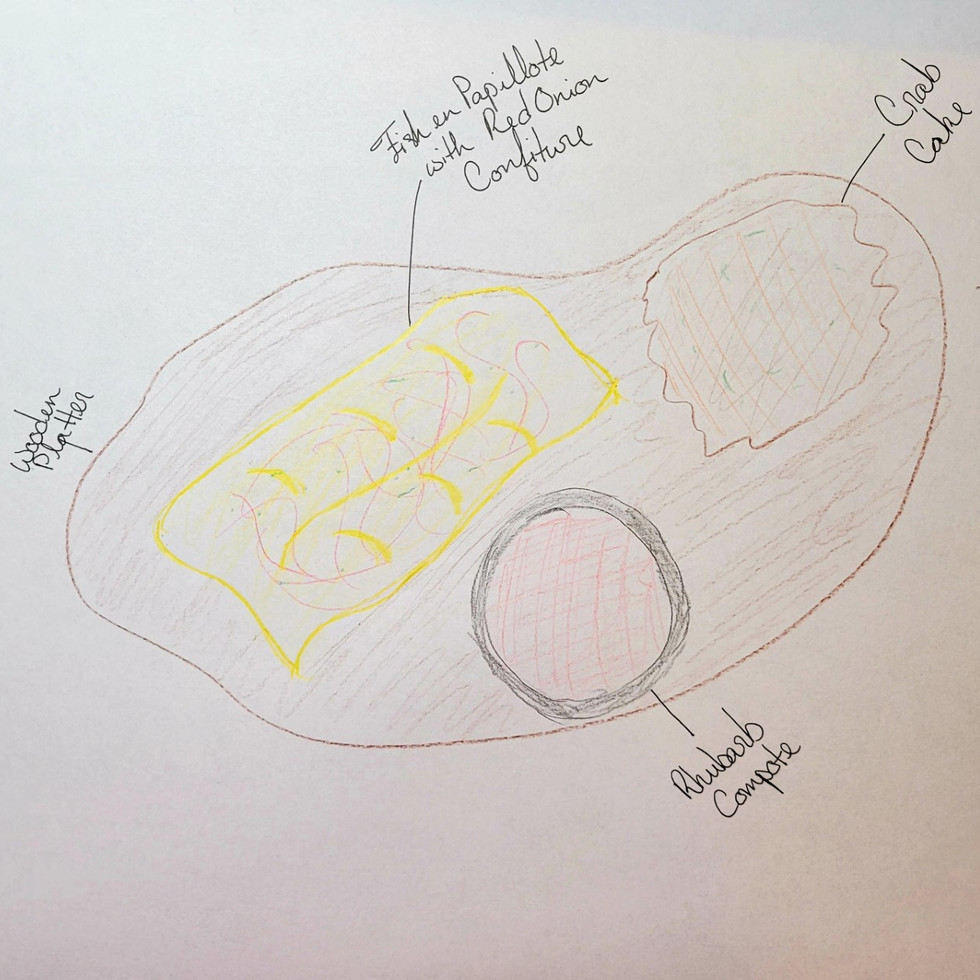
This week’s lab consists of fish and shellfish cookery. The dishes we will be creating are Crab Cakes, Fish en Papillote (fish in a bag), and Red Onion Confiture & Rhubarb Compote.
Method of Cookery: “En papillote is a method of cooking, most specifically a variant of steaming, whereby food is encased in parchment paper and placed in an oven. Herbs, vegetables, and some kind of fluid, such as a sauce, wine, stock, etc., is included. Thus, the natural juices of the food in conjunction with the added fluids, produce steam which cooks the food within its encapsulated parchment pouch. The intermingling of the steam and the various ingredients produces a wonderful hegemony of flavor.” (Vogel, 2008)
Prior Knowledge of the Dish: I make crab cakes at home every couple of months. I have never used mayonnaise or cracker meal for mine, so I am totally stoked to see the difference in taste and texture using the recipe provided for lab. I have never tried Fish en Papillote or Rhubarb Compote. With my onion allergy, the Red Onion Confiture is definitely not something I have made or eaten before.
Learning Objectives:
Sustainable seafood
Explain the difference between wild-harvested and aquaculture seafood.
List reasons why the world supplies of wild-harvested fish are being depleted.
Discuss why improved abilities to transport fresh and frozen fish have affected demand for fish.
Define by catch and its effect on ocean ecosystems.
Explain the different techniques for catching wild fish and their effects on other sea creatures or ocean floor habitats.
Describe the role that aquaculture is currently playing to compensate for decreasing wild fish stocks.
List the characteristics used to assess the sustainability of wild fishing operations.
List the characteristics used to assess the sustainability of aquaculture operations.
List major threats currently to the seafood industry.
Explain how dead zones are formed and their relationship to agriculture.
Discuss some of the factors that chefs should consider when making sustainable seafood choices.
Explain what “trash” fish are and how chefs can leverage them in their operations.
Describe why it is important for chefs to work with reputable seafood purveyors.
List the two major families of algae and discuss their potential impact globally.
Explain why it is important for chefs to work with and learn from organizations that provide current scientific information about sustainable seafood choices.
Background Information
Origin & History: “In 1840 Antoine Alciatore established Antoine’s Restaurant in the French Quarter of New Orleans. A bastion of traditional French Creole cuisine, and still thriving to this day, Antoine’s has the distinction of being the oldest family run restaurant in the United States. Antoine’s is first and foremost known for its superior food, but also its patronage by famous dignitaries and celebrities, New Orleans memorabilia, and an extensive wine list. But, returning to the food, it is not solely the quality that sets them apart, but their inventiveness. Antoine’s has been the birthplace of many classic dishes such as Oysters Rockefeller, Eggs Sardou, Pigeonneaux Paradis, and for the purposes of our present discussion, Pompano en Papillote. Pompano, a saltwater fish of the Jack family, is considered by many to be America’s finest fish.” (Vogel, 2008)
“The origins of the crab cake likely trace back to Native American cuisine, specifically from the Chesapeake region. The same process that was used then to remove the meat from the shells is the same that is used today — it’s done by hand. History also suggests that crab cakes were one of the first indigenous dishes adopted by the settlers.” (Costas Inn, 2018)
“Compote or compôte (French for mixture) is a dessert originating from medieval Europe, made of whole or pieces of fruit in sugar syrup. Whole fruits are cooked in water with sugar and spices. The syrup may be seasoned with vanilla, lemon or orange peel, cinnamon sticks or powder, cloves, other spices, ground almonds, grated coconut, candied fruit or raisins. The compote is served either warm or cold.” (Wikipedia, 2021)
Methods Used: “Traditionally a large heart shaped piece of parchment paper is employed, but a rectangle will suffice. The size of course depends on the amount of food. Use your judgment and err on the large side since it's easier to trim than come up short. If you don’t have or can’t find parchment paper, aluminum foil will also work. Place the main item in the center, then sprinkle the vegetables, herbs, seasonings, etc. over it. Next, fold the paper/foil in half over the food and begin folding and crimping the edge all the way around to create a tight seal. Just before you have completely encased the food, pour the liquid into the pouch and then perform the final crimp. Place the packet on an oiled baking sheet or a stainless-steel platter and place in a preheated oven according to your recipe's instructions. Although it is a little tricky to determine doneness precisely, if using parchment, when the pouch has fully puffed and is browning, it should be done.” (Vogel, 2008)
Dish Variations: “Identical results can be produced with any standard cooking vessel with a snug fitting lid. A primary motivation for en papillote’s creation and continued use is culinary pageantry. The dish was originally intended for a Brazilian balloonist at a banquet in his honor. As the food steams, the parchment paper inflates. The impressive “balloon” of parchment encased food is then immediately served to the guests. The climatic finish occurs when each diner pops his balloon and expels the steam and enticing aromas. You can decide for yourself whether to go the parchment route or whether you think en papillote is just, I can’t resist, full of hot air, and opt for a covered baking dish.” (Vogel, 2008)
“Depending on what area you’re from on the east coast, you may be used to having crab cakes prepared a certain way. In the north, from Baltimore to Pennsylvania, crab cakes are often prepared using a thick cream sauce. They must be allowed for rest for several hours before being cooked. On the Eastern shore, the cakes are bound with a combination of egg and flour with little other additions to distract from the flavor of the crab. The western area is known for “continental” crab cakes, which includes bread or cracker crumbs as filler.” (Costas Inn, 2018)
References
“Compote.” https://en.wikipedia.org/wiki/Compote. 13 October 2021.
“En Papillote.” Mark R. Vogel. Food for Thought. http://www.foodreference.com/html/a-en-papillote-58.html. 07 May 2008.
“The History of Crab Cakes.” Costas Inn. https://www.costasinn.com/blog/crab-cakes/the-history-of-crab-cakes/. 27 April 2018.
Dish Production Components
Recipes:



Plan of Work:

Plate Presentation:

Sources:


Reflection & Summary of Results
What Happened(?): I missed this lab due to Covid-19. I am extremely fortunate to have an amazing group of people in my class. All of the photos you see, other than the final photo at the bottom, were taken by other students in the lab. One of my teammates, Alena, was kind enough to share her blog with me. This is what she stated…
"Results:
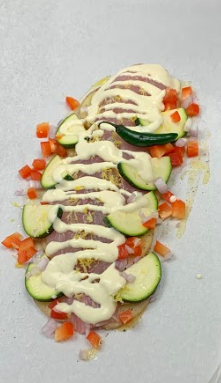
The crab cake's texture was soft in the inside, while the outside was crunchy. The flavor profile of the crab cakes is savory, and the sauce is a little bit spicy, with the Siracha. The appearance of the dish had a reddish sauce that added a pop of color. The fish en papillote's texture was very tender. The fish en papillote has a savory flavor profile. The asparagus with the fish had complimentary flavors. The asparagus added a nice crunch to overall dish. It added another texture. The asparagus, red tomatoes, and red bell peppers created a more colorful plate." (Alena Jen, 2021)




Food Cost:

Evaluation:
"Using the finely ground crackers created a nice coating for the crab cakes. The combination of sautéing the crab cakes first, then finishing them in the oven was effective solution. The crab cakes were cooked thoroughly, while have a nice sear. The size of crab cakes were consistent sizes, due to weighing them out. The crab cakes were one bite appetizers that did not have a lot binding, so the crab meat flavor was not overshadowed. By using the en papillote method, the fish was very tender. By par cooking the potatoes, the potatoes were tender. When covering the fish with the sauce, it helped contain the moisture of the fish. Roasting the red peppers did not have much of a crunch, so we may need to roast the red peppers longer. We peeled the zucchini due to the skin having multiple soft spots. They were julienned and roasted, but they turned out too limp, and it was not very appealing. One way to mediate this would be creating larger slices instead of a julienne cut. We blanched the asparagus, placed it in a ice bath, then sautéed them right before plating. They retained their nice green color and crunch due to this process." (Alena Jen, 2021)


Conclusions:
"I learned about how the process of crab cakes were made. It is best practice to limit the amount of binding agents such as egg and mayo, which can dominate the crab cakes. We did not use egg, and the crab cakes were still holding together, The combination of searing and baking were successful. I learned how to cook a fish using the fish en papillote method. It would be great to utilize this technique for other delicate fish and chicken. The results created a tender texture rather than a dry texture. Cooking through a pouch was eye-catching, and it did not take long for the fish to cook. I learned how to skin a fish for the first time, and it takes patience to not rush the process. Due to the delicate nature of the fish, the tearing of the filet could occur, but it should be minimal. We were able to have all of our dishes plated, but I need to do better on cleaning as I go. A clean space helps with maintaining a clear mindset, so the transition between each task is smoother. This could also be applied outside of kitchen." (Alena Jen, 2021)


I attempted the crab cakes recipe at home. I think they turned out nicely. 😊 You can tell I use an electric range at home as opposed to the preferred gas range. The pan didn't heat evenly.

References
"WEEK 5." Alena Jen. https://aaj0019.wixsite.com/my-site/week-5


Comments