Week 5: Biscuits, Muffins, Scones, & Doughnuts
- kelafoy
- Feb 4, 2022
- 7 min read
Updated: Feb 14, 2022
Introduction
Quick breads and fried dough are the lesson this week. My stomach is growling at me just thinking about it. 😊 The plan is to make biscuits, muffins, scones, and doughnuts. The baker in me is jumping up and down with excitement!
Method of Cookery:
“Straight Mixing Method
Also known as the quick bread method, two bowl method, or stirring method, this option is the commonly used, especially for beginner recipes. It’s the easiest and most straightforward method of the four options described here. It involves measuring and mixing the dry (like flour, baking powder, salt) and wet ingredients (like oil, eggs, or milk) of the recipe separately. The wet ingredients are then added to the dry ingredients, and mixed.
The consistency of the dough will depend on the amount of moisture in the recipe; it can be thin or thick. When using the straight mixing method, be sure to not over-mix; the more you mix, the denser your dough will be. (This can be useful for achieving a bread-like consistency, but over-mixing can still make your result too chewy.) Some common quick bread examples of this type include loaves, muffins, and pancakes.” (Make Bread at Home, 2021)
Prior Knowledge of the Dish: I LOVE to make muffins! Growing up, my mom almost always had muffins for us to eat before school every morning. I think that’s where my love of this easy to make dish comes from. It is quick and simple if you try the plain muffin method. I just add whatever fruit or sweet chips that I desire for the day. Let’s not forget that homemade biscuits are a necessary skill to have living in the South, and they can be easily swapped for cornbread muffins depending on the meal you’re pairing them with. In my opinion scones are an acquired taste. I have never attempted to make them myself. I haven’t bothered to try, because I assumed they were all hard and dry like the ones I have tasted previously. As for the doughnuts…WHO DOESN’T LOVE DOUGHNUTS?! Learning to make them is not going to be pleasant on my waistline. 😉 I think this is going to be the tastiest lab yet!
Learning Objectives:
· Prepare muffins, loaf breads, or tea breads, coffee cakes, and corn breads.
· Prepare baking powder biscuits and variations of them.
· Prepare doughnuts and other deep-fried desserts and pastries.
· Prepare pancakes, waffles, crêpes, and crêpe desserts.
Background Information
Origin & History:
“Before quick breads, this food type was always leavened with yeast or eggs. However, with the advent of commercial baking soda, breads are much easier to make. The Arm & Hammer brand was responsible for the introduction of baking soda in the United States; the popularity of chemical leavening continued with the introduction of commercial baking powder in 1856.” (Make Bread at Home, 2021)
““Quick bread” most probably originated in the United States at the end of the eighteenth century… "Fast bread" is an alternate name…During the American Civil War (1861–1865), the demand for portable and quickly-made food was high, while skilled labor for traditional breadmaking was scarce. This encouraged the adoption of bread, which was rapidly made and leavened with baking soda, instead of yeast.” (Wikipedia, 2022)
“There is evidence that the frying of various forms of dough occurred between 8000 and 5500 BC, after the invention of pottery allowed for oil to be heated in pots…The art of deep-frying was truly developed in Japan, then brought to China around 600-700 BC. Between the 1440s and 1530s, the Portuguese were the ones who could claim responsibility for spreading the gospel of fried dough. Under the flag of colonization, they brought subjugation, disease, war and forced assimilation, but heck if they didn’t repay the favour by bringing some good old golden fried flour and water to North and South America and, later still, to Hawaii.” (Van Gyn, 2016)
Methods Used:
“Creaming Method
The creaming method involves beating together butter and sugar until it creates a smooth and even consistency. Creaming allows air bubbles to be incorporated into the mixture, giving an aerated base for your dough. This aerated base will provide your quick bread with a fluffy, spongy texture. Other ingredients are then added, like eggs, which are also beaten to introduce air. This is a more time-consuming method, but it dramatically affects the taste. Quick breads that are often created with this method are donuts, banana breads, and cookies.
Foaming Method
The foaming method is similar to the creaming method, only it uses eggs and sugar to create an aerated base. The foaming method can be done with whole eggs but using just eggs whites (making a meringue) can create a fluffier base, since it’s easier to aerate egg whites than yolks.
The foaming method is created for all cakes that fall into the quick bread category. You can, of course, mix-match these methods for any recipe, depending on your time restraints and preferences, but the most classic results stick to their given categories.
Shortening Method
The shortening method involves cutting solid fat into flour and other dry ingredients. This solid fat is often butter, but it can also be in the form of lard or vegetable shortening. Manually cutting fat into dry ingredients can take a while. For this reason, the shortening method is often the most time-consuming method of the ones discussed here. Bakers often use a food processor to mix the two together, although it can still be done by hand.
Once liquid is added to the mixture, the dough can then be shaped and cut. This creates a dough that is flaky, crumbly, and coarse. Any type of baked good that does well with a flaky, crumbly texture can be made with this method, like scones and biscuits. Some types of breads, cakes, and pie doughs also use this method.” (Make Bread at Home, 2021)
Dish Variations:
“FRIED DOUGH FROM AROUND THE WORLD
China: Youtiao – a twisted piece of eggy deep-fried dough
West Africa: Akara – fried dough made of pea flour
Uganda/Tanzania: Mendazi – deep-fried ball or square of flour, water, salt and sugar.
Poland: Chruściki – crispy, fried flat dough sprinkled with confectioner’s sugar
First Nations: Bannock/fry bread – a flat piece of deep-fried dough found in First Nation cultures across North America
Mexico: Churros – A thin colander of deep-fried dough lined with ridges owing to it being piped out of a star-shaped bag
Japan: Sata andagi – a ball-shaped piece of deep-fried dough, similar to a doughnut but without the hole
Canada: Touton – leftover bits of bread dough, deep-fried, a staple in Newfoundland
Pakistan: Namak pare – deep-fried ribbons of pastry. Often savoury, flavoured with cumin seeds.
Mongolia and Central Asia: Boortsog – a sweet, deep-fried mound of dough” (Van Gyn, 2016)
References
“Quick bread.” Wikipedia. https://en.wikipedia.org/wiki/Quick_bread#:~:text=%22Quick%20bread%22%20most%20probably%20originated,by%20mixing%20dough%20with%20eggs.&text=This%20encouraged%20the%20adoption%20of,baking%20soda%2C%20instead%20of%20yeast. 2022.
“The Great Unifier: The History of Fried Dough.” Jill Van Gyn. https://eatmagazine.ca/the-great-unifier-the-history-of-fried-dough/#:~:text=There%20is%20evidence%20that%20the,to%20be%20heated%20in%20pots.&text=The%20art%20of%20deep%2Dfrying,China%20around%20600%2D700%20BC. 29 December 2016
“What Is Quick Bread? [History, Origin and Best Recipes].” Make Bread at Home. https://makebreadathome.com/everything-you-need-to-know-about-quick-breads/. 20 October 2021.
Dish Production Components
Recipes:

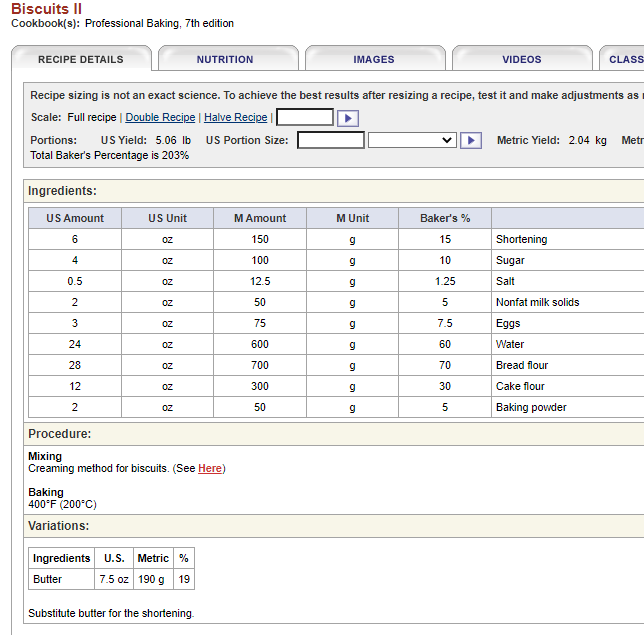


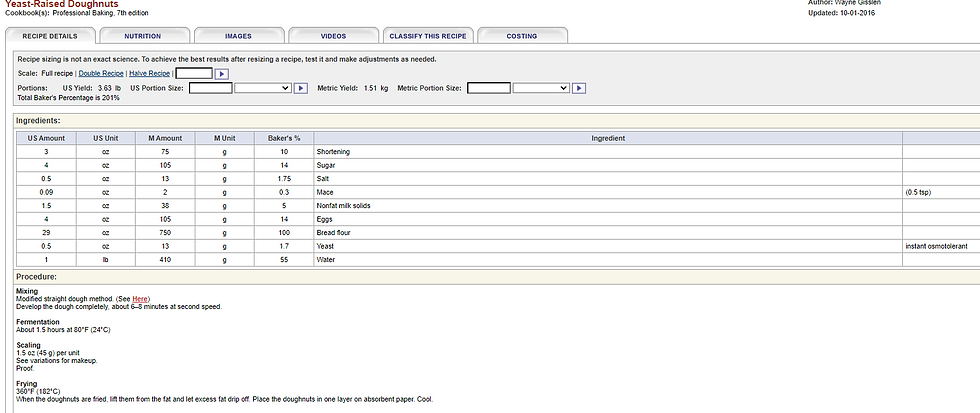

Plan of Work:

Plate Presentation:

Sources:

Reflection
I had the privilege of being selected to attend an intensive training course in Napa Valley, CA to prepare for the Certified Specialist of Wine exam. (Be on the lookout for a blog highlighting my adventure on the West Coast.) The trip overlapped with my school schedule and I missed another in-person lab. My classmate, Alena, was kind enough to let me reference her blog for my reflection purposes. The following dialogue and pictures you see are hers.


"Results
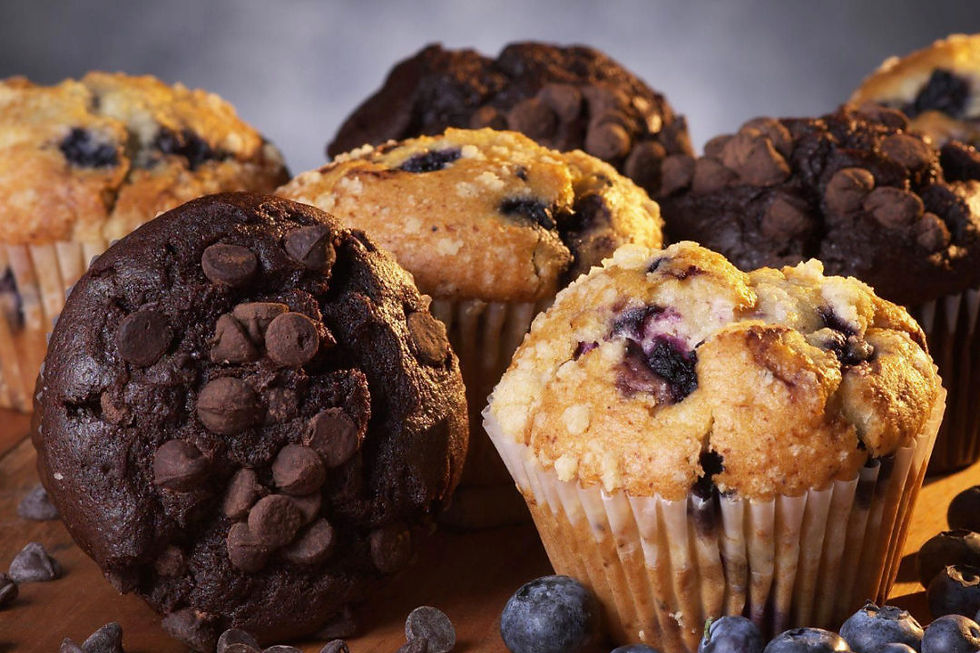
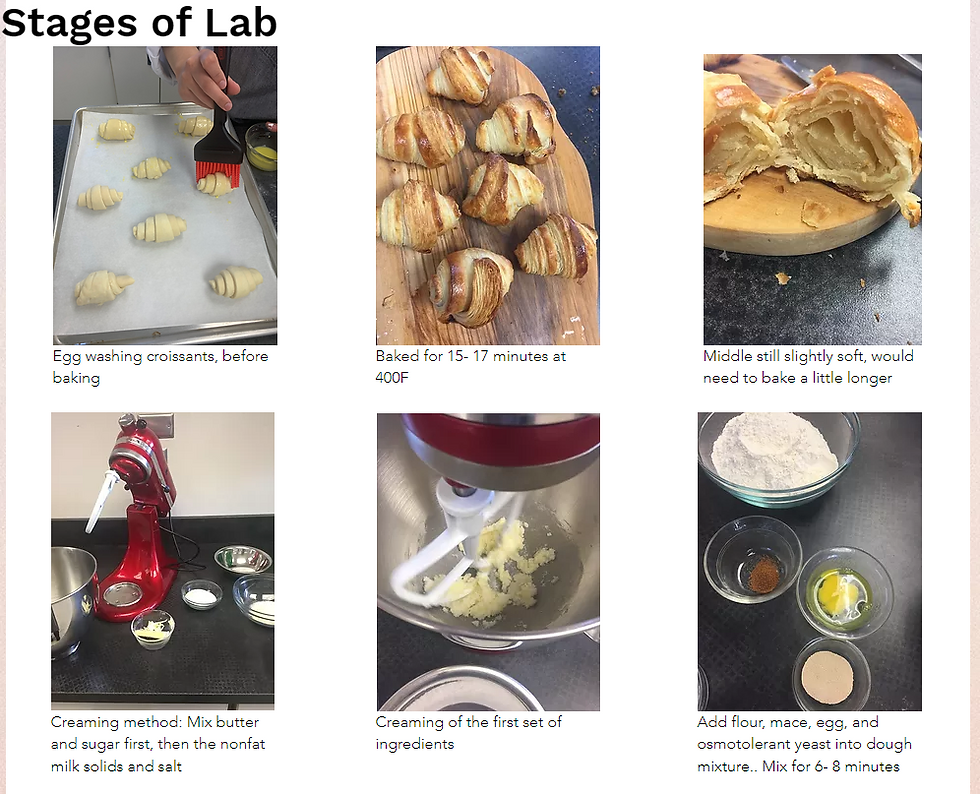
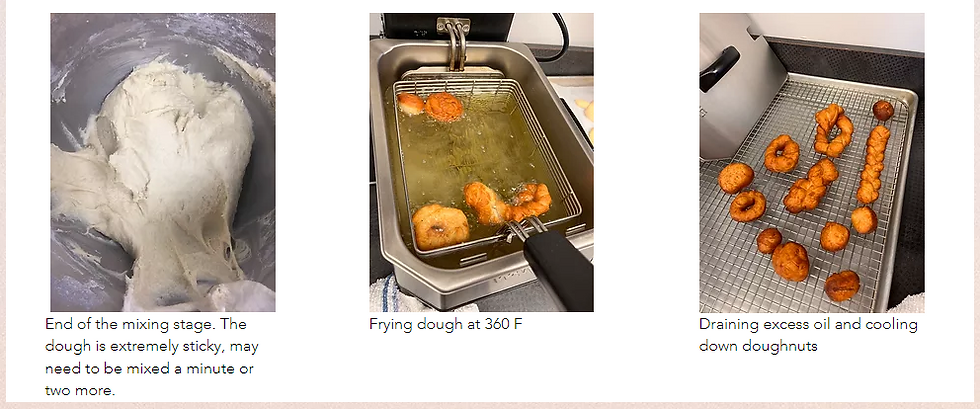
The cooking technique for biscuit II worked. The texture of the biscuit was soft, but some of the smaller biscuits had a tougher texture. The texture was slightly more cake- like. The taste was sweet and slightly salty. The shortening was a dominant flavor in the biscuit. the cheese biscuits did not have much a cheese flavor. The appearance was fluffy and golden . However, the outside layer was a darker brown for some of the cheese biscuits. The cooking technique for the muffins worked. The texture was fluff and cake like. The taste was sweet, where the flavor of strawberry stood out. The appearance of the plain muffin was golden, and the strawberry muffins had a few strawberries that were visible. The cooking technique for the yeast raised doughnuts somewhat worked. The texture of the doughnuts was extremely sticky, which made it hard to handle. After being fried, the texture of the doughnuts was soft. The taste was sweet as there was a cinnamon sugar coating, and donuts are sweet on their own.
Evaluation
Biscuit II used the creaming method instead of the biscuit method. However, there was a mishap involving the creaming method. During the sifting step, flour and sugar were being sifted rather than creaming the sugar with butter. This changed the overall texture of the biscuit, and we made them into drop biscuits. One possible solution is to cream the sugar and butter first. To get more uniform biscuits, we can weigh and scale all of the biscuits. The texture of the biscuits would be more consistent. The cheese flavor was not very strong in the cheese biscuits, so we can add more cheese next time. For the muffins, the muffin method did work. We did butter and flour the muffins, but they still got stuck to the pan. The muffin tins were older and metal, so they may have not been the best to use. We can try using the silicone baking molds next time. The strawberries had a lot of moisture, so some of the muffin bottoms were stuck on the pan. One solution is to cover the strawberries in more flour as they may not have been enough flour covering the strawberries. There were some strawberry muffins that were overfilled, and they broke in the middle. We made filled them with whipped cream and topped them with berries, making a strawberry shortcake. The yeast doughnuts modified dough method did work. However, the dough was too sticky, and it was extremely hard to handle. I only mixed the batter for 6 minutes, so it may have needed a longer mixing time. Another factor is that all of the ingredients were cold, and room temperature butter and eggs could yield better results. For lamination method for the croissants did work. They constant sessions of folding created many layers of the dough and butter. However, I did not have enough time to allow my dough to rest after the third folding session. I would need to start to folding process a little bit earlier, so that it will have more time to rest.
Conclusions
We did prepare muffins, doughnuts, and baking powder biscuits. The best objective that we did well was the strawberry muffins. It had the fluffiest and best texture out of all the baked items that our group had made. The sifting process prevented flour clumps, and the creativity to make the broken muffins into strawberry shortcakes was a great solution. I learned that creating croissants are a laborious process that takes a lot of time, especially the lamination stage. Time management is crucial not just in the kitchen, but it is also important in school. I still need to practice on managing my time as it did take me a longer time to get all the mise en place for doughnuts. We were able to finish in time, but there was not enough time to do more fillings or different toppings."
You can view Alena's full blog post here:


Comments