Week 4: Chilled Cucumber Soup with Dill, Fennel, & Shrimp...&...Bouillabaisse
- kelafoy
- Sep 6, 2021
- 9 min read
Updated: Sep 9, 2021
Introduction
Advance Soups and Bisques…what in the world is that even supposed to be? We’re working on cold soup this week and …well…yyuck!...HaHaHaHa! I can’t say that I’ve ever tried a cold soup. You know what they say…hold your nose and see how it goes. 😉
Method of Cookery: The primary methods I found to be used for creating cold soups was the purée setting on a blender. There is some sautéing of vegetables involved, but very little “cooking”.
Prior Knowledge of the Dish:
Bouillabaisse: Now this is a dish I can get down with! After traveling through parts of Greece this past summer, I love all things Mediterranean…especially the cuisine. It’s said to have originated in France, but I bet the Greeks might have something else to say about that. But I digress…this is a light brothy dish made with multiple types of bone / rock fish, crustaceans, mussels, etc. When recreating it at home, it is important that your broth be light to clear in color and your fish firm.
Chilled Cucumber Soup: You know that game Never Have I Ever? I feel like I’m playing that game sometimes in the culinary world. I have never tried a cold soup before, let alone a cucumber soup. I guess the closest thing I’ve had to a cucumber soup is my Omi’s cucumber salad that’s been passed through the family. (See Below)


About 25 (or so) years ago, my aunt thought it would be a great idea to compile all my Omi’s recipes into a family cookbook. The problem was, Omi never measured anything. For months my aunt would stand in the kitchen with my grandmother and hold measuring cups and measuring spoons under the ingredients (salt, pepper, spices, oils, flour, sugar…you name it…it was measured) as Omi dumped them into various pots and dishes while cooking. The result is what you see above. As you can see from the stains and marked pages, it is very well loved. 😊 Anyway…I bet I could take this cucumber salad recipe and purée it to create a cold soup out of it. What do you think?
Learning Objectives:
reviewing the different classifications of soups
preparing cold soups
garnish and serving soups appropriately
successfully prepare & execute chilled cucumber soup & bouillabaisse
Background Information
Origin & History:
Cold Soups: “Although the exact origin of cold soup can’t be pinpointed, these chilled nectars can be found from the tropics of the Caribbean to the fjords of Scandinavia. Russia may be known for hot borscht, but their chilled version, served with a dollop of sour cream, is just as popular. Credit a French chef for creating one of the fanciest names for a chilled soup: vichyssoise. Created by the late chef Louis Diat of the New York Ritz Hotel, this creamy chilled potato and leek-based concoction was named for his hometown of Vichy, France.” (Milligan, 2019)
“Gazpacho has an incredible history behind the creation of the famous dish. Originating from the Roman Empire, soldiers would carry pieces of stale bread, garlic, and olive oil with them on their journeys. They would then take the ingredients and make it into a paste with a makeshift mortar so they could quickly turn it into a soup.” (Amigofoods, 2021)
Bouillabaisse: “The dish originates in ancient Greece. The Phoceans, an Ancient Greek people who founded Marseille in 600 BC, ate a simple fish stew known in Greek as "kakavia". A dish similar to bouillabaisse also appears in Roman mythology: it is the soup that Venus fed to Vulcan. The legend has it that bouillabaisse was created by Marseille fishermen who wanted to make a meal when they returned to port. Rather than using the more expensive fish, they cooked the common rockfish and shellfish that they pulled up with their nets and lines, usually fish that were too bony to serve in restaurants, cooking them in a cauldron of water on a wood fire and seasoning them with garlic and fennel. Tomatoes were added to the recipe in the 17th century, after their introduction from the Americas. In the 19th century, as Marseille became more prosperous, restaurants and hotels began to serve bouillabaisse to upper class patrons. The recipe of bouillabaisse became more refined, with the substitution of fish stock for boiling water and the addition of saffron. Bouillabaisse spread from Marseille to Paris, and then gradually around the world, adapted to local ingredients and tastes.” (Wikipedia, 2021)
Methods Used:
Cold Soups: “These soups tend to be lighter than winter soups and typically contain less fat and meat per serving. Some are purely vegetable based but many use light meat or fish stocks.” (Wikipedia, 2021)
· Noodle Soups
· Milk / Cream based soups
· Vegetable Purée Soups
· Fruit Soups (popular in Sweden and China)

Bouillabaisse: “The name bouillabaisse comes from the method of the preparation—the ingredients are not added all at once. The broth is first boiled (bolh) then the different kinds of fish are added one by one, and each time the broth comes to a boil, the heat is lowered (abaissa). Generally similar dishes are found in Greece, Italy (zuppa di pesce), Portugal (caldeirada), Spain (sopa de pescado y marisco, suquet de peix [es]), and all the countries bordering the Mediterranean Sea. What makes a bouillabaisse different from these other dishes are the local Provençal herbs and spices, the particular selection of bony Mediterranean coastal fish, and the way the broth is served separately from the fish and vegetables.” (Wikipedia, 2021)

Dish Variations:
Cold Soups: When browsing the web for cold soup variations, I found over a hundred…
YES THAT’S 100…different cold soups. I found a little excerpt on gazpacho that I’ve included below. While doing my research, I also found that Spain classifies gazpacho as a salad in cookbooks rather than a cold soup like we do.
“Gazpacho or otherwise known as Andalusian Gazpacho is a cold soup that uses stale bread, garlic, olive, oil, and raw vegetables or fruit. It gained popularity in the southern Spaniard region of Andalusia.” (Amigofoods, 2021)
Bouillabaisse: “Another version of the classic Marseille bouillabaisse, presented in the Petit LaRousse de la Cuisine, uses congre, dorade, grondin, lotte, merlan, rascasse, saint-pierre, and velvet crabs (étrilles), and includes leeks. In this version, the heads and trimmings of the fish are put together with onions, celery and garlic browned in olive oil, and covered with boiling water for twenty minutes. Then the vegetables and bouquet garni are added, and then the pieces of fish in a specific order; first the rascasse, then the grondin, the lotte, congre, dorade, etrilles, and saffran. The dish is cooked for eight minutes over high heat. Then the most delicate fish, the saint pierre and merlan, are added, and the dish is cooked another 5–8 minutes. The broth is then served over bread with the rouille on top, and the fish and crabs are served on a large platter. Other variations add different seasonings, such as orange peel, and sometimes a cup of white wine or cognac is added.” (Wikipedia, 2021)
References
“A Mouthwatering History of Gazpacho.” Blog.amigofoods.com. Amigofoods. https://blog.amigofoods.com/index.php/spanish-foods/a-mouthwatering-history-of-gazpacho/. 2021.
“Bouillabaisse.” En.wikipedia.org. https://en.wikipedia.org/wiki/Bouillabaisse. 22 August 2021.
“List of cold soups.” En.wikipedia.org. https://en.wikipedia.org/wiki/List_of_cold_soups. 14 July 2021.
“The Really Cool Thing About These Soups.” Edibledoor.ediblecommunities.com. Chef Terri Milligan. https://edibledoor.ediblecommunities.com/eat/really-cool-thing-about-these-soups. 11 June 2019.
Dish Production Components
Recipes:





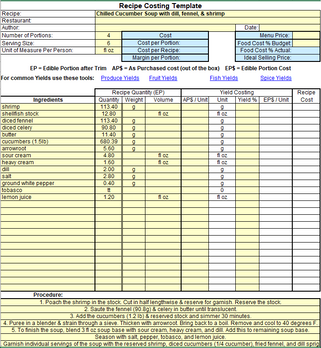

Plan of Work:

Plate Presentation:

Sources:



Reflection & Summary of Results

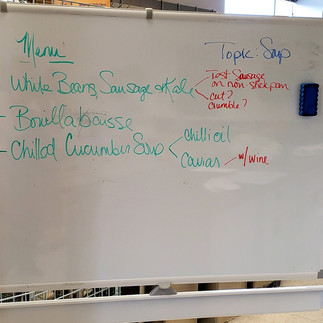



What Happened(?): So much FUN is what happened! We had fennel today. It was so amazing to be able to taste my own project for once. I left the leeks and onions out that the recipe called for. Since I doubled the amount of fennel to make up for the other lost veggies, I also left out the Pernod (anise liquor). Fennel, especially uncooked, has a very strong anise flavor. It’s like a root vegetable made from black licorice…YUCK! However, once you soften the fennel with heat and cook it down it does a pleasant job in place of the onion and the strong licorice taste abates.

Apparently, I was the lobster queen today. Most of the class couldn’t get past the fact that we were placing live creatures into a boiling pot of water. My partner A.P. and I rocked it though!



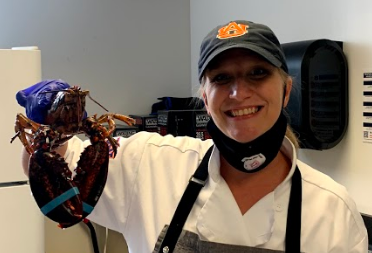


Unfortunately, my lobster had the worst last day of its life today. My lab partner and I decided to skewer the crustacean to keep the tail from curling while it boiled. When I pushed the skewer through the cloaca that poor little thing didn’t like it AT ALL. It spiked my finger so fast and hard it not only bled terribly (like fingers tend to do) but that little booger created one heck of a bruise. I’m sure I’ll be feeling that one for a few days. ☹ This little guy below was a much easier to wrangle.


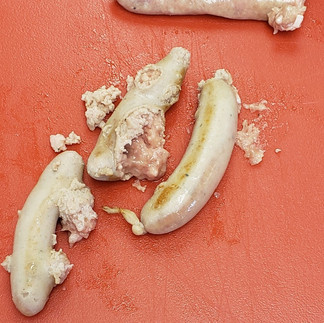
I took on the white beans and sausage we were unable to get to last week. The recipe called for crumbling the linked sausage, but I wanted to try slicing it into ovals for a more elegant presentation effect. Alas, the sausage would not cut. The sausage casings were too delicate to slice properly, and the filling was not firm enough.
Evaluation:
An attempt at firming up the casings by par cooking in the saucepan first was a complete disaster. If you kept the sausages moving, they didn’t stick which was a concern we had. Once the casing strengthened, it began to push the filling out into the pan. Since we were originally going to crumble it anyway, I removed the sausage from the casings and browned it in the original saucepan. There were bits of flavor stuck to the bottom, and we all know that’s the best part…so I put a splash of white wine in the pan to deglaze and it pulled all the crispy sausage fat flavor back into the dish with the white beans, kale, parmesan, and lemon...YUM!




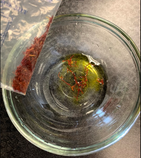
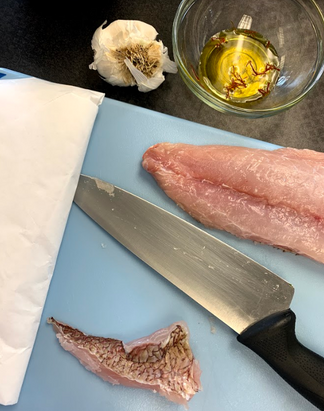
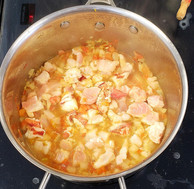
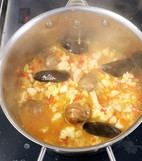
We couldn’t fit our lobster into the pot we chose, so half of him got boiled while the other half stuck out of the pot. We decided it was best to dismantle his body and place the pieces into the pot. This was done to solidify the meat just enough to be able to remove it from the shell and add it to the bouillabaisse. Once the trauma to the lobster was over, the rest of the dish came together smoothly. We bloomed saffron to allow its aromatic presence to really take hold in the bouillabaisse. We also kept our lobster shell pieces as intact as possible to add color and dynamic to our plate presentation. But you'll have to wait just a bit longer for that masterpiece. 😉 I got some great progression photos of the bouillabaisse. Check it out.









Conclusions:
Dr. O’Neil told us the beans had a little too much cheese and citrus. I think we did a Tbsp. of lemon juice rather than a squeeze. We know better for next time. We weighed out the correct amount of cheese the recipe called for, so I made a note to half the amount in the future. I think the bursting of the casings may have been my fault. Read this little excerpt I found… “One other cause would be placing a sausage into a piping hot frying pan. Not only will the sausage casings burst but you would probably end up with a nuked (destroyed by a nuclear weapon) sausage on the outside and a raw inner. I needn’t explain what the aftermath would be if you ate that!” (Gaynor, 2017) That explains the half cooked explosion in the picture above. Lesson learned, and on to the next one we go. On the bright side...the completed dish looks quite appetizing. 😊

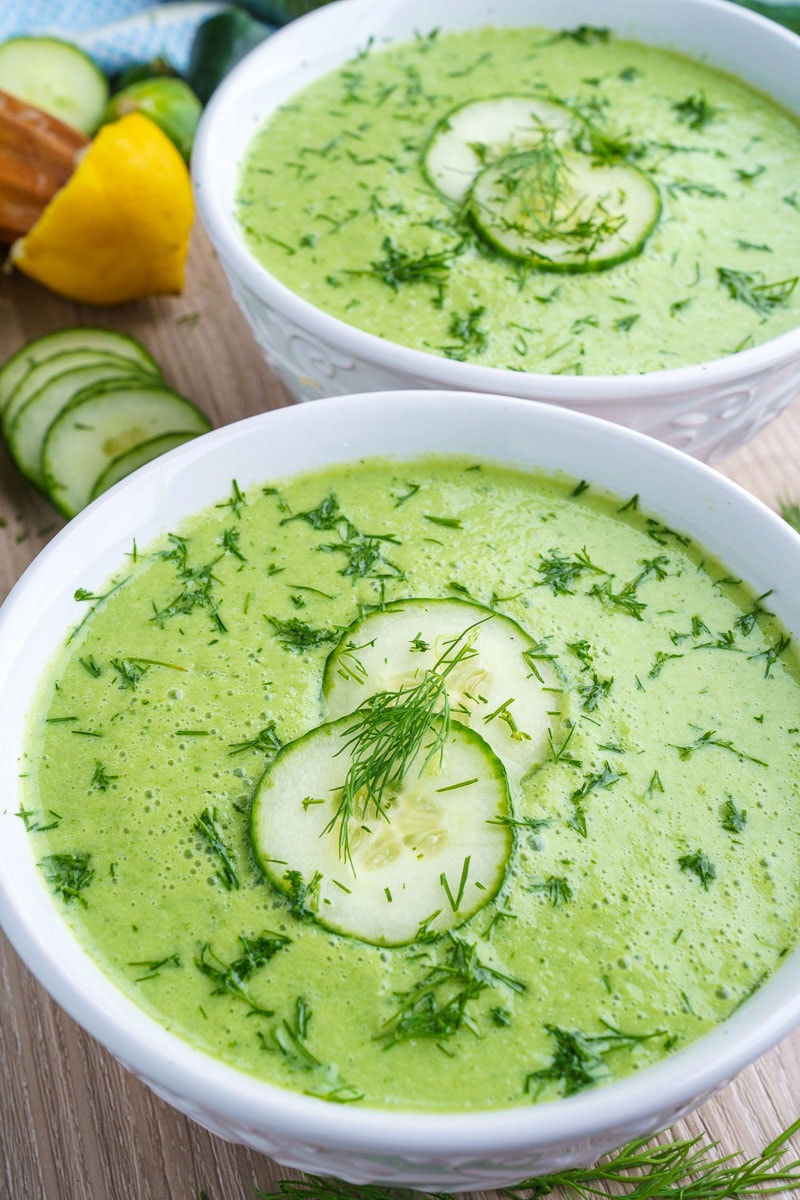
I couldn’t get to the chilled cucumber soup today. I took longer with the bouillabaisse than I anticipated. My time management skills in the kitchen are getting better, but they still need work. My goal was to prepare all three dishes today. Needless to say...No dice. Some of the other students did the cucumber soup in place of the beans. Here’s how their presentations were built and displayed.



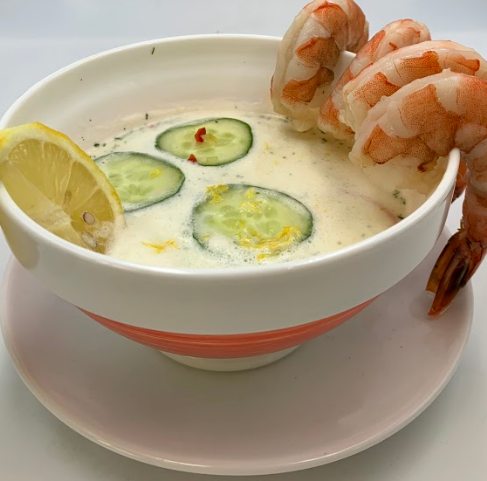
I really like the how the shrimp adds more dimension to the the dish presentation. The one on the left is beautiful, but it feels a little flat. The bowl stole the show in that particular photo, whereas the dish on the right highlights the food.
I made bouillabaisse for the first time today and it was delicious, if I do say so myself. It was also super fun to create. I most definitely need more practice when it comes to skewering and / or dismantling a lobster. Honestly, I was a little upset thinking I may have caused the lobster so much pain before his death. I cannot stand the idea of bringing harm to a living creature. We must kill to eat, but we don’t have to be vicious or barbaric about it. Thankfully, I found this: “…lobsters do have nerves, and a very real (if very primitive) nervous system that can react to outside stimuli. Current research is unclear on whether or not their brains have the capacity to process such stimuli as pain and undergo emotional trauma when it's administered (a feeling we'd refer to as "suffering"), but many people still like to minimize the chance that the creature is suffering before it's consumed.” (Lopez-Alt, 2020)
This eases my mind, if only slightly.
I am quite proud of the plated dish I created. It’s one of the most visually appealing dishes I have put together. Hopefully my instructors are as enamored with it as I am. 😊

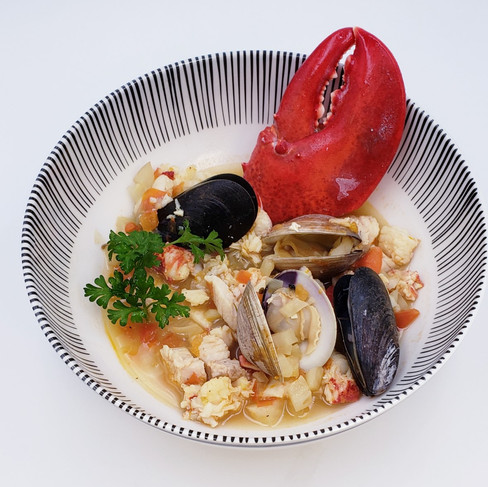

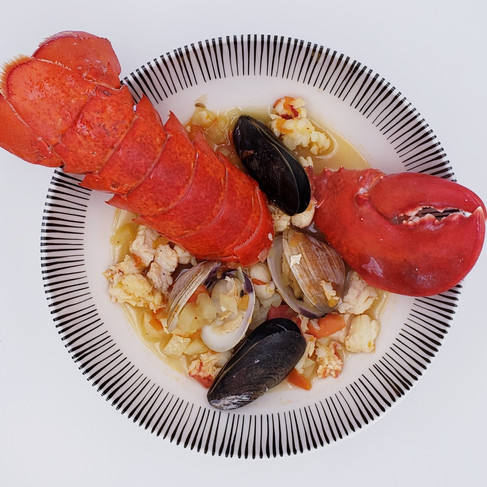

Aren't they gorgeous!? I am REALLY proud of my accomplishments this week. I still have a long way to go, but even when I become an expert I hope to never stop learning. That's all I have for this week. Until we meet again friends!
References
“How to Kill, Cook, and Shell a Lobster | The Food Lab.” Seriouseats.com. J. Kenji López-Alt. https://www.seriouseats.com/the-food-lab-how-to-cook-shuck-lobster. 19 February 2020.
“Why do my sausages keep bursting?” sausagemaking.co.uk. Gaynor. http://www.sausagemaking.co.uk/why-do-my-sausages-keep-bursting/. 25 June 2017.


Comments