Week 3: Brown Stock, Vegetable Stock, & Minestrone Soup
- kelafoy
- Aug 30, 2021
- 5 min read
Updated: Sep 4, 2021
Introduction
This week our culinary module is Stocks & Soups I: Vegetable Stock, Brown Stock, and Soups.
Method of Cookery: This week simmering seems to be the cooking method of choice. A good simmer is just under a boil. You have nice small bubbles moving up the sides of the pot but no rolling bubbles on top of the liquid. “Bubbles will form and gently rise to the surface of the pan, but the water is not at a full rolling boil. Simmering is the standard method for preparing soups, stocks, and starchy items such as potatoes. Most foods cooked in a liquid are simmered rather than boiled because a full rolling boil is too hard on them. When a recipe calls for boiling foods, many times it is actually referring to allow boil or simmer rather than a full boil. Simmering is the most common method of cooking vegetables but requires careful management to prevent nutrient and color loss and to keep the vegetable from turning to mush.” (Utah State, 2019)
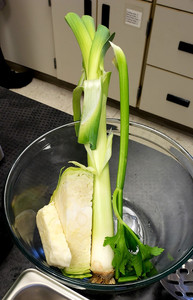
Prior Knowledge of the Dish: I have made MANY soups and stocks in my lifetime. The stocks I have made have been brown stocks, so I feel fairly comfortable in this particular module. I may be singing a different tune when we get to fish stock / fumet. I am nervous about creating a vegetable stock. I have a severe onion allergy, and all vegetable stocks use onions. I have read recommendations for trying fennel bulb in place of the onion. “Fennel! Fennel looks like an onion, but it has a strong black licorice flavor when it’s raw. But cooked, it can stand in for onion! In fact, it adds a nuance to soups and stews that is absolutely irresistible. It works for people with an onion allergy.” (Overhiser, 2020) Hopefully it will work without compromising flavor.
My favorite soup is a creamy tomato soup. When it comes to soup making, creamy soups are my forte. I have never created a minestrone soup before, so I am quite excited to try it! I thoroughly enjoy cutting vegetables because it is so calming. By the end of my Minestrone Soup, I should be feeling rather Zen. 😊
Learning Objectives:
List the different cuts of vegetables
Articulate the principles of making stock
Prepare a vegetable stock
Understand the different classifications of soup
Produce a broth soup
Practice the costing of menu items
Background Information
Origin & History: “While stocks have presumably been around since the discovery of fire, their first codified use for culinary application was in the eighteenth century when sauces were categorized within the classic French system. Stock was used as a general term to refer to the foundation of cooking: the use of basic materials to bring harmony and balance to a dish. Stocks were intended to be a fundamental ingredient, full of bones and clarified in advance of building soups and stews, used for braising meats and generally adding character to dishes that appeal to the eye.” (Green, 2021)
“Evidence of the existence of soup can be found as far back as about 20,000 BC…The word soup comes from French soupe ("soup", "broth"), which comes through Vulgar Latin suppa ("bread soaked in broth") from a Germanic source, from which also comes the word "sop", a piece of bread used to soak up soup or a thick stew.” (Wikipedia, 2021)
Methods Used: I am assuming we will start by browning or roasting the bones in the oven to “brown” them for the brown stock we are creating. Our primary method of cooking this week will be a slow simmer. Our focus will be on getting the correct cut of vegetables for our stocks and Minestrone to release the proper amount of flavor into the liquid and hold it there without it dissipating into the air.
Dish Variations:


References
“Best Onion Substitute.” Acouplecooks.com. Sonja Overhiser. https://www.acouplecooks.com/onion-substitute/. 30 November 2020. Updated 16 January 2021.
“Moist Cooking: About Moist Cooking Methods.” extension.usu.edu, Utah State University, https://extension.usu.edu/createbetterhealth/cook/moist-cooking. 2019.
“Soup.” https://en.wikipedia.org/wiki/Soup. 2021.
“The Etymology of Stock and Broth.” chelseagreen.com. Chelsea Green. https://www.chelseagreen.com/2017/etymology-stock-broth/. 2021.
Dish Production Components
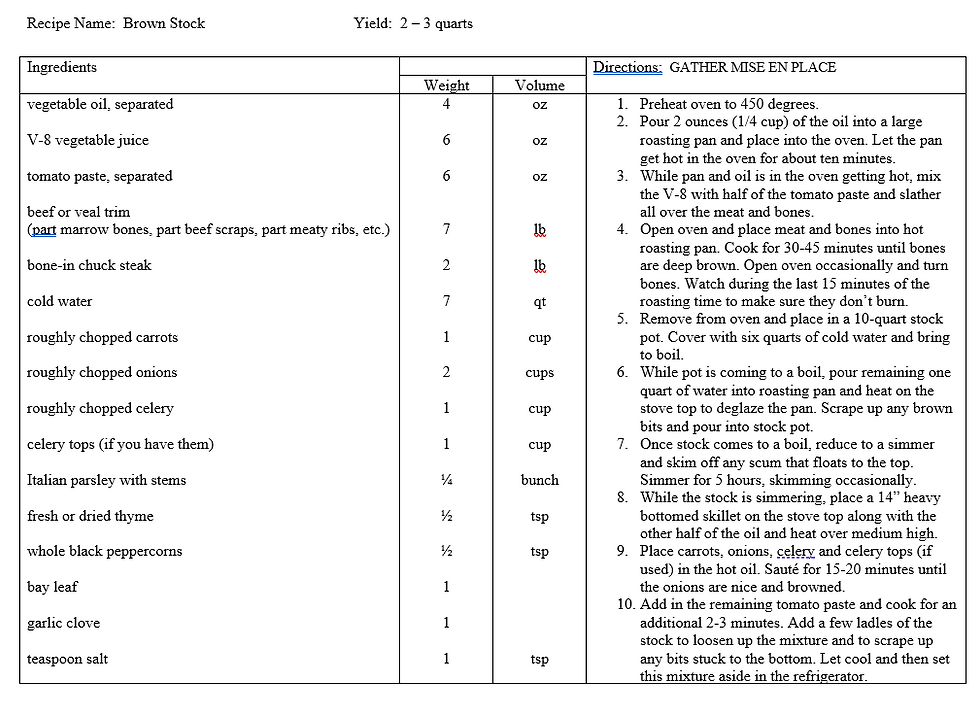
Recipes:


Plan of Work:

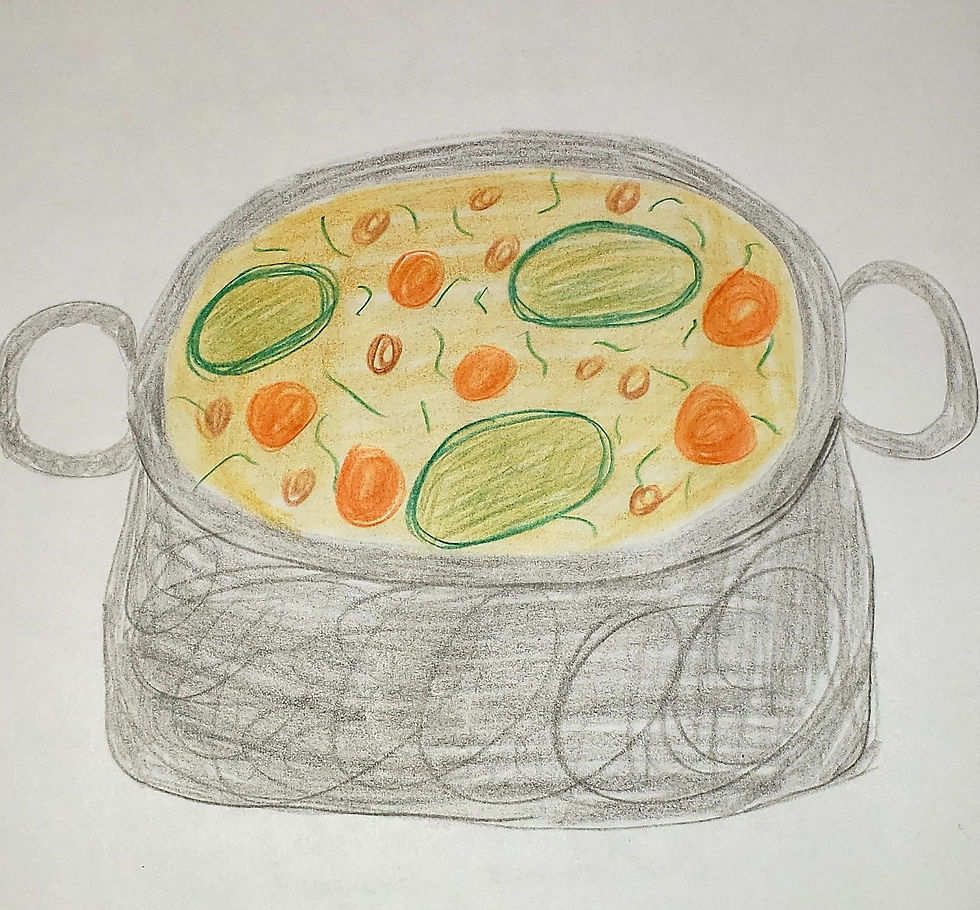
Plate Presentation:
Sources:

Reflection & Summary of Results
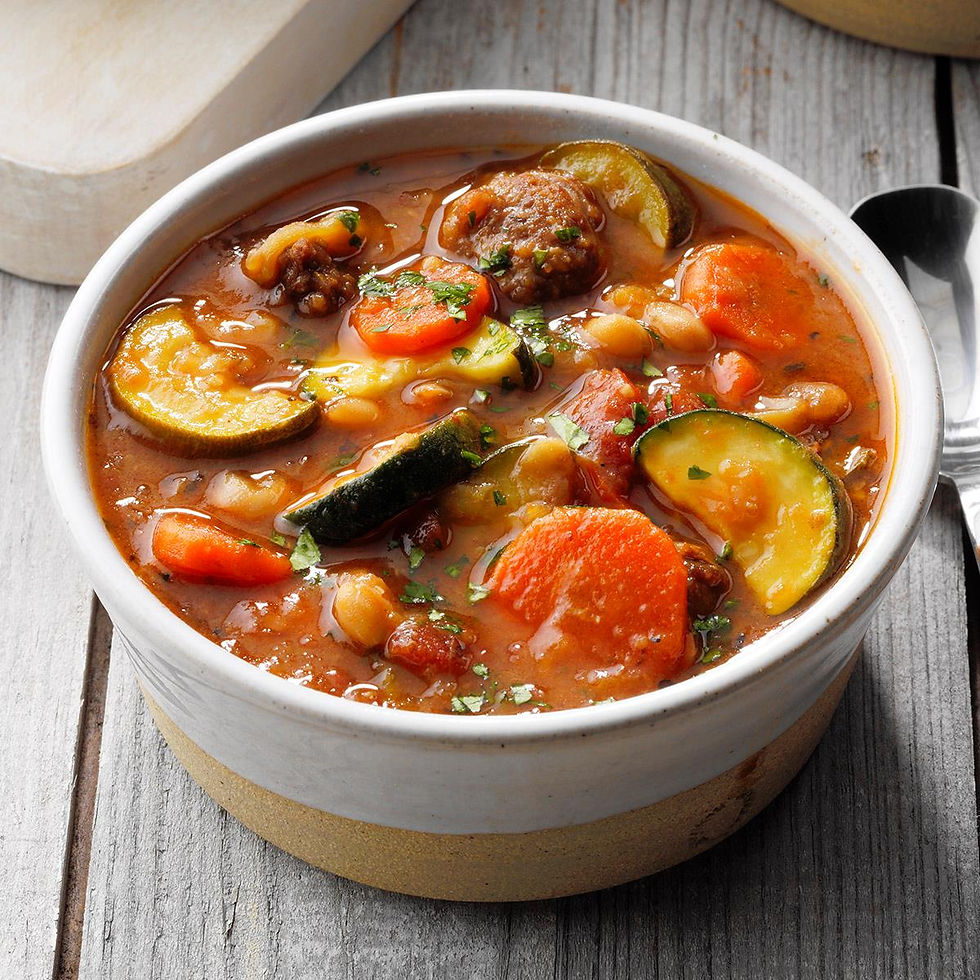
What Happened(?): I didn’t get to use fennel in place of onions for my minestrone this week. ☹ Unfortunately, they didn’t make it into the lab until after class was finished for the day. I am super excited to use fennel in the future! Thankfully my lab partner cut all the onion, so I wouldn’t have to run for my epi-pen. 😊 We focused a lot on getting precise vegetable cuts this week. Certain vegetables also vary in cooking times. The carrots we used take longer to soften than the zucchini. For this reason we put the zucchini in much later than the carrots and onions, since they all needed to be cut into relatively the same size. You see all of them in detail in minestrone soup, so having uniformity is extremely important. We eat visually before we ever take the first bite of a dish. If something looks unappealing, you are not likely to want to try it.

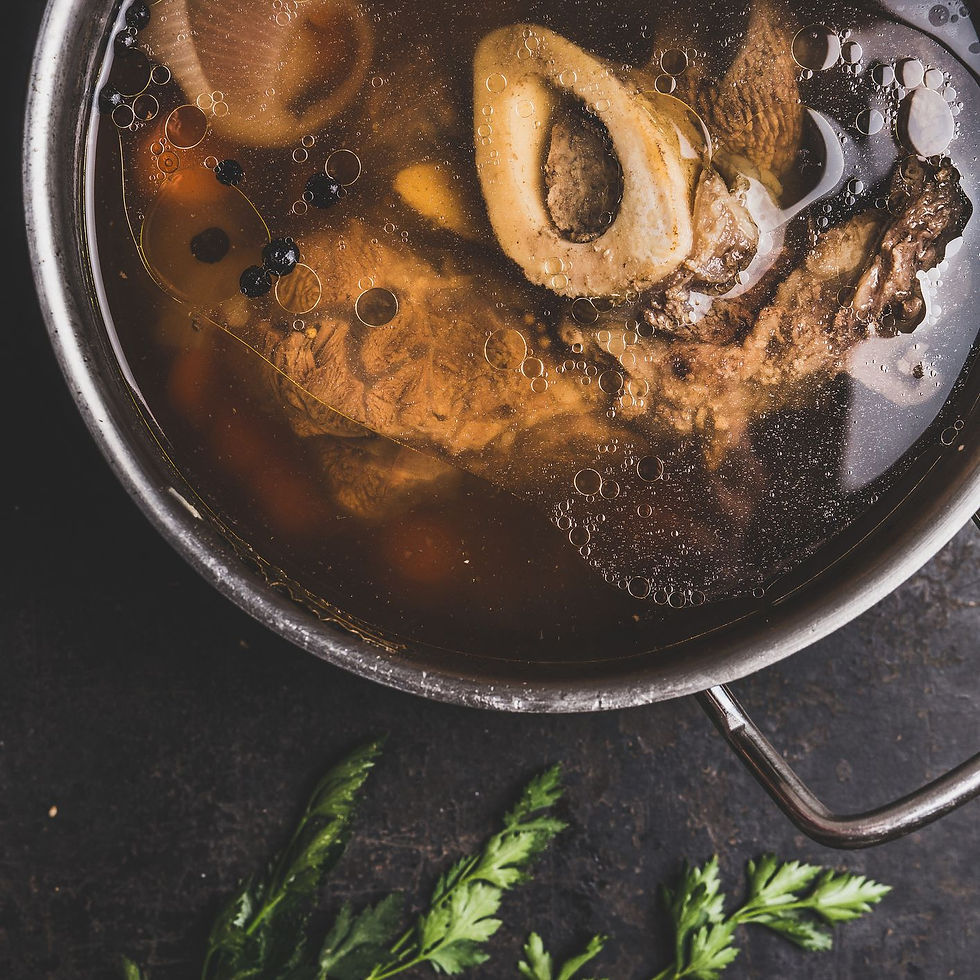
The brown stock was started before we entered the lab. One of our instructors / chefs coated beef bones in tomato paste and roasted them in the oven during the morning hours. The bones were then placed in a pot with cold water and vegetable trimmings to slowly simmer throughout the day (about 8 hours).

Evaluation: Having a food allergy can be a major struggle when composing a dish. Being unable to taste what you are preparing is a hinderance. I was taught by my grandmother to tell the phase of a dish by its aroma and appearance. She always told me I would know when something is ready when it “just feels right.” I don’t know how well that will work in my chosen culinary profession. 😉 Learning the small skills makes a big difference. Simple things like seasoning a dish higher up from the food, and the difference between the function of a sachet compared to a bouquet-garni make a distinction in the production and compilation of flavors and their enhancement. I chose the sachet due to it's ease of use when removing it from the soup. Plus, I can put more into a sachet, such as peppercorns, than I can when using a bouquet-garni. We made our own vegetable stock to use in the minestrone which gave it a more hearty flavor than using water would have. All of our scraps such as onion peels, tomato skins, carrot trimmings, etc. were placed on the stove, covered with water, and simmered for about an hour. The result was a more full bodied bowl of soup when we completed the minestrone.





Conclusions: According to my lab partner, our minestrone turned out really well. I wish I could have tasted it…stupid food allergies. 😊 We even had one or two people from other lab groups request a bowl of soup, so I would say it was a success! The Italian community would probably be exasperated with me for breaking my noodles before adding them to the minestrone soup. I think they looked better in the completed dish that way. Not only did they match the size of the vegetables in the bowl, but it was also easier to get a balanced bite this way. Each scoop of the spoon had every element of the dish in each bite taken. It is difficult to say what I would have done to correct or modify the dish without tasting it myself. In the future I hope to try using fennel in place of the onion. It would be so exciting to finally eat minestrone soup for the first time in my life. We will be working on more soups and stocks next week. Until then, enjoy the photo of the steamy goodness I have included below and try your best not to slobber on your screen.

References
Sachet d'espice vs. bouquet garni. Cheftalk.com. Thread in 'Food & Cooking' thread started by deltadoc. https://cheftalk.com/threads/sachet-despice-vs-bouquet-garni.12668/. 26 October 2004.
“Slice, Dice, Chop Or Julienne: Does The Cut Change The Flavor?” Npr.org. Carolyn Beans. https://www.npr.org/sections/thesalt/2016/07/11/485235765/slice-dice-chop-or-julienne-does-the-cut-change-the-flavor. 11 July 2016.


Comments