Week 11: Cakes & Cake Assembling Using Basic Syrups & Cream Sauces
- kelafoy
- Mar 22, 2022
- 7 min read
Updated: Mar 28, 2022
Introduction
This week is the art of not only baking cakes but assembling them. There is a specific science to cake baking. If you get one ingredient slightly off, it can change the texture and flavor of your cake. The reason I call it the art of baking and assembling, is the fact that there is more to putting a cake together than some realize. You must worry about structure and stability all while creating a visual masterpiece. It is a lot more involved than just shellacking some frosting around it and calling it a cake. 😊
Method of Cookery:
Our focus this week will revolve around basic syrups and cream sauces added to cakes when being assembled. “Simple syrup is a baker’s secret weapon… Simply put it keeps the cake moist throughout every stage of assembly and decoration. Not only does it help keep your cake moist, but it also helps to add sweet flavor which is always good!” (Rettke, 2015)
Prior Knowledge of the Dish: What can I say? This is my wheelhouse for sure. Baking and decorating cakes is what I do best. These are a Bride’s and a Groom’s cakes I created just this past weekend.


I made a vanilla bean cake with a vanilla simple syrup and vanilla bean buttercream for the bride, and a rich chocolate cake with chocolate ganache and a milk chocolate buttercream for the groom. The flowers are made with wafer paper, and the decorative embellishments with modeling chocolate. I’d say I have a pretty good handle on prior knowledge of the dish. 😉
Learning Objectives:
Prepare icings.
Assemble and ice simple layer cakes, sheet cakes, and cupcakes.
Perform basic cake-decorating techniques using a pastry bag, paper cone, and other basic decorating tools.
Assemble cakes using a variety of specialized techniques, including the use of cake rings and the application of glazes and rolled coatings.
Prepare a variety of small cakes.
Cook sugar syrups to various stages of hardness.
Prepare whipped cream and meringues.
Prepare crème anglaise and pastry cream variations
Prepare dessert sauces, ganache, and other chocolate creams.
Background Information
Origin & History: “The historical evolution of sauce development, especially dessert sauces, is difficult to track due to the lack of ancient manuscripts that remain for study. Sauce historians began analyzing the cooking styles of the ancient Greeks mostly through the writings and teachings of Archestrate. However, she wrote more about the procurement of ingredients rather than the techniques of cooking. Much knowledge of sauce making in ancient Roman times was provided by the teachings of Apicius, a chef and gourmand who historians believed lived sometime between about the 1st century B.C. to the 1st century A.D. He wrote two cookbooks, one on sauces and a second that incorporated the sauce recipes, known as De re Coquinaria ("On Cooking"). Reviewing his translated ancient manuscripts reveals the usage of both sweet and savory ingredients, such as honey, spices and herbs, in sauce making. The sauces were found on savory as well as sweet dishes.” (Brisson, 2004)
“The big four dessert sauces are chocolate, vanilla or custard, fruit, and sugar-based sauces such as butterscotch and caramel. Almost everything else is a variation of one of these or calls for the same cooking techniques.” (Kump, 1986)
Methods Used: “Dessert sauce is typically drizzled or poured atop various desserts and may also be drizzled or poured on the plate. Dessert sauce examples include caramel sauce, custard, crème anglaise, chocolate sauce, dulce de leche, fruit sauces such as blueberry sauce, raspberry sauce and strawberry sauce. Raspberry sauce may be strained using a sieve to remove the seeds from the sauce. Dessert sauce adds flavor, moisture, texture, and color to desserts. It may be cooked or uncooked. Dessert sauce is sometimes prepared as a hard sauce with the addition of alcoholic beverages, such as bourbon, brandy or liqueur. Desserts with hard sauces can be served flambéed because the ethyl alcohol in distilled beverages is flammable. Drops of lemon flavoring may be added to the sauce as a fire accelerant.” (Wikipedia, 2022)
Dish Variations: “First let’s discuss the difference between sweet frostings and buttercream. The difference between the two can be inferred from the name. To be a buttercream, the recipe needs to include butter! Sweet frosting is a very low-cost way to top a cake and is typically what you will find at your local grocery store bakery, or in a Betty Crocker at home baking container. Rather than butter, sweet frostings are made with shortening, or solid fat that is made from vegetable oils like soybean or cottonseed oil. Because shortening lacks taste, these frostings often need to be reinforced with artificial flavorings or additives. And the texture of sweet frosting tends to be a bit gritty.
There are four common types of buttercream: American buttercream, Swiss buttercream, Italian Buttercream, and French Buttercream. American buttercream is your made-it-at-home style, because quite simply it’s the easiest frosting ever to make. You simply combine the main ingredients (butter, sugar, milk, vanilla), refrigerate, and you’re done! Swiss buttercream is a meringue-style buttercream, meaning it contains whipped egg whites. Swiss buttercream involves cooking the egg whites and sugar together, whipping them into a meringue, and then beating in the butter. The result is a smooth, silky buttercream that can be spread smooth on cakes and can also be used in pipe decorations.
The third type of buttercream is Italian buttercream. Italian buttercream is the most complex recipe to make because it involves whipping the egg whites at room temperature, and then pouring the hot sugary mixture into the egg whites to cook them, and then beating in the butter and other ingredients. While the change is subtle, its important because the result is a buttercream that is the richest, smoothest, and most stable of the buttercreams. And if you want to turn an Italian buttercream into a French one, simply use the whole egg rather than egg whites only.” (Bake Shoppe, 2018)
References
"Dessert Sauce.” Wikipedia. https://en.wikipedia.org/wiki/Dessert_sauce. 2022.
“Dessert Sauces.” James Brisson. https://www.naturalproductsinsider.com/specialty-nutrients/dessert-sauces. 1 November 2004.
“It’s all about the Buttercream.” The Bake Shoppe. https://www.thebakeshoppe.net/bakery-blog/buttercream. 26 May 2018.
“Just About All Dessert Sauces Are Variations of the Big 4.” Peter Kump. https://www.chicagotribune.com/news/ct-xpm-1986-05-08-8602020379-story.html. 8 May 1986.
“Simple Syrup Recipe.” Amanda Rettke. https://iambaker.net/how-to-make-simple-syrup/. 24 April 2015.
Dish Production Components
Recipes:










Plan of Work:

Plate Presentation:
Sources:



Reflection & Summary of Results
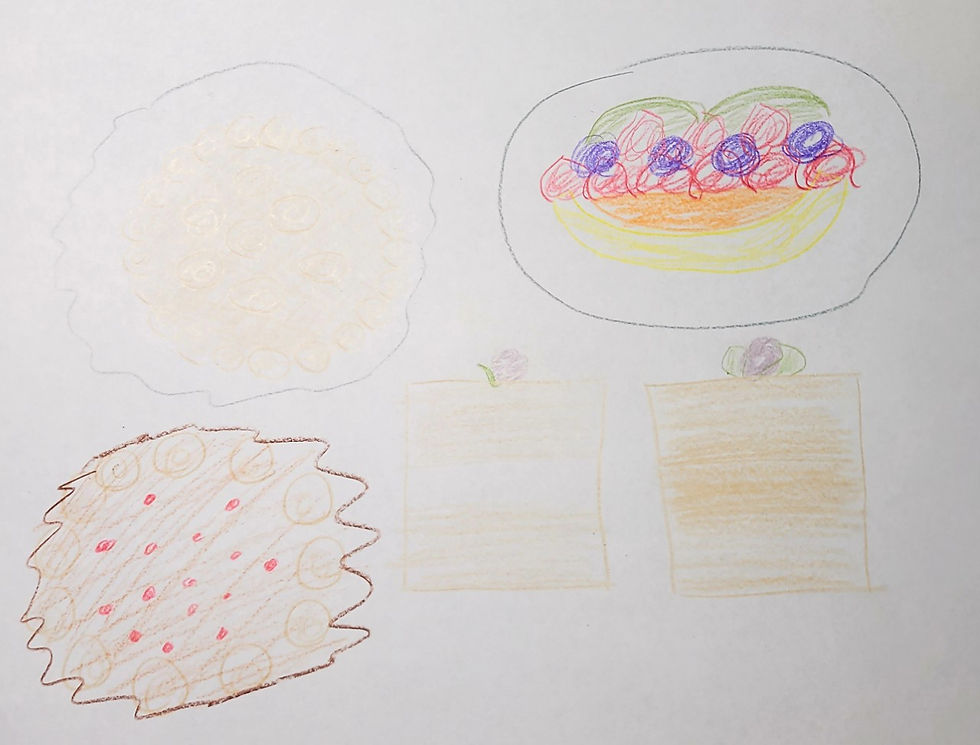
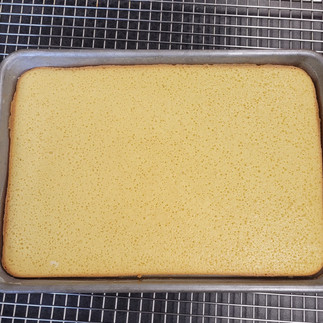
What Happened(?): This week I partnered with Alena, and we set to work on the Génoise. My original plan was to begin with the crispy meringue as it takes so long, but Chef advised we start with the cake to allow for cooling time. The goal was for each lab group was to create one of everything we had recipes for, so we cut all our recipes in half. The result was some gorgeous desserts.


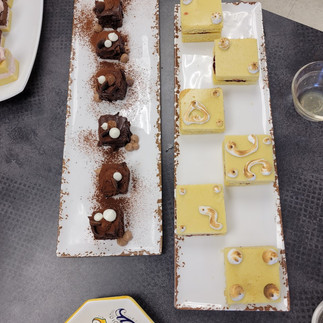

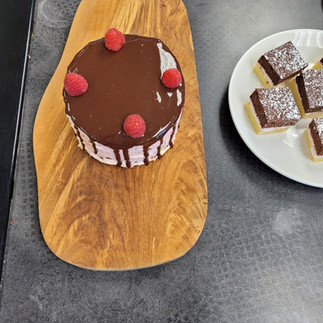




Per usual, time got away from us, and it didn’t quite work out that way. We made considerable progress though, and we managed to accomplish quite a bit by working as a team. Alena and I made both a vanilla sponge as well as a chocolate sponge. We tried two different preparation methods, the creaming method and plain sponge method, to find which method works best.







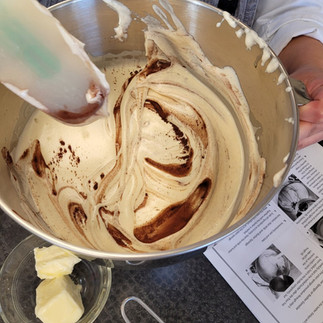
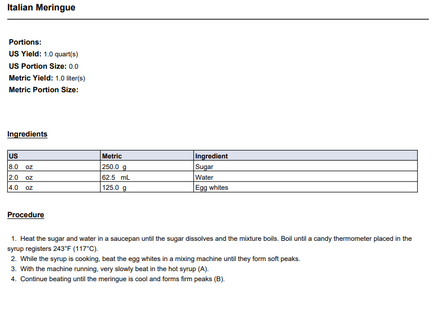
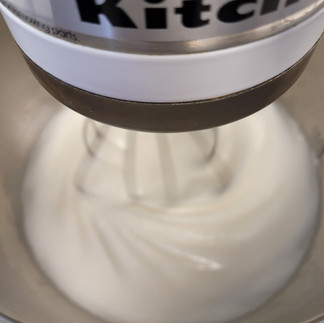
Each team made a different type of meringue this week. The other groups made French meringue and Common meringue, while Alena and I chose the Italian meringue.





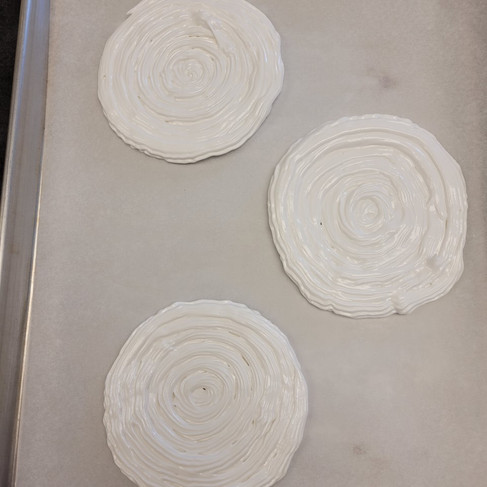
I enjoyed piping the Italian meringue onto the pan to be baked. Something about piping is soothing to me and melts my stress away. We popped them into the oven for roughly 2 hours and pulled them out just in time to use for decorating our Génoise. Thankfully, another group had an extra meringue disk we could use for our base while our meringues were still baking.


Evaluation: I saw little difference in the two methods of preparing the cake batter. The plain sponge method resulted in a slightly taller / airy cake, but when eating them the texture was the same.

When assembling our miniature Génoise a la Confiture Framboise the chocolate ganache was a little too wet and our remaining meringue was left out too long, so when we piped the meringue onto the ganache it kept falling over the sides. “Meringues must be piped or shaped immediately after they are made. Even a short rest can allow the moisture from the egg whites to separate and form a thin syrup that causes the whites to deflate.” (Bishop, 1995) Our crispy meringues were cooked well enough to remove the from the oven, so we used them to adorn the top of our cake. They weren’t set since they hadn’t enough time to cool and had a stickiness to them in the center. I tried them again later in the day after returning home, and they were the perfect balance of air and texture. They had a nice crunch to them without crumbling when bitten, and they didn’t break into dusty pieces in the bag while being transported.

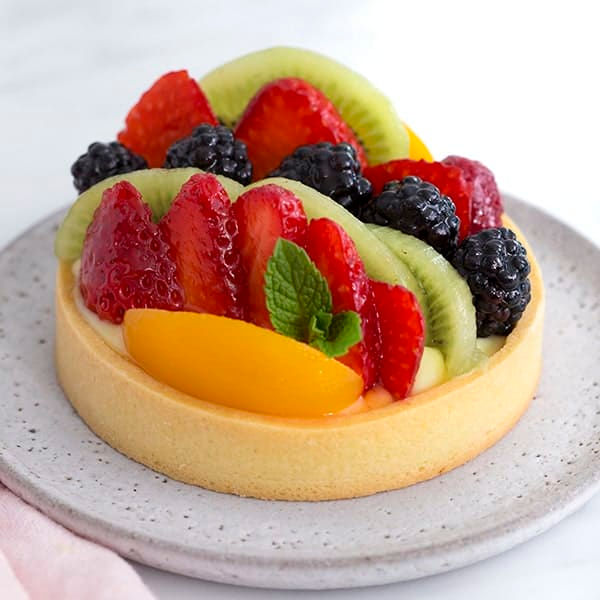
Conclusions: We didn’t have enough time to create a fruit tart like we had hoped. The dough began to get warm and soft, so it needed to be placed back into the fridge again. “Once you have the dough placed in the baking tart tray, let it sit in the fridge for an hour or two before baking. This will make sure the dough retains its shape while baking. Keeping the pie crust in the fridge for a while will make sure the butter in it is firm. When this firm crust goes into the hot oven, it is the quick melting of the butter that makes the crust flaky and crisp.” (Rodrigues, 2020)
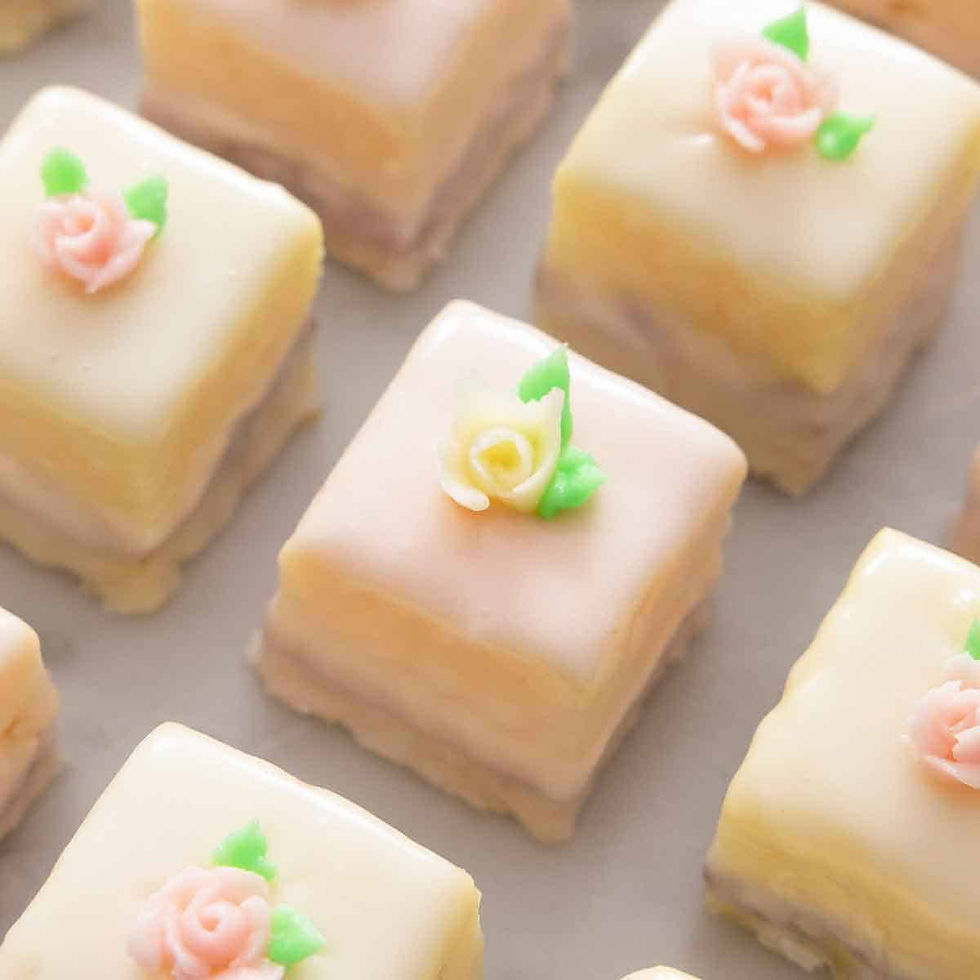
As for the Petits Fours…they were marvelous! We had a guest come in which took away the time we needed to create the poured fondant. This is when it’s rather handy for me to have the baking experience I do. I whipped up a basic American buttercream and flavored it with raspberry preserves. We chose to make naked petits fours and top them with fresh raspberries. They gave the appearance of Neapolitan ice cream. The flavor was a decadent mix of chocolate and vanilla sponge cake and was complimented well by the tart raspberry and smooth, rich buttercream. We dusted some with powdered sugar, and made some without a chocolate layer. We did this to cut our food waste, since we didn't have enough of each dish element to make them all uniform. I think we handled our hiccups well this week and managed to create pleasing dishes both visually and palatably.


References
“Foolproof Meringues.” Jack Bishop. https://www.cs.cmu.edu/~roseh/recipes/Other/cooks/docID=5956.html. May 1995.
“Tips For Baking Tarts.” Alisha Rodrigues. https://bakealish.com/tips-for-baking-tarts/. 13 August 2020.


Comments