Week 10: Cheese & Dairy
- kelafoy
- Oct 20, 2021
- 6 min read
Updated: Oct 22, 2021
Introduction
Cheese please! This week we are creating Chevre, also known as goat cheese. We will also be working on other fermented dairy products such as Roquefort mousse, yogurt, and crème fraiche. I can’t wait!
Method of Cookery: “Central to the production of cultured milk is the initial fermentation process, which involves the partial conversion of lactose (milk sugar) to lactic acid. Lactose conversion is accomplished by lactic-acid–producing Streptococcus and Lactobacillus bacteria. At temperatures of approximately 32 °C (90 °F), these bacteria reproduce very rapidly, perhaps doubling their population every 20 minutes. Many minute by-products that result from their metabolic processes assist in further ripening and flavouring of the cultured product.” (Britannica, 2021)
Prior Knowledge of the Dish: The only thing I know about cheese is that I LOVE TO EAT CHEESE. Every dish you can imagine is better with cheese…well…mostly every dish. I fell in love with the various ways to cook dishes with cheese when I traveled to Greece in June 2021. I became obsessed with a dish called Saganaki. It’s basically a one-inch slice of salty cheese like gruyere, lightly coated in flour and fried in olive oil with a squeeze of lemon. Talk about DELICIOUS! I don’t think I have ever met a cheese I don’t like. Although, some of it doesn’t like me very much. 😉
Learning Objectives:
Identify, store, and use a variety of milk-based products
Identify, store, and serve a variety of fine cheeses
Select fresh milks and creams according to their milkfat content and make knowledgeable decisions when substituting one for another.
Prepare whipped butter and compound butters.
Explain the process of fermentation as it applies to fermented dairy products.
Use commercial fermented dairy products in various cold preparations.
Produce fermented dairy products in-house.
List and explain the five steps in the cheese-making process.
Correctly store and handle various types of cheese.
Prepare attractive, well balanced cheese platters and cheese boards.
Develop a cheese menu for a restaurant or catering operation.
Background Information
Origin & History: “In the 8th century A.D the Moors brought goats to the Loire Valley where French goat cheeses, or chèvres were first made, Chèvre in French simply means goat, and that’s where our story begins. Farmers who used fresh goat’s milk to make cheese have referred to it as chèvre for centuries, and the use of the word spread with the cheese’s popularity.” (Hartigan, 2019)
Methods Used: “Making cheese is both an art and a science. Cheesemakers rely as much on measurements of pH levels and inoculations of specific molds as they do their own senses of sight, touch, and smell. There are six important steps in cheesemaking: acidification, coagulation, separating curds and whey, salting, shaping, and ripening. While the recipes for all cheeses vary, these steps outline the basic process of turning milk into cheese and are also used to make cheese at home.” (Meier, 2019)
Dish Variations: “Cultured buttermilk, sour cream, and yogurt are among the most common fermented dairy products in the Western world. Other, lesser-known products include kefir, koumiss, acidophilus milk, and new yogurts containing Bifidobacteria.” (Britannica, 2021)
“Goat’s milk has a much higher concentration of fatty acids, but less milk protein, than cow’s milk. The higher concentration of fatty acids such as caproic, caprylic and capric acid in goat’s milk gives goat cheese its signature tangy flavor, and the lower amount of milk protein gives it a smoother, creamier texture. Without as much milk protein it can’t become stretchy as in mozzarella. And even a firmer goat cheese such as aged Spanish Garrotxa never gets as hard as an aged Parmesan Reggiano. Aging goat cheese mellows the tart tangy flavor significantly making Garrotxa an excellent choice for anyone!” (Hartigan, 2019)
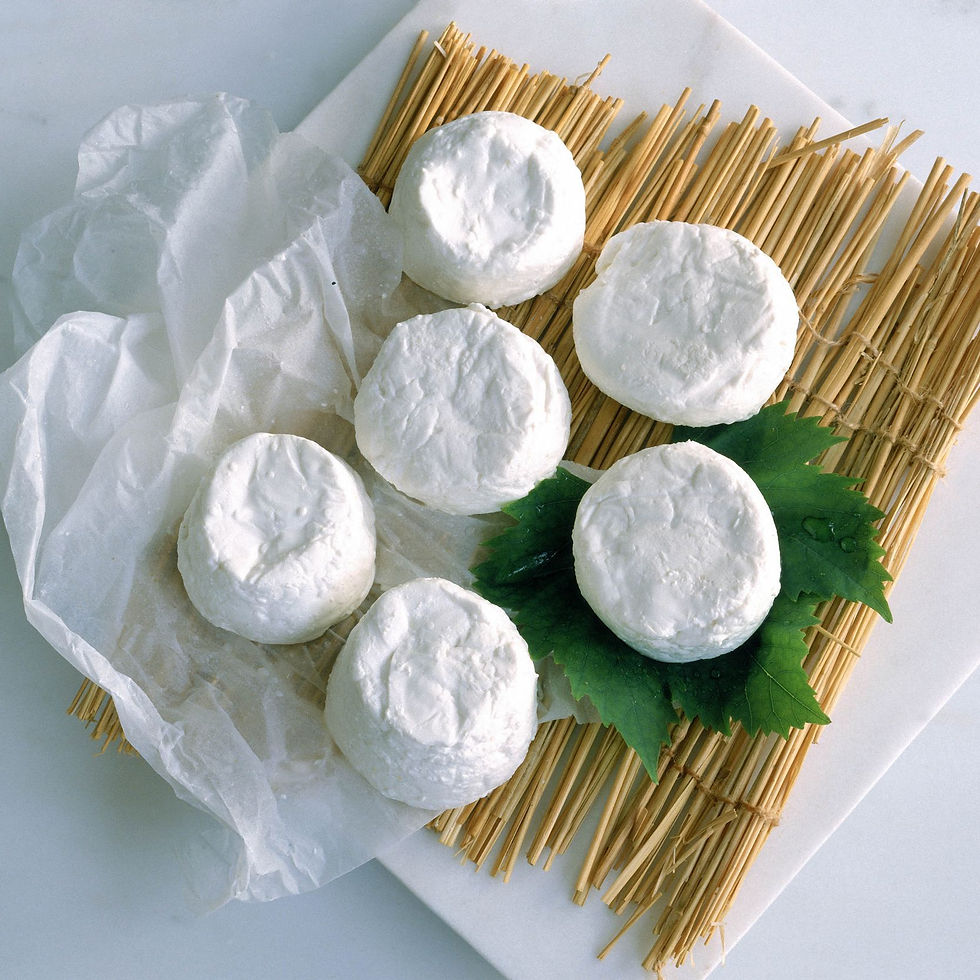
“Goat cheeses often come in wheels or rolls. At times the chevre is sprinkled on the outside with seasoning or fruit. Many factors go into creating the flavor and aroma of chevre. For example, some goat cheese producers add a serum to alter the acidity and moisture level. Moisture, density, aging and flavoring all add to a chevre’s distinct flavor profile. Well-known French varieties of goat cheese include Bucheron, Chabis, Chavroux, Clochette, Montrachet, Picodon and Pyramide.” (Escoffier Online, 2014)
References
“Cultured dairy foods.” Britannica. https://www.britannica.com/topic/dairy-product/Cultured-dairy-foods. 2021
“Get to Know: Goat Cheese Makers.” Julie Hartigan. https://www.iloveimportedcheese.com/get-to-know-goat-cheese-makers/. 20 May 2019.
“The 6 Steps of Cheesemaking -The Basic Process of Turning Milk Into Cheese.” Jennifer Meier. https://www.thespruceeats.com/important-steps-in-cheesemaking-591566. 19 September 2019.
“What you need to know about chevre.” Escoffier Online. https://www.escoffieronline.com/what-you-need-to-know-about-chevre/. 14 August 2014.
Dish Production Components
Recipes:


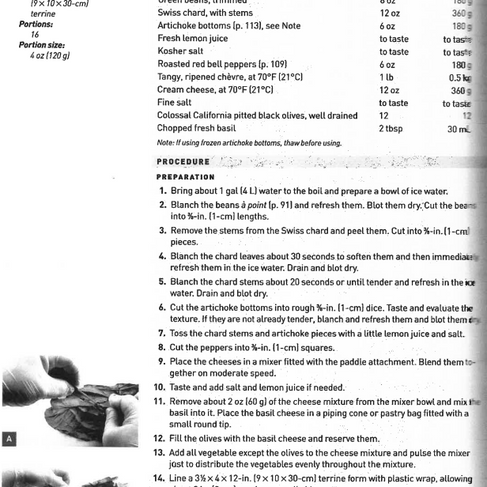

Plan of Work:

Plate Presentation:
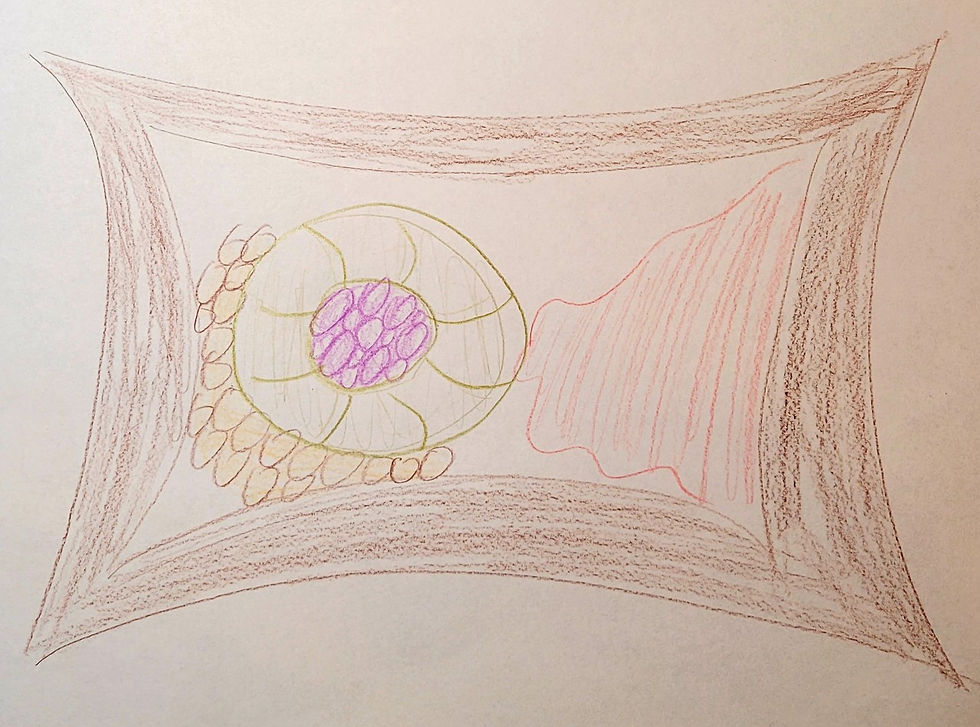
Sources:


Reflection & Summary of Results
What Happened(?): Well…I didn’t get to make cheese like I was hoping, due to time constraints. There’s only so much we can accomplish in a four-hour lab. However, I did have the opportunity to create the Roquefort Mousse this week. My classmates worked on the Chevre Boulettes and the Chevre & Vegetable Terrine. Plating was a big part of our skills lab this week, so we reverted back to what we learned about charcuterie presentation in week 3.

I had a few mishaps, but that’s how we learn right? 😊 Keep on scrolling to take a look at how it all went down.
Food Cost: I had to add blue cheese to my recipe. We didn’t have enough Roquefort cheese in the food lab to create the dish as it was listed.

Evaluation: I love a good stinky cheese! This is the main reason I wanted to work on the Roquefort Mousse. “Roquefort is a sheep milk cheese from Southern France, and is one of the world's best known blue cheeses. Though similar cheeses are produced elsewhere, EU law dictates that only those cheeses aged in the natural Combalou caves of Roquefort-sur-Soulzon may bear the name Roquefort, as it is a recognized geographical indication, or has a protected designation of origin. The cheese is white, tangy, crumbly and slightly moist, with distinctive veins of blue mold. It has a characteristic fragrance and flavor with a notable taste of butyric acid; the blue veins provide a sharp tang. It has no rind; the exterior is edible and slightly salty.” (Wikipedia, 2021)

Learning to manipulate it was interesting. With it being such a moist cheese, it is easily loses shape when molding it. After combining it with the wine and cream, even the gelatin didn’t help it hold well. This was the main purpose for freezing the mousse before serving.

Chef Ana advised me to place saran wrap inside the molds before the mousse to make them easier to remove. I was hesitant to do this, because I figured it may create too much moisture on the presentation side of the cheese. “When it comes to cheese, you want to say no to plastic. Even if your cheese comes wrapped in plastic, it’s a good idea to substitute with foil or wax paper. Plastic wraps or coverings keep the cheese from breathing. This can lead to moisture and bacteria buildup in your cheese.” (Kitchen Seer, 2021)

Conclusions: Now I see that heeding the advice of Chef Ana would have saved me a lot of trouble. She is the expert after all. 😊 The mousse would not have been in contact with the saran wrap long enough to cause moisture damage. I had a heck of a time removing the semi-spheres of mousse from the molds. I had to use a torch to heat the outside of the molds to make the mousse break loose from the frozen metal. In the future, it may be beneficial to add some color to the mousse as well. The blue mold in the cheese caused a somewhat unpleasant green hue when blended with the other ingredients. I plated my dish on a blue plate hoping that using the same color palate may make it more aesthetically pleasing. I chose to pair the mousse with garlic-basil croutons and red seedless grapes. For added color and flavor, I pan seared jalapeno slices in the same pan I toasted the croutons in for those of us that like a little extra kick with each bite. I would have liked the plating to look a little better, but I think it turned out well. The flavor was exactly how I hoped it would be, so I was ultimately happy with the end result.

Dr. Martin gave the entire presentation a thumbs up, so I'd say cheese and dairy week was a success.

References
“Should You Wrap Cheese In Foil Or Cling Film?” Kitchen Seer. https://kitchenseer.com/should-you-wrap-cheese-in-foil-or-cling-film/. 2021.
“Roquefort.” Wikipedia. https://en.wikipedia.org/wiki/Roquefort. 2021.


Comments