French Bread, Soft Rolls, & Milk Bread (Pain au Lait)
- kelafoy
- Jan 19, 2022
- 5 min read
Updated: Jan 23, 2022
Introduction
This week we are learning to understand yeast doughs. We will be producing lean yeast doughs using the straight dough method.
Method of Cookery:
“The straight dough method is used primarily for making lean yeast doughs, meaning dough that does not contain any fat. The actual ingredient mixing part of the straight dough method is only one step, as opposed to the multiple steps of the other methods.” (Bettie, 2018)
“Straight dough is a single-mix process of making bread. The dough is made from all fresh ingredients, and they are all placed together and combined in one kneading or mixing session. After mixing, a bulk fermentation rest of about 1 hour or longer occurs before division. It is also called the direct dough method.” (Wikipedia, 2022)
Prior Knowledge of the Dish:
Pizza dough is usually created using the straight dough method. I enjoy making my own pizza dough at home. It’s one of the few things I can get a picky preteen to eat. 😉 I have an extensive background with cakes, cookies, and pastries, but I haven’t made a lot of breads and yeast doughs. I like to make a basic banana bread, fresh cinnamon rolls, monkey bread and sticky buns…homemade biscuits from time to time. That’s probably the extent of my expertise in that area.
Learning Objectives:
· Describe the principal types of yeast-raised products
· Describe the 12 basic steps in the production of yeast goods
· Explain how to judge the quality of yeast goods and correct defects in them.
· Explain the mixing methods for straight doughs and prepare straight doughs.
· Mix doughs using appropriate mixing times and speeds, based on the three basic techniques for developing doughs.
· Describe the factors affecting dough fermentation and how to control them.
· Makeup and bake a variety of yeast dough products.
Background Information
Origin & History:
“The straight dough method became popular after the discovery and later mass production of baker's yeast, as well as the mass production of mixing machines. Straight dough was simpler than sponge and dough, took less time and effort, and was considered superior for commercial purposes. Baking expert Julius Emil Wihlfahrt of The Fleischmann Company wrote in 1915: Generally speaking, sponge is best used for fancy breads and straight dough for the average bread, for in this manner the advantages of both systems can be best appropriated. Prior to 1920, there were two basic kinds of breads, naturally leavened French bread, and Vienna bread leavened with cereal press yeast, an early form of baker's yeast. After 1920, when mixing machines became popular among bakers, rural bakers began to make more sponge doughs and city bakers more straight doughs, both replacing sourdough. By the 1930s, straight dough had mostly replaced sponge dough, and the terms "French" and "Vienna" breads were used less often. Bakers who continued using older methods were generally unable in America to compete on a cost basis, and so with "rare exceptions," were limited to local niche markets.” (Wikipedia, 2022)
Methods Used:
“Some bakers prefer to hydrate their yeast in some of the water before mixing everything together. This is not absolutely necessary anymore. Modern active dry yeast is produced in smaller particles and will hydrate thoroughly even if they are not pre-dissolved. However, some bakers still prefer it for reassurance that it will be completely hydrated.” (Bettie, 2018)
Dish Variations:
You can make dinner rolls, cinnamon rolls, pizza dough, Focaccia bread, and so many other tasty bites of gluten lovers’ heaven. There’s even popcorn bread, croissants, and Brioche. The list can go on for what seems like forever. This is a versatile dough that stands alone no matter how you choose to pair flavors. My personal fave is the Focaccia de Recco with white truffle taleggio, honey whipped goat cheese, and rosemary, served at Ariccia Cucina Italiana in Auburn, Alabama. It is DIVINE!
References
“Dinner-12.14.2021.” Ariccia Cucina Italiana. https://aricciacucina.com/wp-content/uploads/2021/12/Dinner-12.14.2021-1.pdf. 12 December 2021.
“Straight dough.” Wikipedia. https://en.wikipedia.org/wiki/Straight_dough. 2022.
“Straight Dough Method for Yeast Bread.” Baker Bettie. https://bakerbettie.com/straight-dough-method-yeast-bread/#:~:text=The%20straight%20dough%20method%20is%20used%20primarily%20for%20making%20lean,steps%20of%20the%20other%20methods.&text=Combine%20all%20of%20the%20ingredients%20for%20the%20bread%20together. 01 January 2018.
Dish Production Components
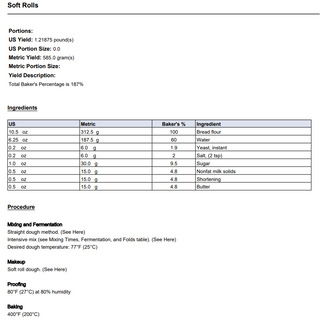
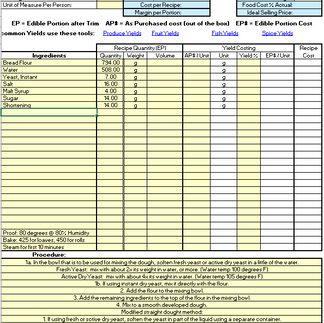
Recipes:





Plan of Work:
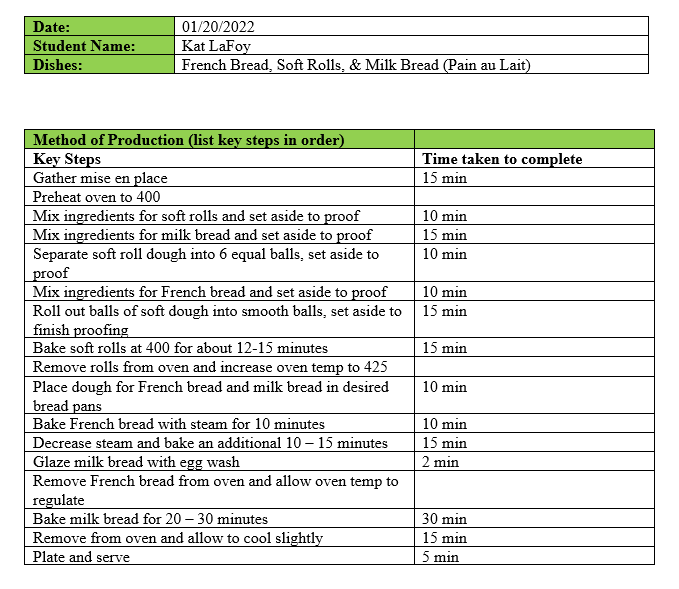
Plate Presentation:

Sources:

Reflection & Summary of Results
Well...it has happened again...Covid decided to take up residence in my body. I think it must really love living here for some reason. 😊 All jokes aside, I missed lab this week both physically and emotionally. I enjoy working with my peers, and I was truly looking forward to creating the delicious bread recipes we had planned. My classmate, Céline, has been gracious enough to allow me to reference her blog documenting her lab experience in order to complete this portion of my blog. All words, pictures, and findings below came from her and my fellow classmates.
If you would like to view her blog in it's entirety, you may find it here:
Let's see what went down, shall we...
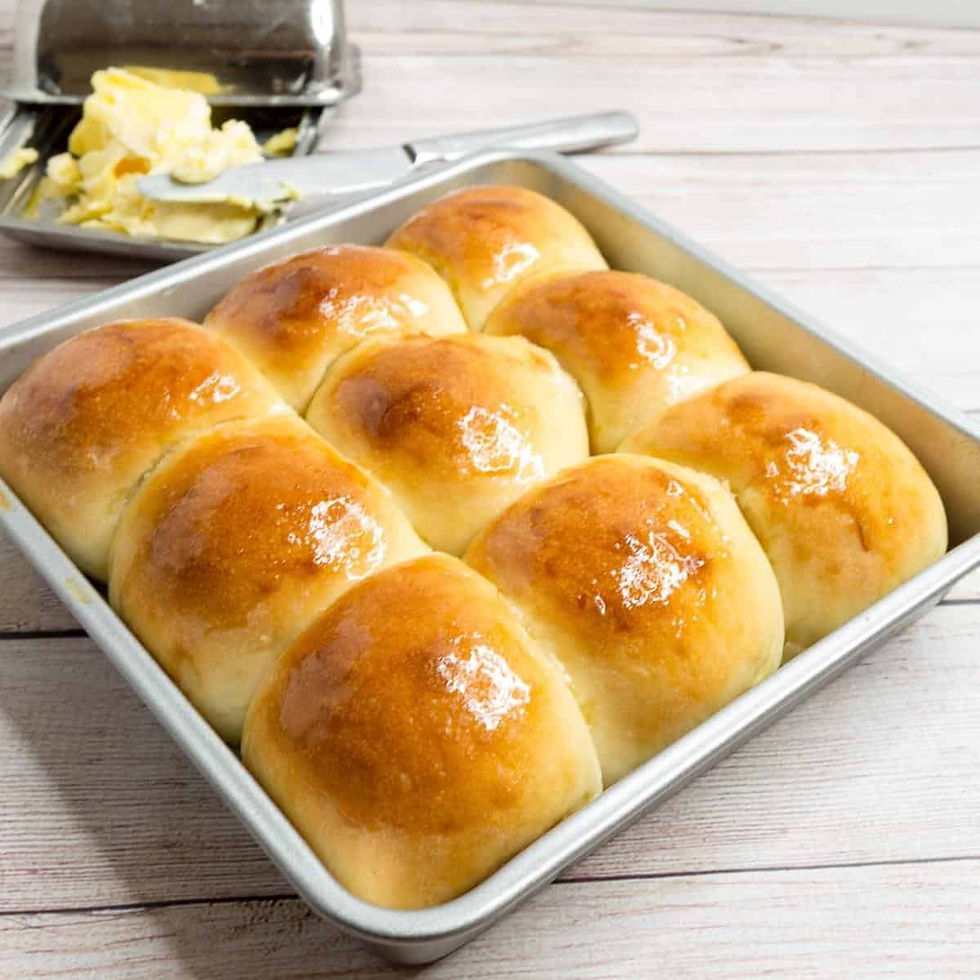
"Week 2: Reflection Lab Outcomes: For our first week of Patisserie and Confectionary lab, we started working on our bread skills, working with dough and reminding ourselves to be patient while the dough takes 1:30-2 hours to ferment. Dish Results: Soft Rolls: our soft rolls turned out like CopyCat Texas Roadhouse rolls! They were absolutely perfect. The air CO2 bubbles on the inside were small & evenly distributed. I also appreciated that this recipe only had a 20-30 minute fermentation time- it's interesting how all breads can be faster or shorter. My group decided to water-wash our rolls instead of egg-wash them, and the color on the top was not as dark- but the flavor was just as good. The rolls came out fluffy. My group used instant yeast, which was a simple process since no proofing was necessary. The other groups who used fresh and active yeast experienced a faster baking time.


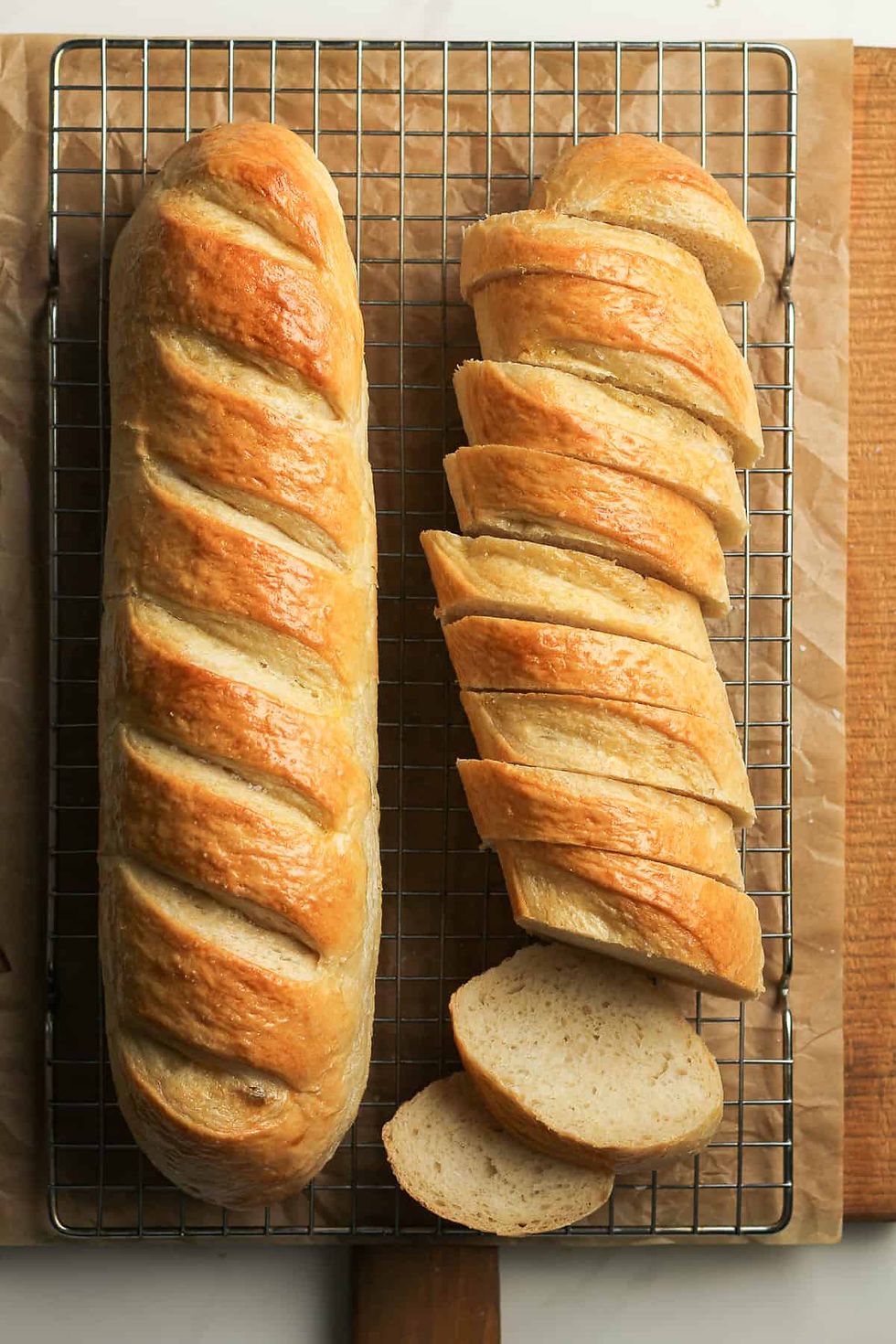
French Bread: I was very excited to make french bread, since baguettes are one of my favorite types of bread. We differentiated from the recipe a little bit and used butter instead of shortening. The dough came out really wet after both mixes, so we added about 1/3 more flour. The butter added about 20% more hydration to the dough- so next time we either account for this and add 20% more flour or 20% less water (the plain water ingredient). Our french bread turned out a lighter color than everyone else's, and this is maybe because of the extra hydration- but the taste was still good.


Milk Bread: I worked with this recipe the most. When I scalded the milk, the recipe called for 250g to be heated, but I added 50 extra grams of milk to account for some of the milk evaporating away. The soft rolls and the milk bread both use the intensive mixing method.


Plate Cost:





Results evaluation: Overall, this lab was a lot of fun & a great start to the semester! Some notes that were made to potentially improve our outcomes were that we needed to be careful not to overwork the dough, or let it get too warm. Conclusion: Of the objectives listed for this chapter, I believe I best understood the method of preparing straight doughs. I still have a lot to work on, but I would like to next have a better understanding for the 12 basic steps in the production of yeast products. Also, our class seems to work well together, but throughout the semester we will have to continue learning how to work with new people, as well as developing better communication skills with our team members."


Comments